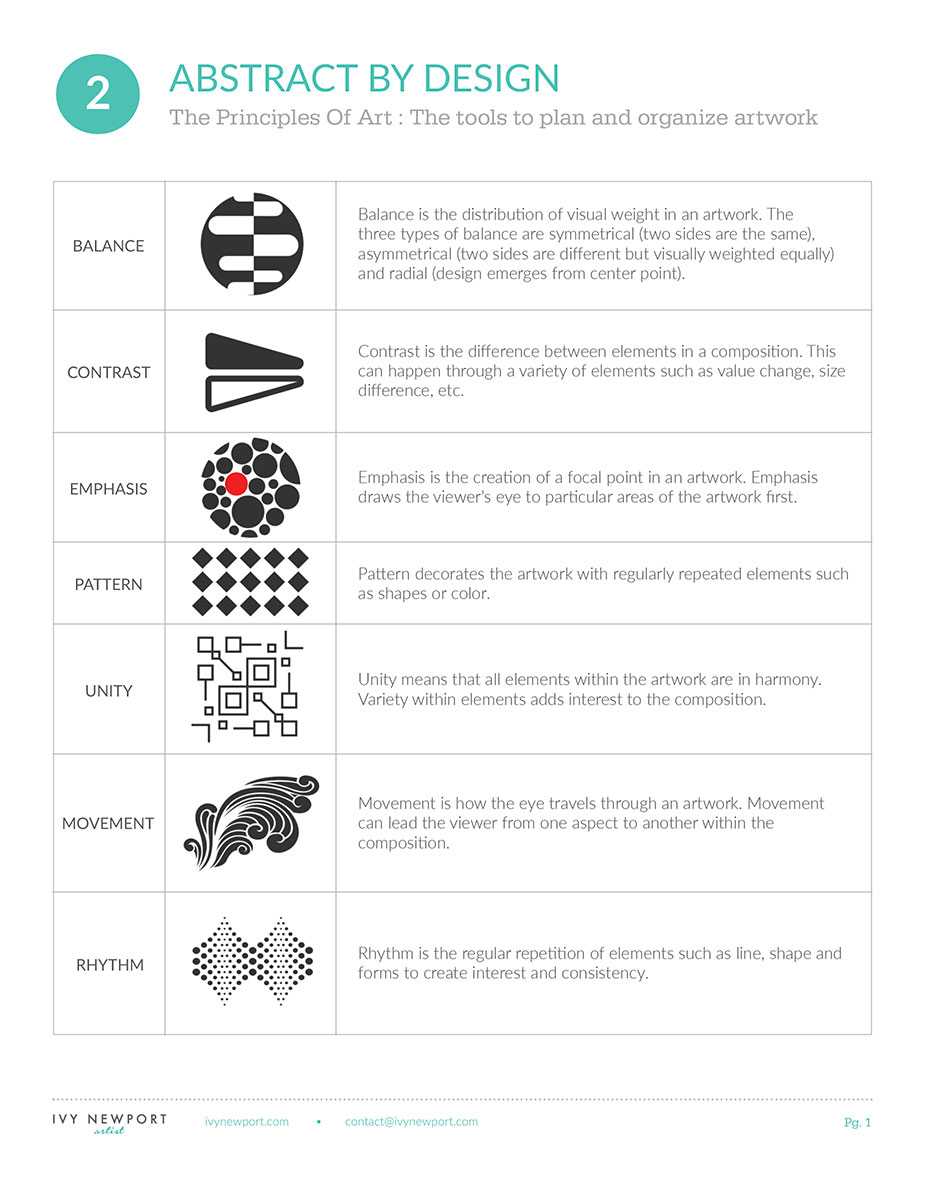

Here’s the geeky (but super important) part - we need to understand both the Elements of Art and the Principles of Design to effectively analyze and discuss art. When we understand these concepts we are armed with the tools to be intentional with our art and edit our work.
Seeing the world through the scope of these principles will not only assist you in making art, it will help you when arranging anything visually! Whether you are setting a table, getting dressed or decorating a room - the same principles apply!
I have included downloads that discuss each of these. Become VERY familiar with these! They are key to understanding the overall success of your abstract pieces. I highly recommend printing these out and keeping them handy for when it comes time to analyze your work.
Before we discuss and analyze some abstract artwork let’s chat about one of the rules you may have heard about when talking about artwork and photography - The Rule of Thirds.
Definition: "One of the fundamentals of painting and photography, the Rule of Thirds is a technique designed to help artists and photographers build drama and interest in a piece. The rule states that a piece should be divided into nine squares of equal size, with two horizontal lines intersecting two vertical lines. Points of interest should be placed at the intersection of these lines."
Now, that being said….The Rule of Thirds is not the only concept behind composition and it can be debated that it is the simplest but it’s a starting point and works well ONLY when the whole piece is considered. We must always remember that the eye is also drawn to areas of a painting due to color, contrast, line, movement and pattern. So we can’t lean on the rule of thirds exclusively but analyze the painting as a whole.

Let me explain a little more in this video where we will analyze this work together.
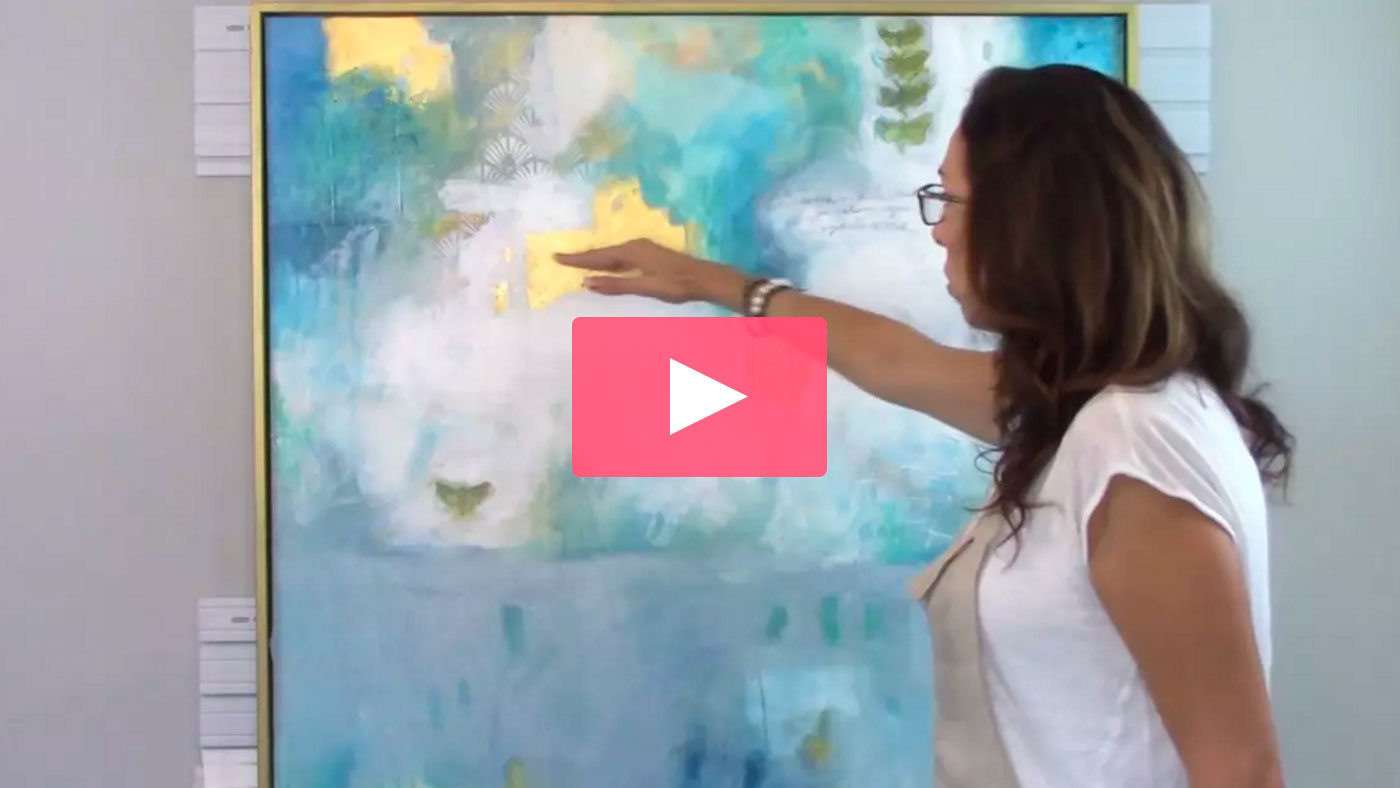
I hope that helped you understand a little more behind the design of my piece and why I did the things I did.
Okay…. so now that you know a little more about composition let’s continue and look at some Abstract work in Interiors and see why they work!
I hope you enjoyed looking at those beautiful abstract works in Interior Spaces and now have a better understanding about why they worked and how they enhance the room dramatically!
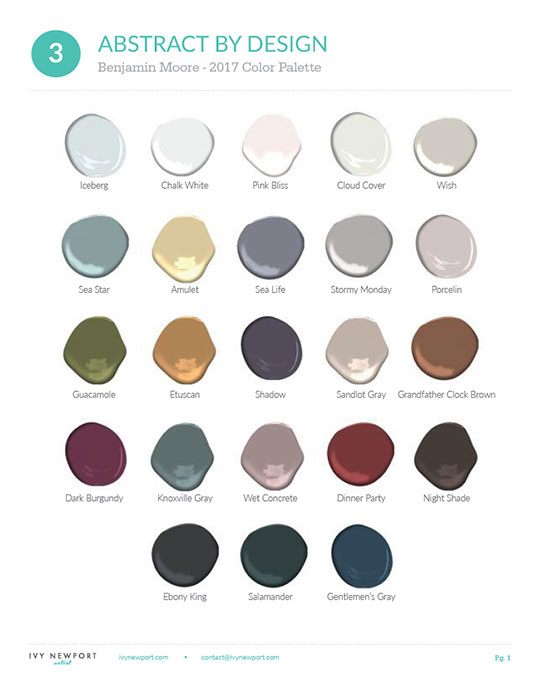
Okay so we talked about color in the last video so let’s explore that further now. First of all...let’s drool over the latest palette from Benjamin Moore that is so fresh and in style right now!!
Gorgeous right? From soft, cool grays to moody jewel tones to pastels….it’s quite a delight for the eye! But of course REMEMBER that you need to decorate with the colors that resonate with YOU! Trends come and go but your home should reflect you and your family so please understand I’m only sharing these with you for inspiration purposes….and because let’s face it...it’s FUN to learn about what’s in STYLE!
Obviously, color is ENDLESS….phew. It can really make one feel overwhelmed - that why I always choose a color palette to work from first! Since we are focused on creating art for our home - I highly suggest looking around your home and figuring out what your color palette is! Is it neutrals with hints of color? Is it spicy, hot warm colors or cool, soothing blues? Maybe you adore greens with a mix of cream and gold? Whatever it may be, define it and create a color palette that you can base your abstract painting on. This way, it gives you a color plan and sets you up with some boundaries for your color journey. Once you define your color palette, you can’t really go wrong because you know from the get go that your colors work together! By connecting your artwork with your surroundings, you create an instant unity between art and interior design.
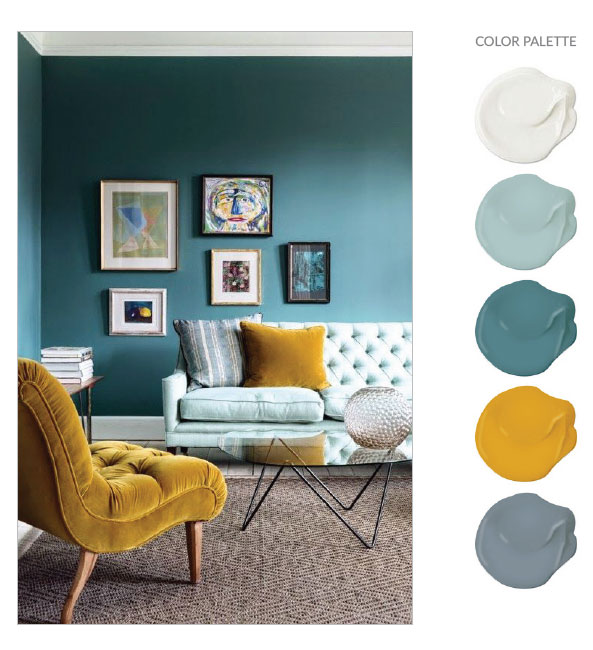
Here are some examples pulled from gorgeous interiors on Pinterest, I have created color palettes for each room that would work well in a painting.
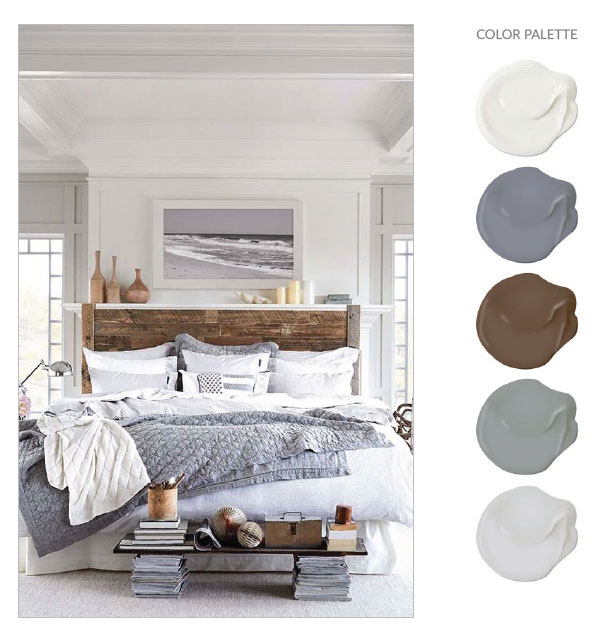
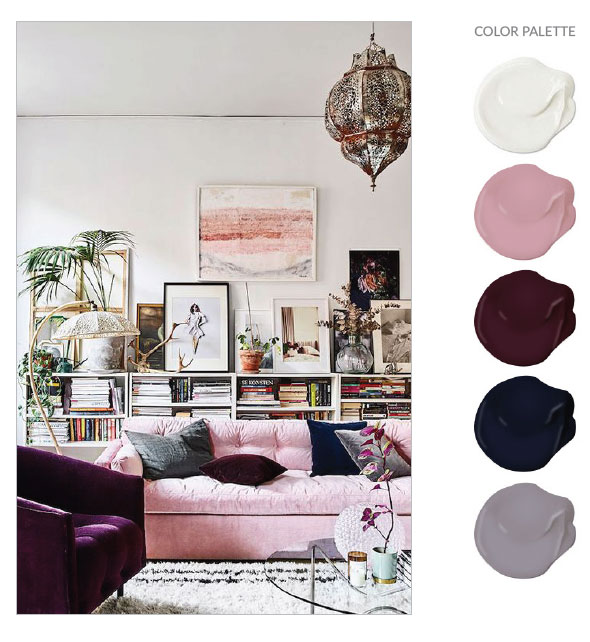
So pretty right? It’s fun to play with color and find a gorgeous color palette that you are excited to work with. I suggest taking pictures of your space and then going to a paint store to select color swatches that coordinate. You can hang these up or keep them handy when you go pick out your paints and when you begin to work!