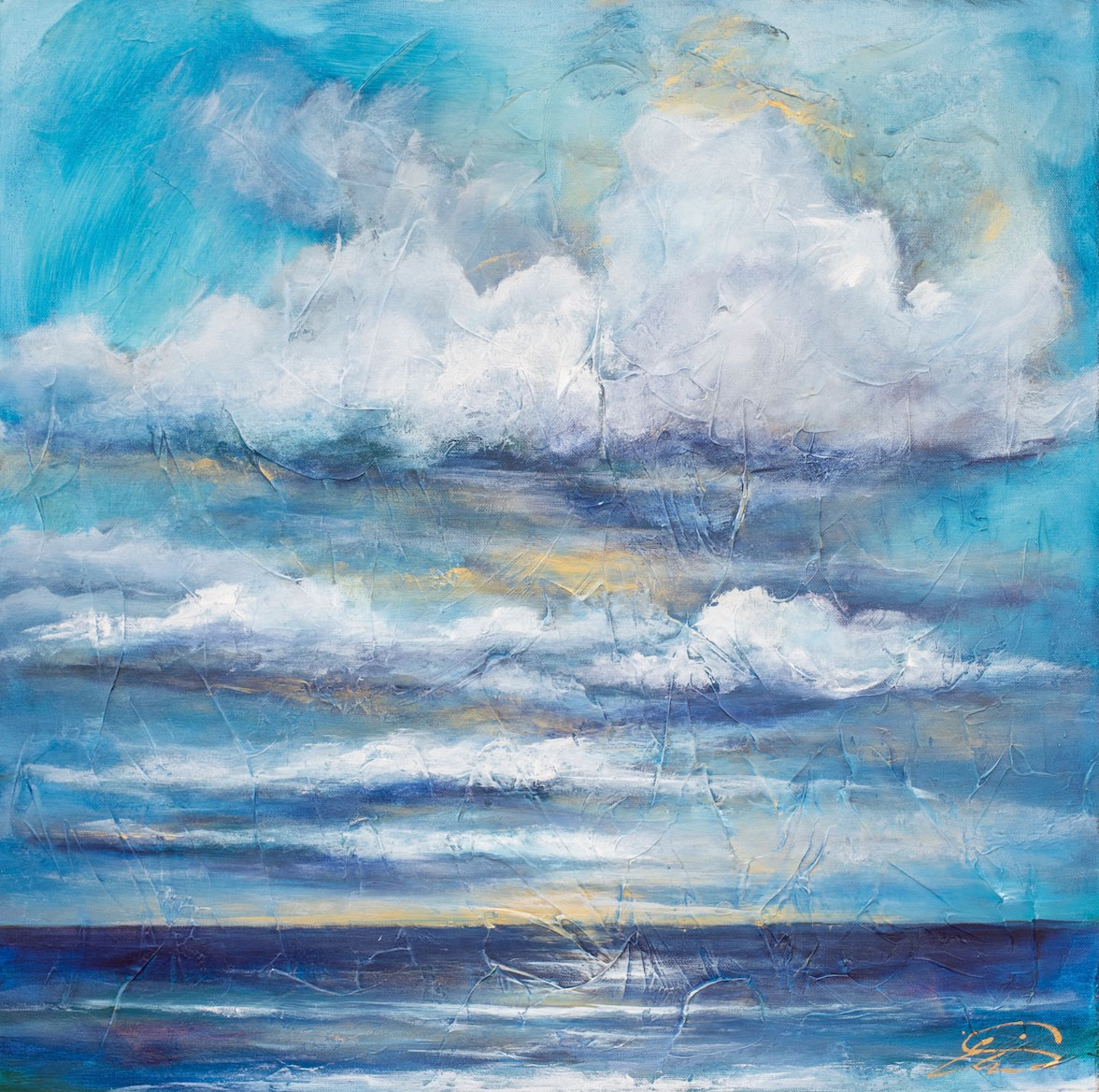

There is nothing more breathtaking than standing at the edge of the ocean, watching the waves roll in and the clouds roll by. The sound of the water, the cool breeze and sun hitting your face. Ahhhh I can go there in my mind and never come back. Creating that feeling and expression is what we are after with this piece. By using a big brush and molding paste, you’ll be pushed to create with more freedom and less constraint.
Important - Prepping your canvas: This should be done a day or two before painting. The molding paste takes a while to dry and a dry canvas is a prerequisite. With this process, I usually prepare several canvases at once to save time. Grab your palette knives, molding paste and your canvas.
Painting the Sky: Make sure that you have already mixed all of your colors from Elida’s Fab Five mixing chart and are ready to go. For the bulk of this painting, I use the Shur- line Handi-Painter from a hardware store. If you aren’t comfortable using this tool, you can use a big flat brush instead. But stay away from your small brushes.This piece is meant to be abstract, so big strokes with lots of movement is what we are after. Let’s get started!
Painting the Ocean and finishing touches: It’s time to paint the ocean and then go back to do any touch ups. Again, I’ll be using primarily my handi-painter. This is a great time to push yourself out of your comfort zone and use bigger, bulkier brushes. This allows you to keep the piece more fluid and less controlled. When you finish, don’t forget to sign your painting and paint the edges for a finished look. Congratulations, you did it! Thank you so much for painting with me. Share your paintings at www.elidaart.com and stay in touch!
Bonus: Take a look at my bonus video on how to spray your painting to protect it best against UV light etc. There are many options out there, but they aren’t necessary. If you like the sheen on your piece, you are fine to leave it as is. This is just one more layer of protection for your painting.