Dear creative friends,
I’ve just wrapped up teaching in Tomar, and already part of my mind is drifting toward Scotland.
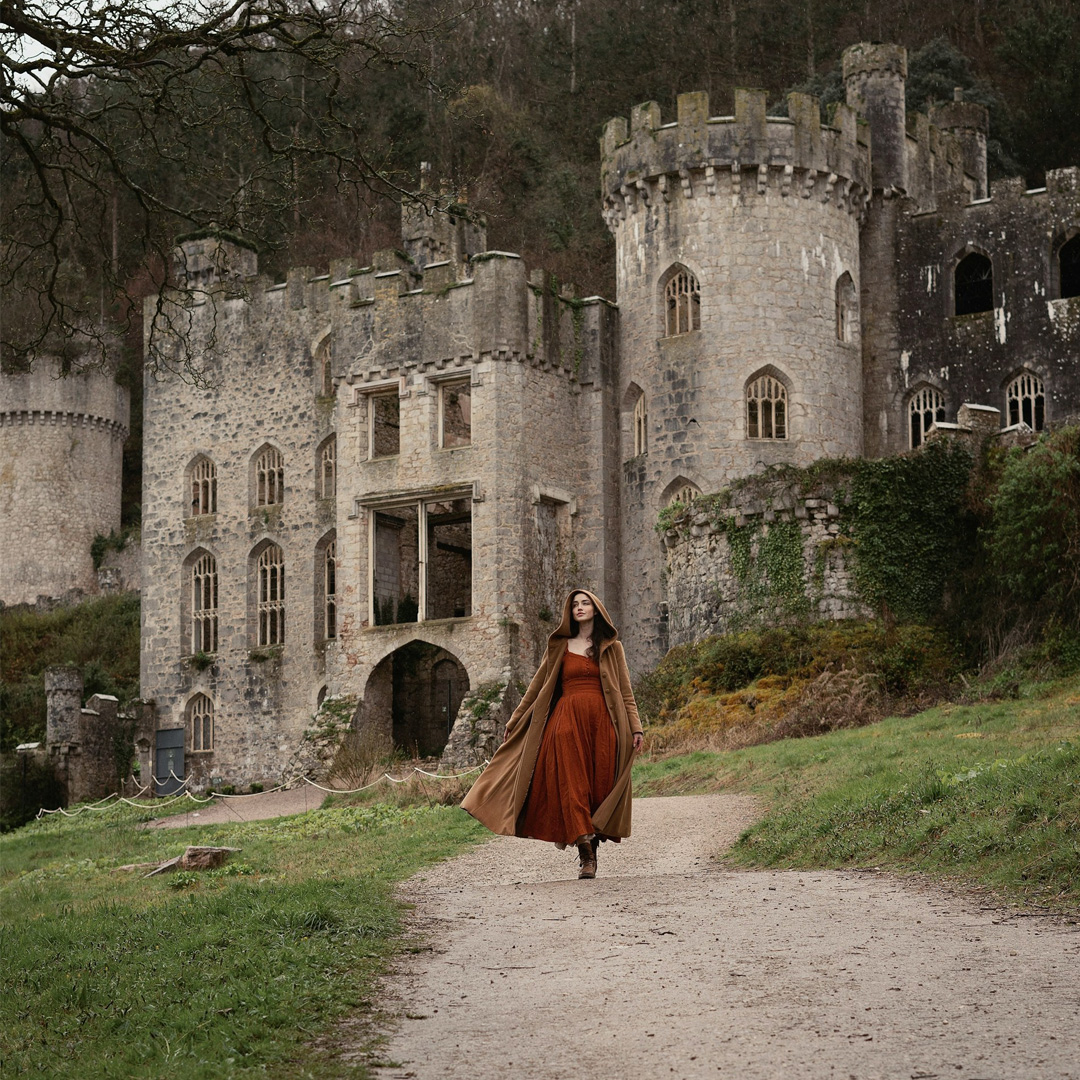
In a few weeks I’ll be in the Highlands, teaching in a landscape that seems to hold memory in its bones. Standing stones, old glens, weather moving across the hills, places that feel layered with story long before Outlander ever arrived there.
Somewhere between one class ending and another still ahead, this month’s theme started to make sense to me.
Echoes. Inheritance. The things we carry forward without always knowing where they began.
Sometimes they come through family. Sometimes through place. Sometimes through the women, artists, stories, and images that came before us and somehow still feel familiar when we meet them.
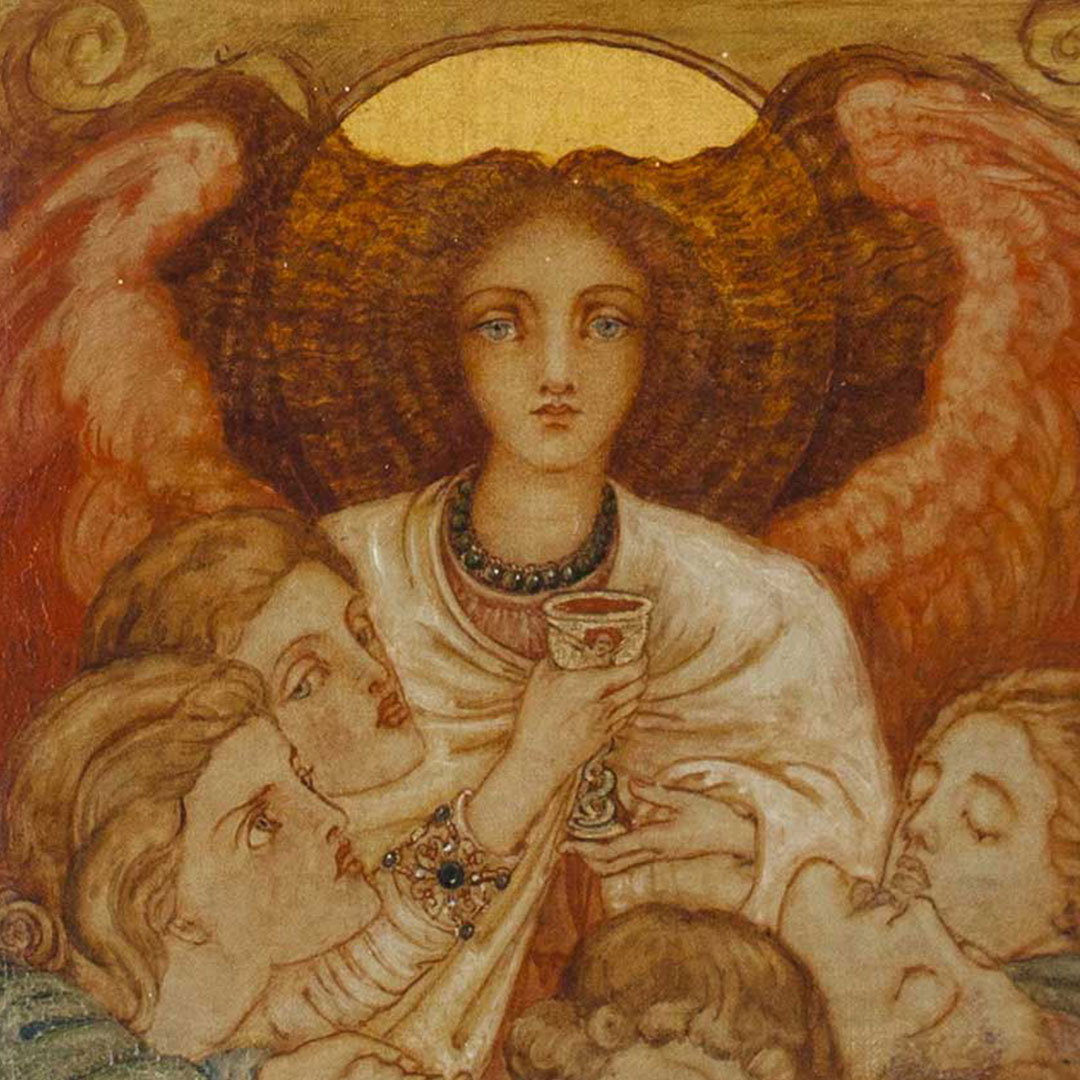
This issue’s master artist, Phoebe Anna Traquair, feels especially right for that conversation. She spent much of her life reaching back into medieval manuscripts, sacred imagery, Celtic pattern, and older visual traditions, then making something entirely her own from them. She wasn’t interested in copying the past. She let it pass through her.
I think that idea is sitting with me more than anything this month.
October has always felt like the right time for this kind of noticing. The light changes. The year begins to turn inward a little. We start paying attention to what has lasted, what keeps returning, what still has something to say.
Maybe echoes don’t need to be solved.
Maybe we just need to hear them.

One of the things I love most about the Pre-Raphaelites is that their story is full of contradiction. They began, in part, by pushing back against the very tradition they would later become so closely associated with.
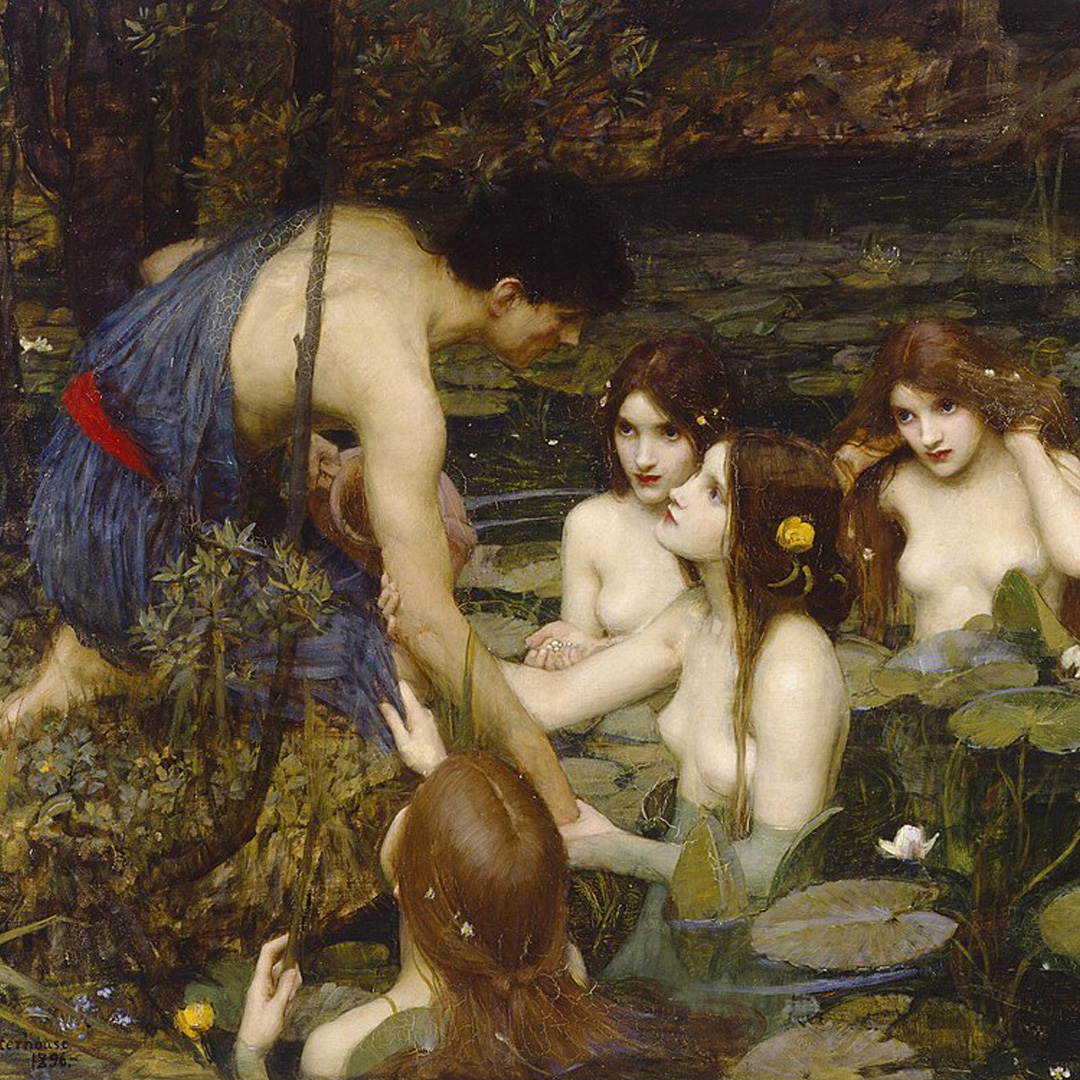
When Dante Gabriel Rossetti, William Holman Hunt, and John Everett Millais founded the Pre-Raphaelite Brotherhood in 1848, they were rebelling against the polished academic style taught by the Royal Academy. Raphael became a kind of symbol for everything they felt had become too mannered, too idealized, too far removed from direct observation.
What they wanted instead was something fresher and more alive. They looked back to early Italian and medieval art, to intense color, strange detail, flattened spaces, and figures that sometimes felt almost awkward in their honesty. They wanted art to feel seen again, rather than inherited as a set of poses and rules.
And yet, within a few decades, the visual world around Pre-Raphaelitism was full of myth. Goddesses returned. Nymphs appeared in pools. Ariadne waited on her island. Narcissus bent toward his own reflection. Pygmalion fell in love with the woman he had made. Which is where it gets interesting.
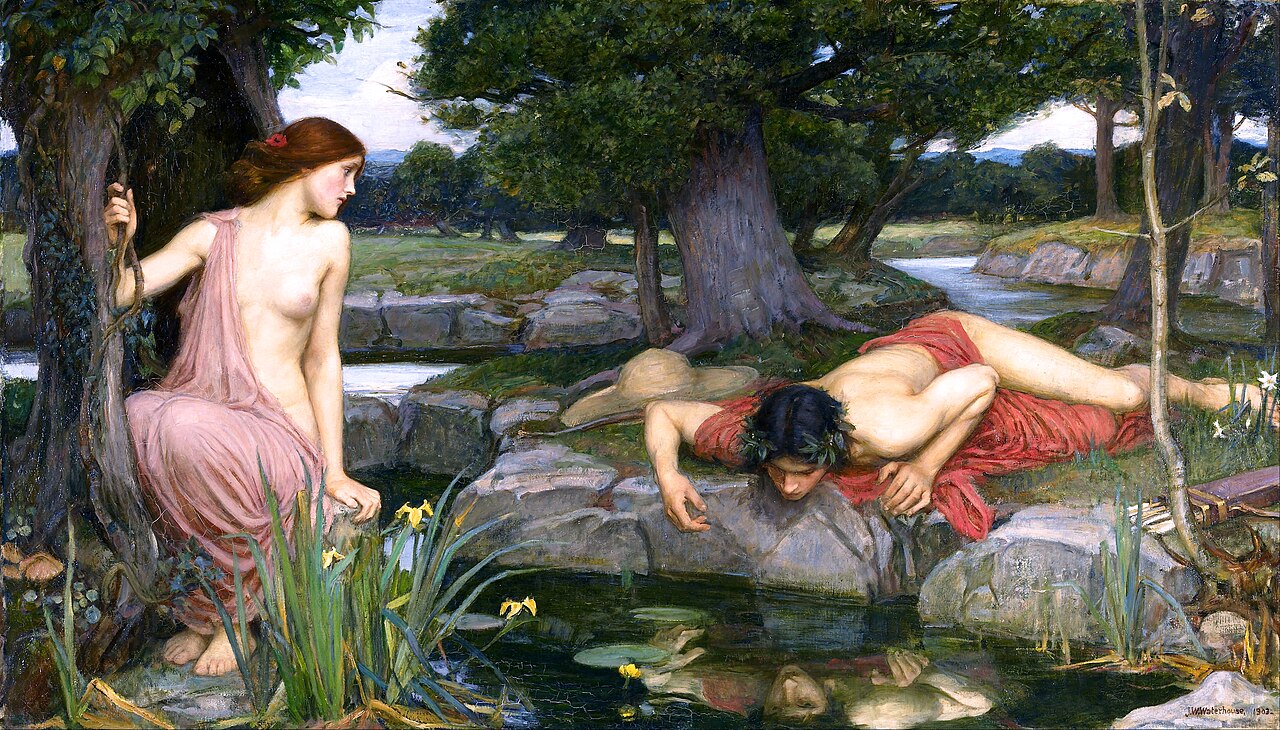
Echo and Narcissus
By John William Waterhouse 1903
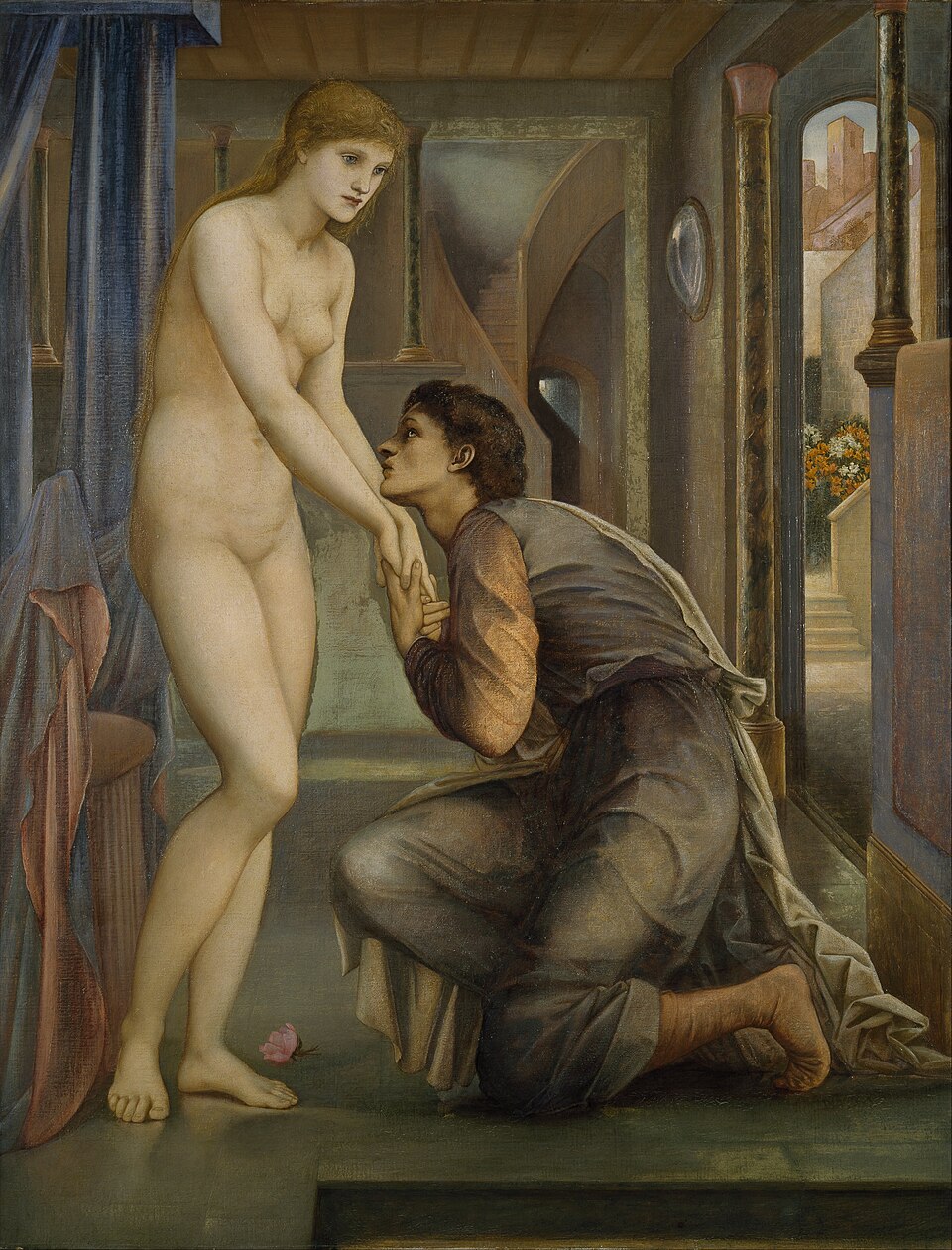
Pygmalion and the Image: The Soul Attains
By Edward Burne-Jones, 1873
As the movement evolved, so did its relationship with the classical past. Rossetti’s later work became increasingly dreamlike and symbolic, while artists such as Edward Burne-Jones pushed further into legend, myth, medieval romance, and ancient story. A little later, painters including John William Waterhouse and Evelyn De Morgan drew heavily from many of the same sources.
Waterhouse returned again and again to Greek and Roman myth: Echo and Narcissus, Ariadne, Hylas and the Nymphs. Burne-Jones spent years with stories of enchantment, transformation, and impossible longing. His Pygmalion series turns an ancient myth into something intimate and almost psychologically charged.
The old stories were no longer being treated as academic exercises. They had become emotional territory, and that shift matters. These artists weren’t simply copying the classical world they had inherited. They were using it to speak about things their own culture often preferred to leave half-said: desire, obsession, grief, beauty, temptation, loss.
Myth gave them distance. A woman could become Echo, Ariadne, Proserpine, Circe. Through her, an artist could explore abandonment, longing, captivity, power, sensuality, without having to say quite so plainly, this is about us.
This is the part I find most useful as an artist. The Pre-Raphaelites and the artists who followed in their wake didn’t inherit the classics as something fixed; they inherited a vocabulary.
A myth about Echo, condemned to repeat the words of others, could suddenly hold something very Victorian: silence, longing, emotional confinement, a woman whose voice does not entirely belong to her. The story stayed ancient, but the meaning shifted.
And perhaps that is what inheritance always does. We receive a form, a story, a technique, an image. It comes to us carrying the fingerprints of people we will never know. Then, almost without realizing it, we begin to bend it around our own lives.
We keep what still has energy, alter what no longer fits, and add something of ourselves.
The Pre-Raphaelites began by resisting one kind of inheritance and ended up creating another, built partly from the very material they had once pushed against. I love that contradiction because it feels so human.
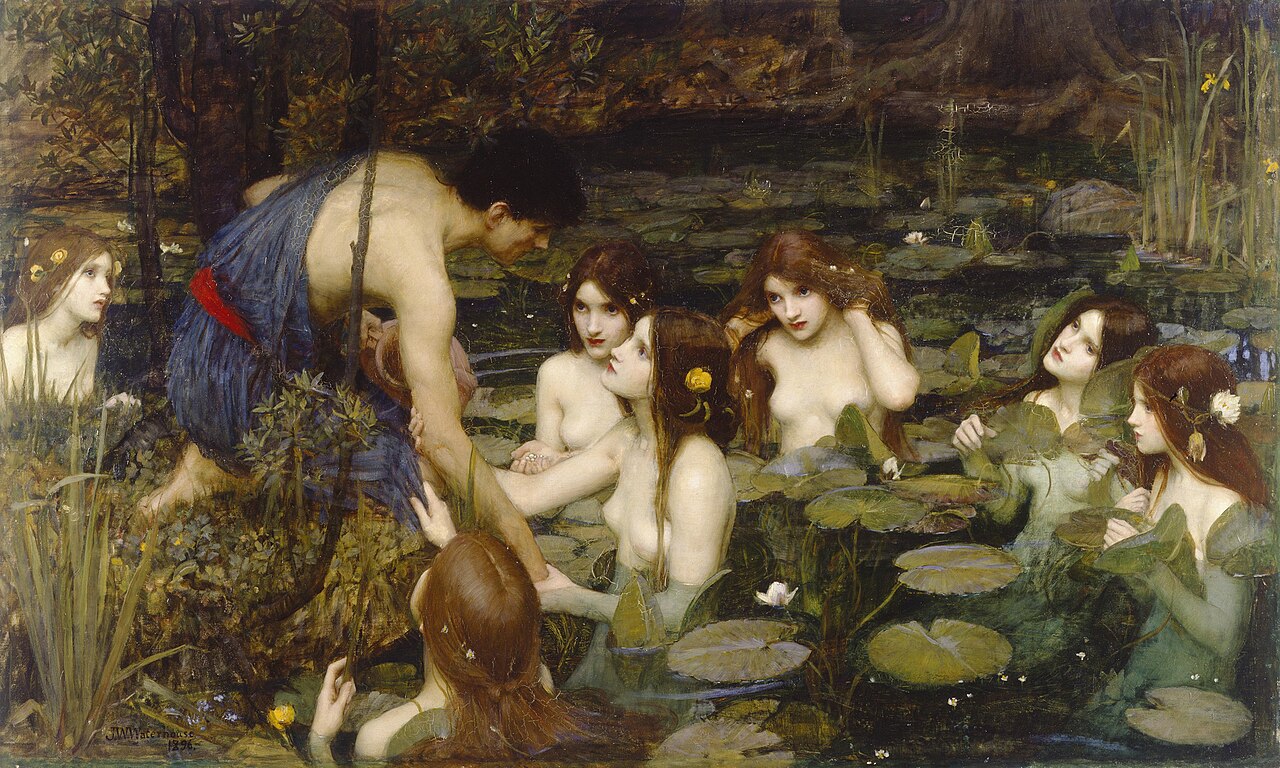
Hylas and the Nymphs
By John William Waterhouse, 1896
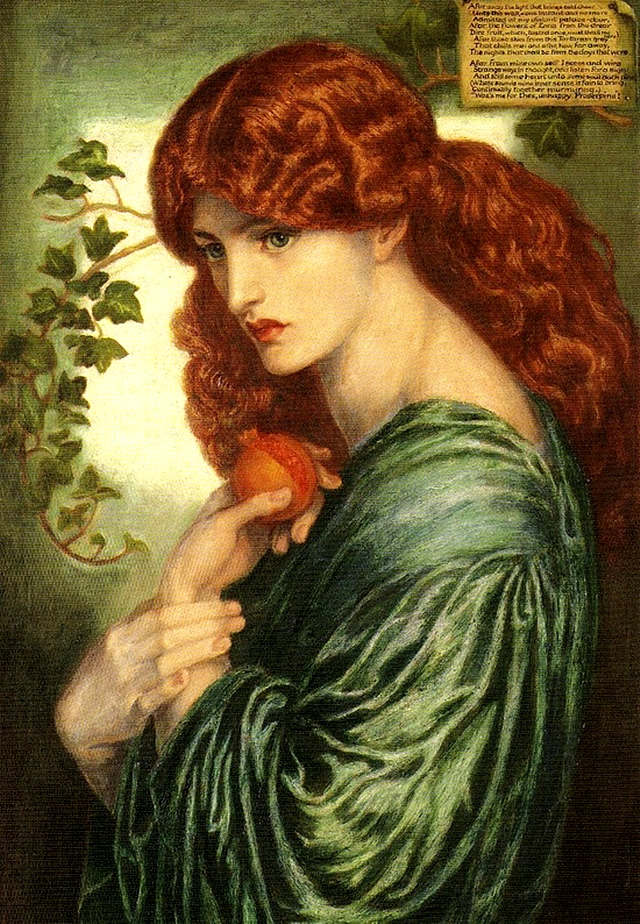
I think about this whenever I stand in front of a painting that borrows from something much older than itself. The interesting part is rarely the borrowing.
It is what happened to the old story once it passed through a particular artist, in a particular time, carrying a particular set of desires and worries. That is where the work becomes alive again.
And maybe this is useful for us too. We can get so nervous about influence, about repetition, about whether something has been done before. But of course it has. Almost everything has. The question is not whether we inherited something. The question is what happens to it in our hands.
The Pre-Raphaelites did not simply preserve the past.
They argued with it, romanticized it, reshaped it, and used it to speak to their own century. Which feels, to me, like a much more interesting way to carry anything forward.
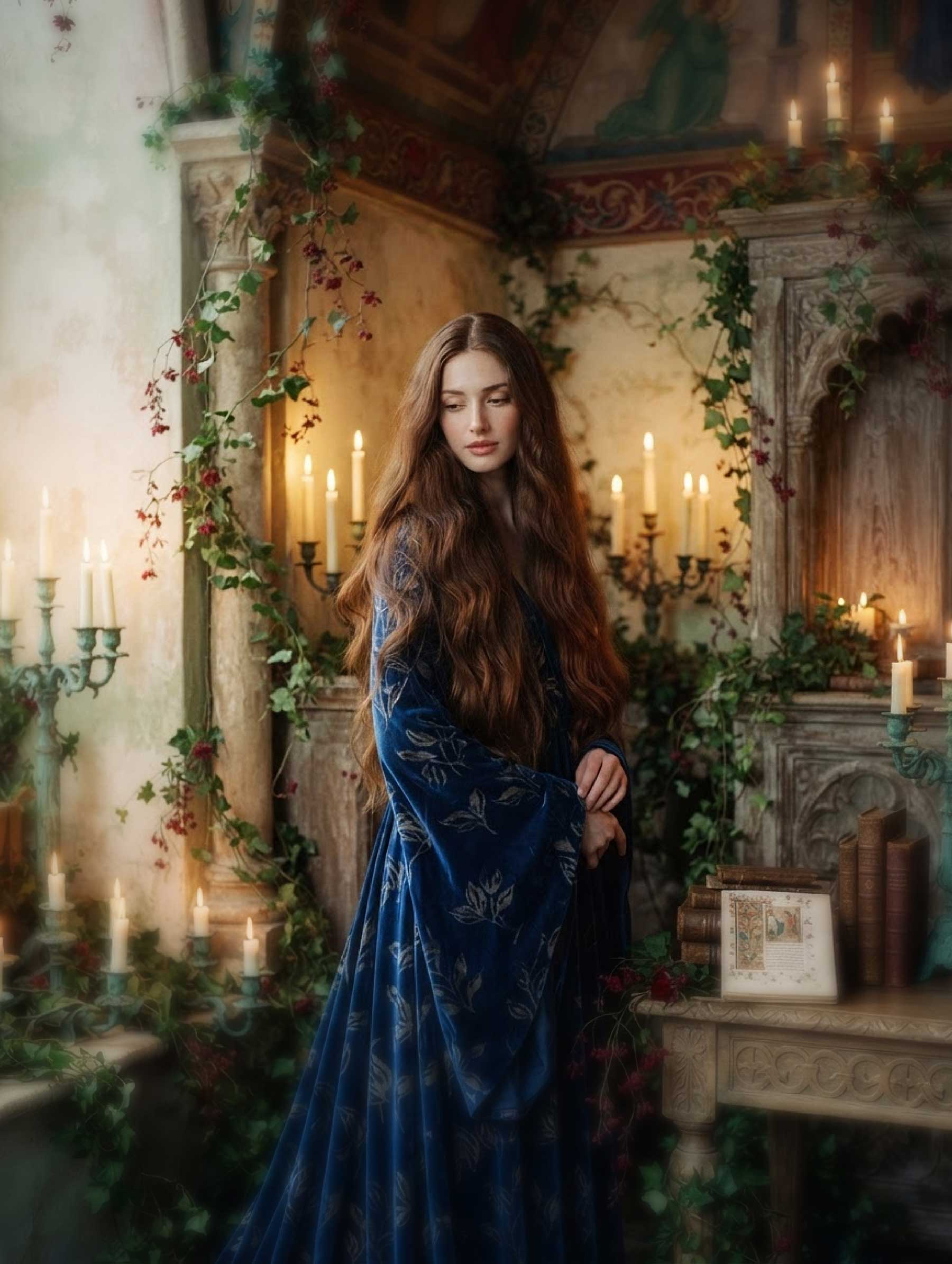
When I was a kid, I was completely taken by romantic imagery. Not romance exactly, but the atmosphere of it. Flowing dresses, candlelight, forests, old castles, illustrated Greek myths, women standing beside rivers looking as though something terrible and beautiful had just happened.
I couldn’t have explained what I loved about any of it. I just knew those images got under my skin. I wanted to live inside them.
Years later, in my twenties, I found myself drawn to Art Nouveau and the Pre-Raphaelites and felt that same pull all over again. The long hair, the gardens, the theatrical beauty, the women caught in some private moment of thought or longing. At the time, I thought I was discovering a new taste.
Looking back, I don’t think it was new at all. I think I was recognizing something I had loved long before I had the words for it. The feeling was already there. Art history simply gave it a name. That idea has stayed with me, because so much of our creative life begins before we ever think of ourselves as artists.
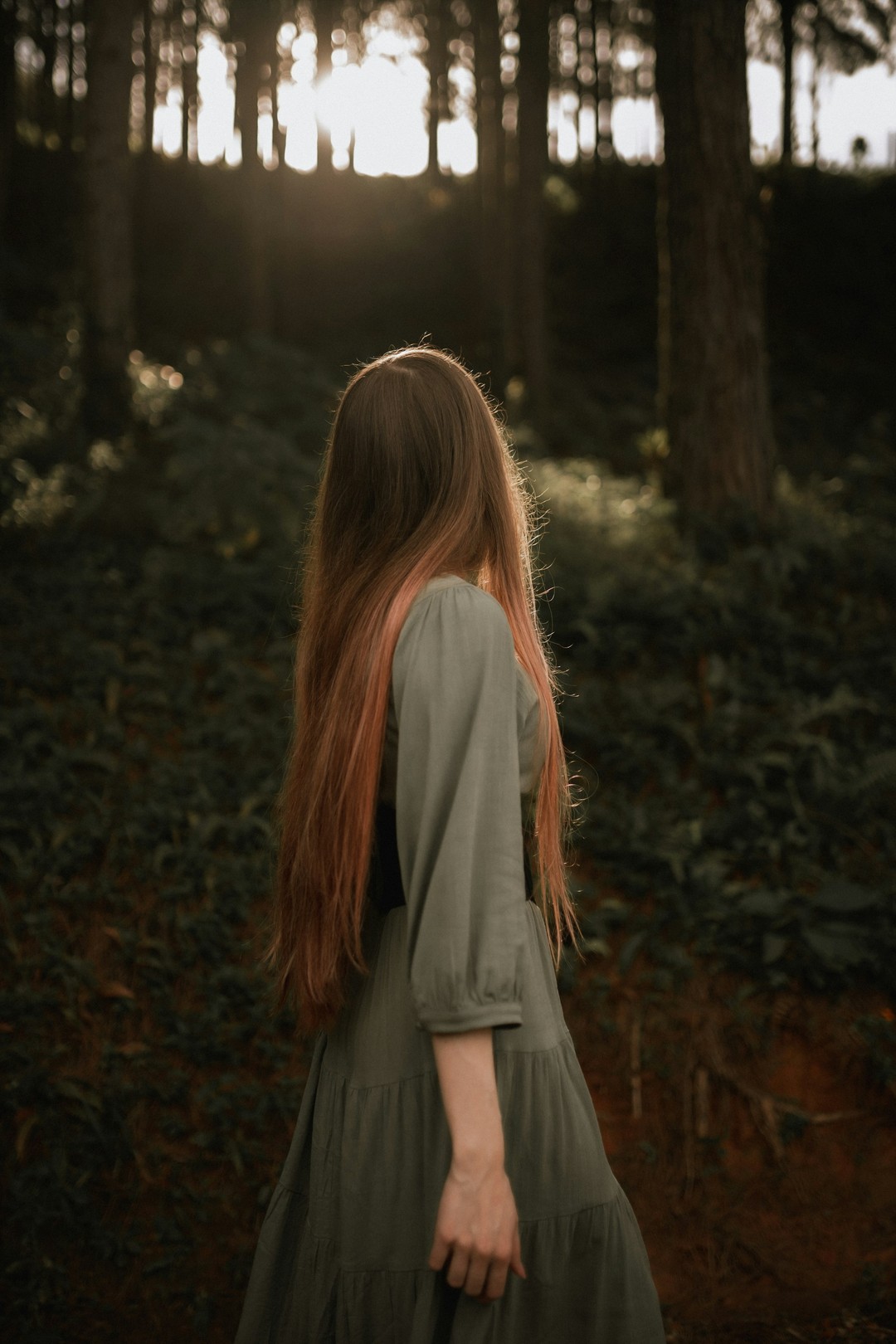
We all carry a visual history with us.
It might be a film you watched until you practically knew every scene by heart, a picture book you couldn’t stop looking at, your grandmother’s wallpaper, a strange little object on a shelf, or a song that made you feel something enormous when you were nine even though you had no idea what that feeling was.
Those things don’t simply disappear. They have a way of slipping quietly into our work years later. They show up in the colors we choose, the kinds of faces we want to paint, the subjects we keep returning to, the moods that feel instinctively right.
Sometimes I think the more interesting question isn’t, Who are my influences? It is, What moved me before I knew enough to call it an influence?
Maybe you notice that you always paint women looking away from the viewer. Maybe you keep coming back to faded pinks, mossy greens, twilight, old interiors, tangled gardens, a certain kind of solitude. Where did that begin? The answer may be obvious. Or it may surprise you.
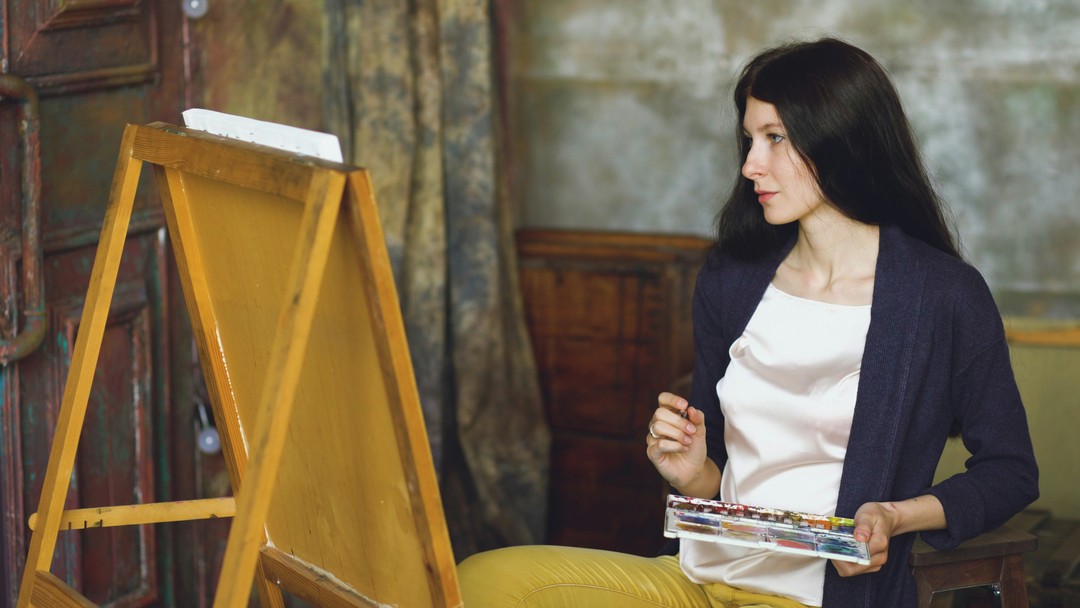
As an adult, it can be strangely moving to encounter an artist or an art movement and feel an immediate sense of recognition. That’s how I feel when I look at Waterhouse or Rossetti. It doesn’t always feel like studying something from the past. Sometimes it feels much more personal than that, almost like finding a visual language for something I already knew.
Maybe that’s why certain artworks stop us in our tracks. They aren’t always introducing us to something unfamiliar. Sometimes they are naming something that has been sitting quietly inside us for years.
Try going back to an image you loved as a child. It could be a scene from a film, an illustration from a fairy tale, an old book cover, an album sleeve, even a room you remember vividly. Instead of asking whether it was “good” or important, ask what it gave you. Did it feel mysterious? Beautiful? A little sad? Did it suggest freedom, danger, escape, tenderness, drama?
Then look at your work now and see whether any of that has survived. Chances are, it has. Not in a literal way, necessarily. The original image may be long gone, but the feeling underneath it may still be shaping what you make.
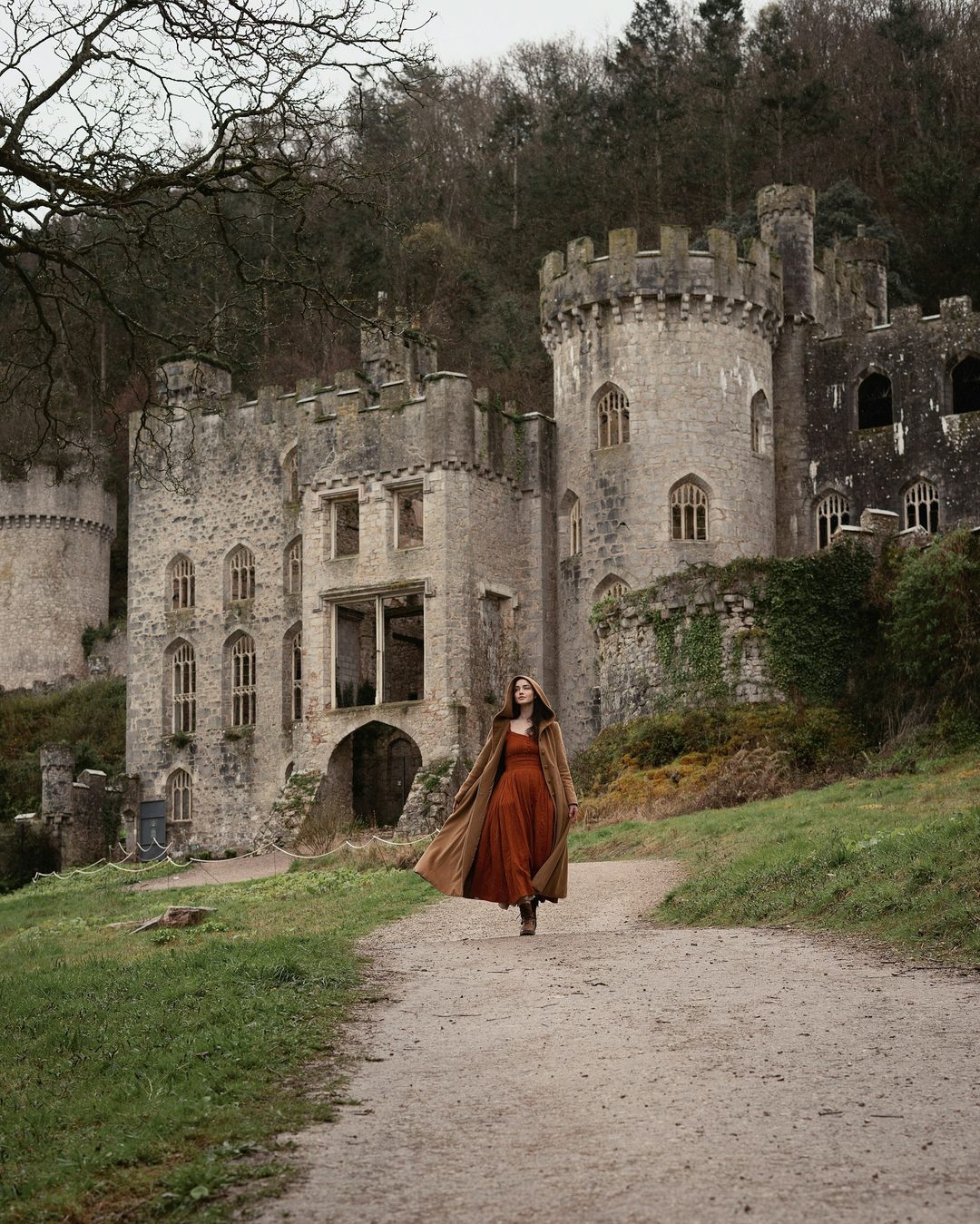
I like thinking about the possibility that some of our earliest visual memories are still quietly at work in us, not because we are stuck in the past, but because certain images make a deep impression before we have any reason to analyze them. They arrive before taste, before training, before all the rules we later pick up about what art should look like. And maybe that is why they stay so potent.
This isn’t about recreating the things you loved as a child. It’s about paying attention to the thread that has lasted.
An image can change completely and still carry the same emotional charge. A childhood fairy tale might become a painting about a woman in a dark wood. An old film might reappear years later as a color palette. A place you once knew might become a feeling you keep trying to paint.
We don’t always recognize these things while they’re happening. Sometimes we only see the connection in hindsight.
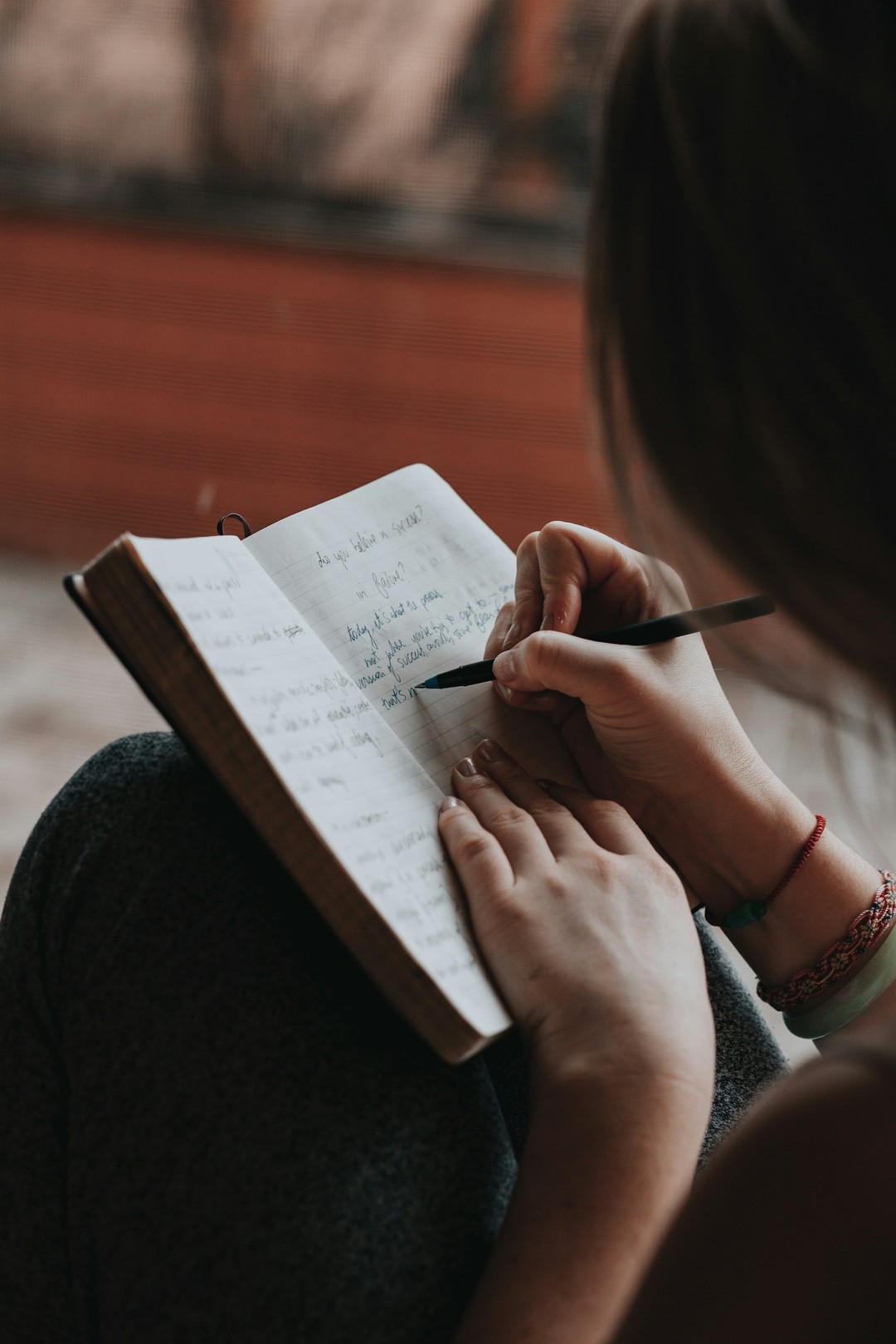
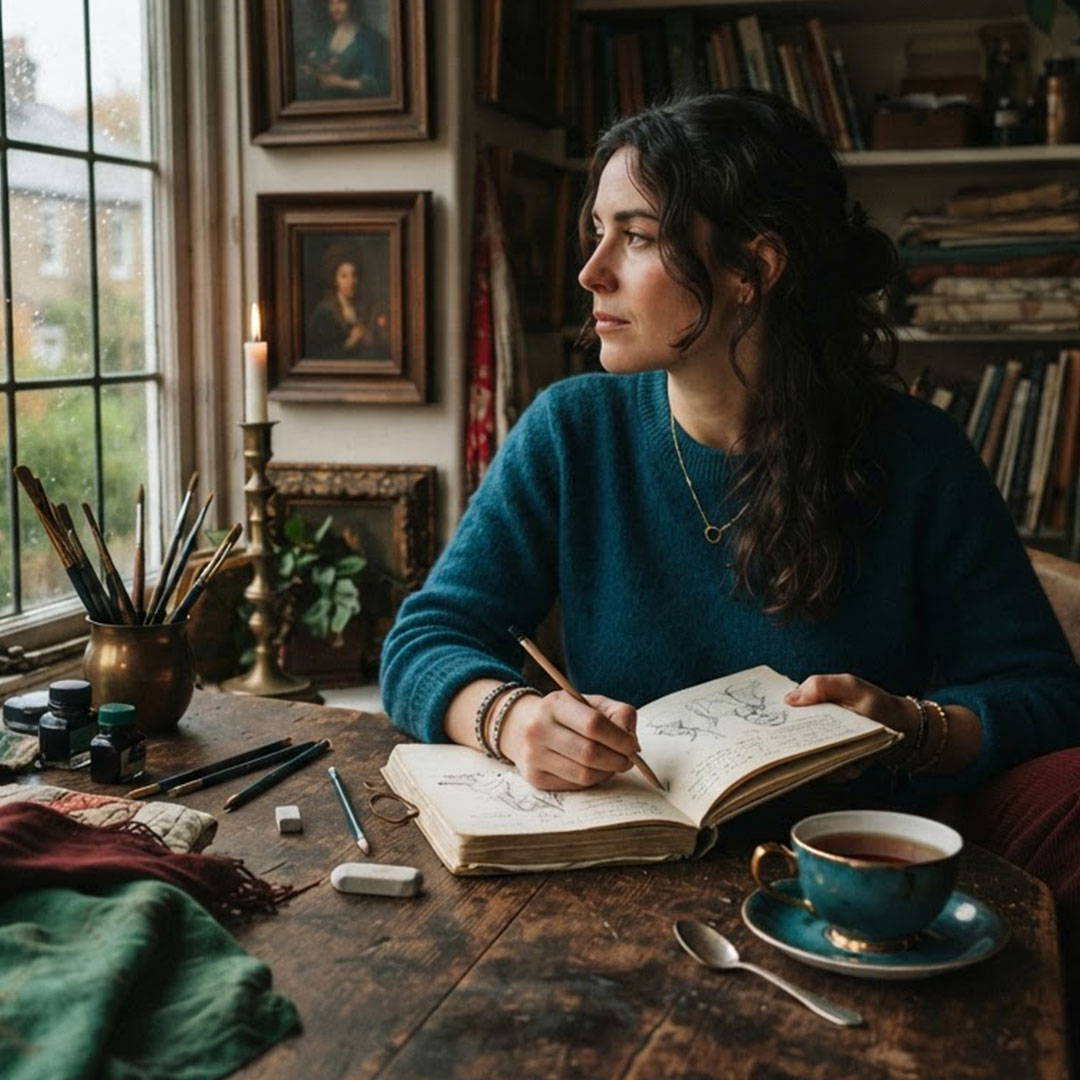
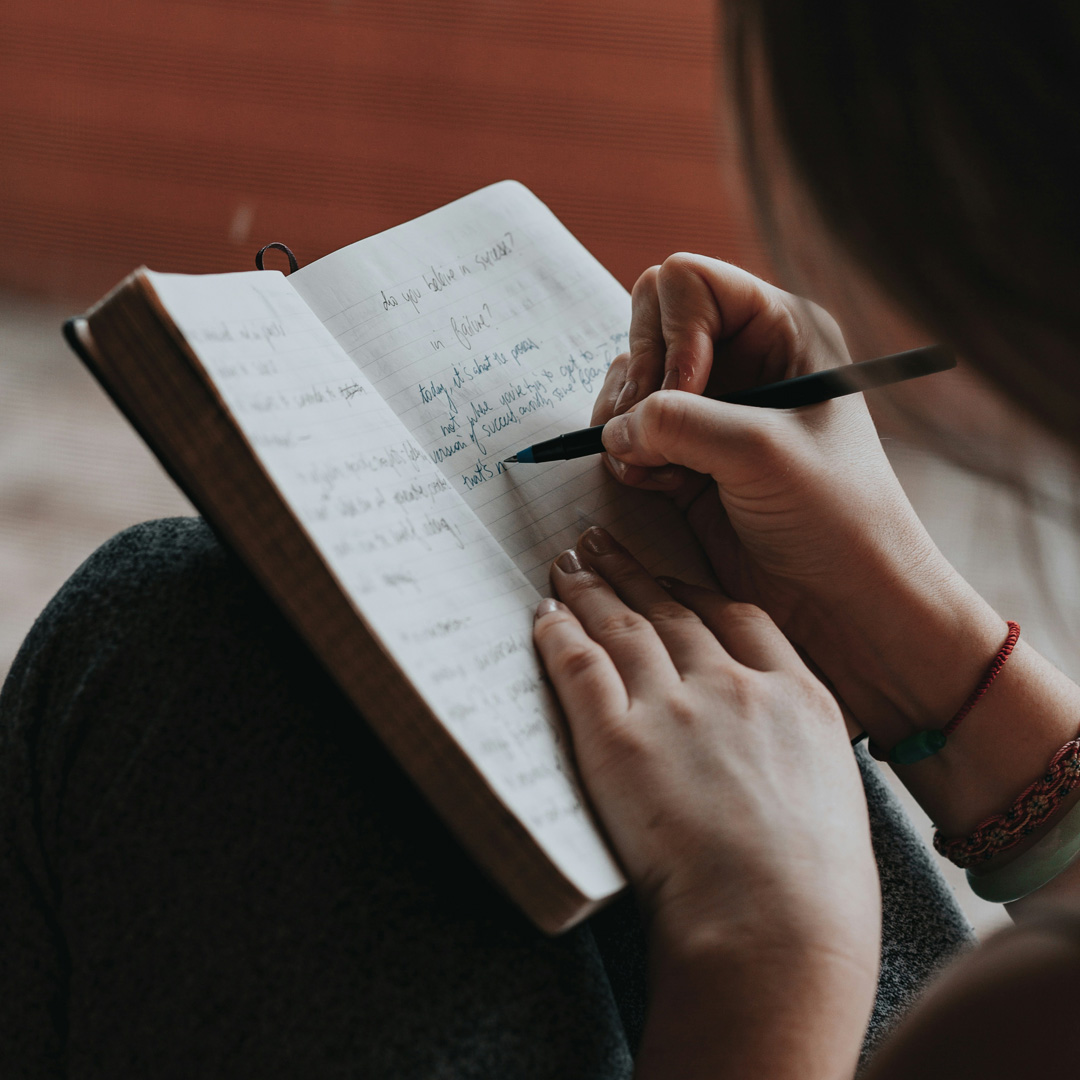
This week, set aside a journal page for what I’m calling an inheritance inventory. Write down a handful of things you return to again and again in your work: certain colors, moods, symbols, subjects, textures, places, figures.
Then see if you can trace them backward: where did you first encounter that feeling or image?
Was it in a childhood bedroom, a story, a film, a museum, a relative’s house, a landscape you once knew well?
Some connections will be clear and others won’t. I wouldn’t force them. Part of the pleasure here is simply noticing what rises to the surface.
We spend so much time worrying about originality, as though we are supposed to arrive at our work untouched by everything that came before us. But of course we don’t. We are shaped by what we notice, what we love, what unsettles us, what we return to without quite knowing why.
The creative part is what happens next. We take those old images and feelings and let them pass through everything we have lived since. They change as we change. They become less about imitation and more about interpretation, memory, instinct.
Maybe originality isn’t about inventing something from nothing. Maybe it begins with paying closer attention to what has been quietly following you all along.
What did you love before you had the language for it? And where is it showing up in your work now?
According to the Oxford English Dictionary, an echo is a sound heard after the original sound has stopped. It can also mean a repetition or continuation of an idea or feeling.
What interests me is that an echo never comes back exactly the same. Distance changes it. Space changes it. Creativity can work that way too.
One piece often leads quietly into the next. A color combination suggests another. A failed painting leaves behind one useful shape. A drawing opens a question you didn’t know you were asking.
We often think progress means moving on, but sometimes the better move is to stay with an idea a little longer. Paint the same subject again. Repeat the palette. Make another version without trying to improve the first. See what changes.
An echo is not a copy. It is a response.
Let's tap into our creative intuition and do some self-reflective work inspired by our theme. Below you will see our month's Oracle/Tarot card spread. But fear not, if you are not one drawn to using oracle or tarot cards, no worries, just use the accompanying reflective questions as writing prompts for your journals!
Here's a three-card oracle spread that fits seamlessly with our monthly theme. Take a deep breath, grab a cup of tea and enjoy.
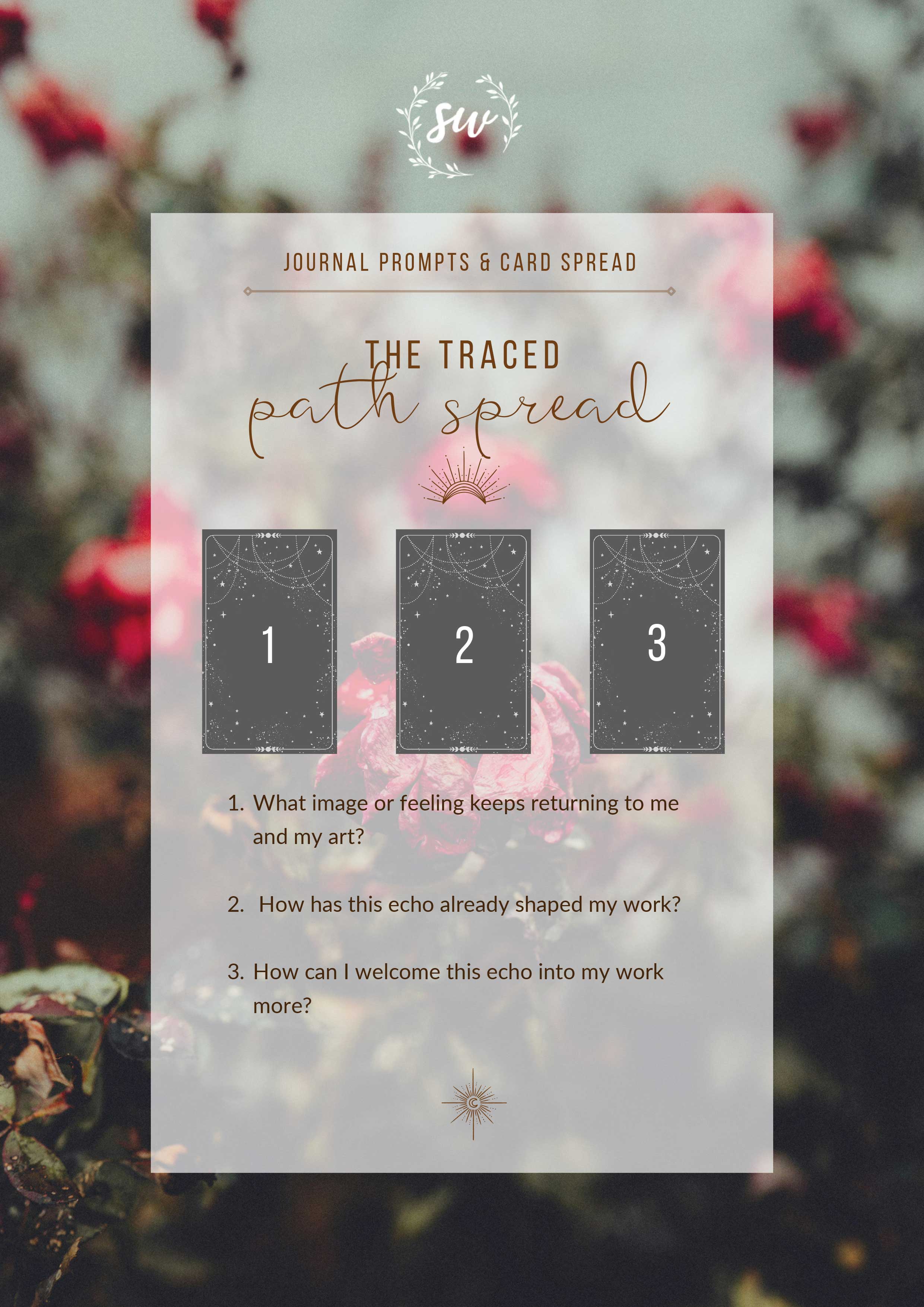
A three-card spread for the creative soul.
Card 1: The First Echo
What image or feeling keeps returning to me and my art?
This card points to something inherited, an early love, a family habit, a mood. It isn't asking you to explain it yet. Just to notice it's there.
Card 2: What It Became
How has this echo already shaped my work?
This card reveals where that early pull is already living in your practice, in a palette, a subject, a recurring gesture. It's less about discovery than recognition. You've likely been standing near this truth for a while.
Card 3: The Next Return
How can I welcome this echo into my work more?
This card offers a way forward, not to abandon instinct, but to work with it deliberately. It asks what it would look like to invite the echo in rather than stumble into it.
Find a quiet moment before drawing your cards. Let each one arrive slowly. Notice your first response before you start interpreting it, a tightening, a warmth, a memory surfacing uninvited. Write down whatever comes, even if it feels incomplete. This spread works well with both oracle and tarot decks, and it's worth returning to more than once this month, since echoes rarely finish saying what they came to say the first time.

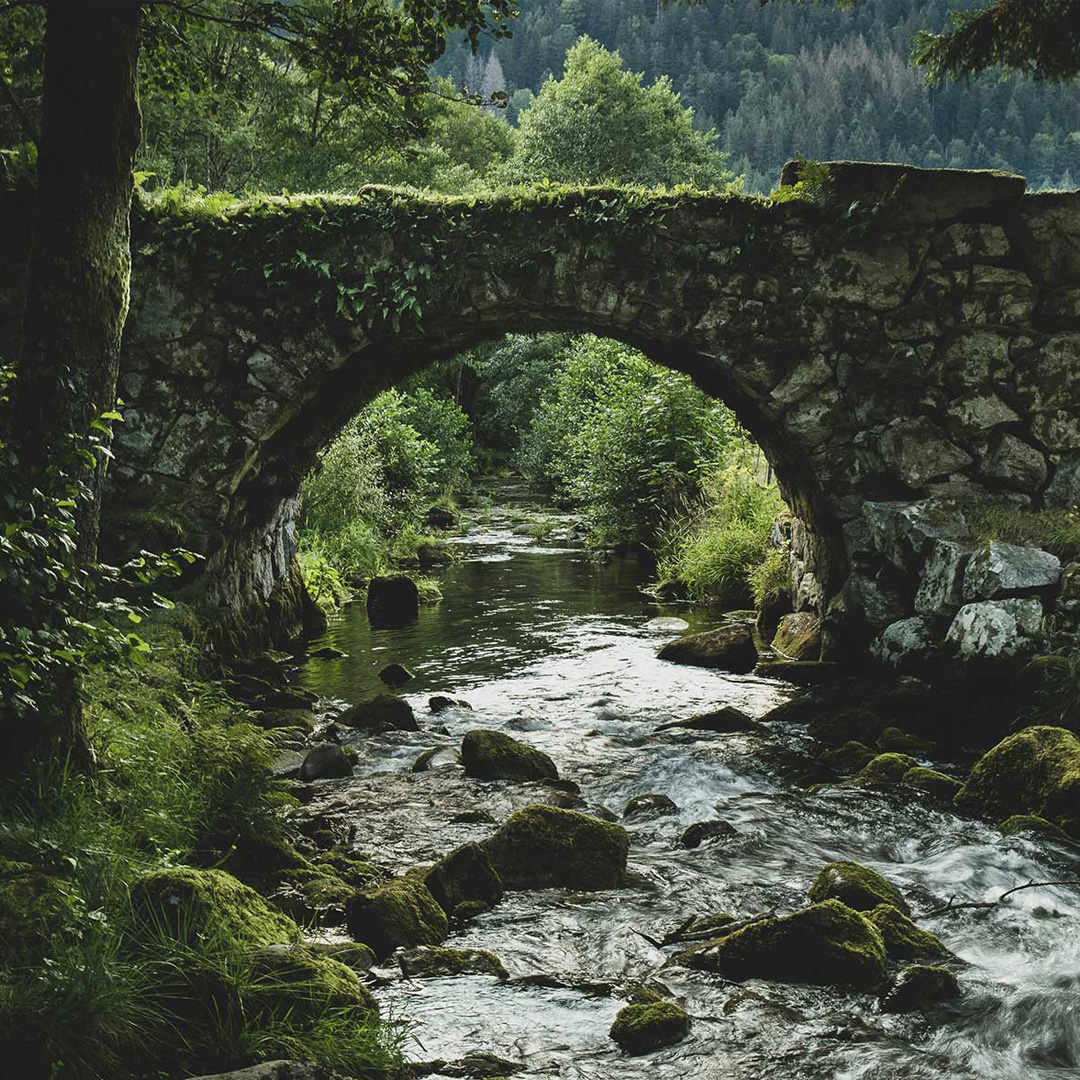
I chose this month's meditation because it feels like it belongs to the very ground I've been walking on. Something about the mountains holds memory differently than other landscapes do. They don't rush to tell you what they know. You have to sit with them a while first.
Here's a little more information from Rachel…
This guided practice is an in depth experience, calling on our imagination to go on a quest and journey inside a beautiful green mountain in the middle of a lush green field. This practice is intended to call on our strength, heal lost or broken parts of ourselves, and re-imagine and claim our own power. This practice was inspired by a beautiful awakening and spiritual blessing I received whilst camping by a beautiful mountain in Wales.
Please note there is no ending bell or guided ending to this meditation.
xo,
Rachel
Each month we will have a positive affirmation. I recommend you print out this affirmation and put it in your sketchbook or somewhere in your studio. Recite the affirmation out loud each time you show up to create. Saying words aloud is powerful and can begin to re-write some of our own limiting beliefs or calm our fears. Try it now…
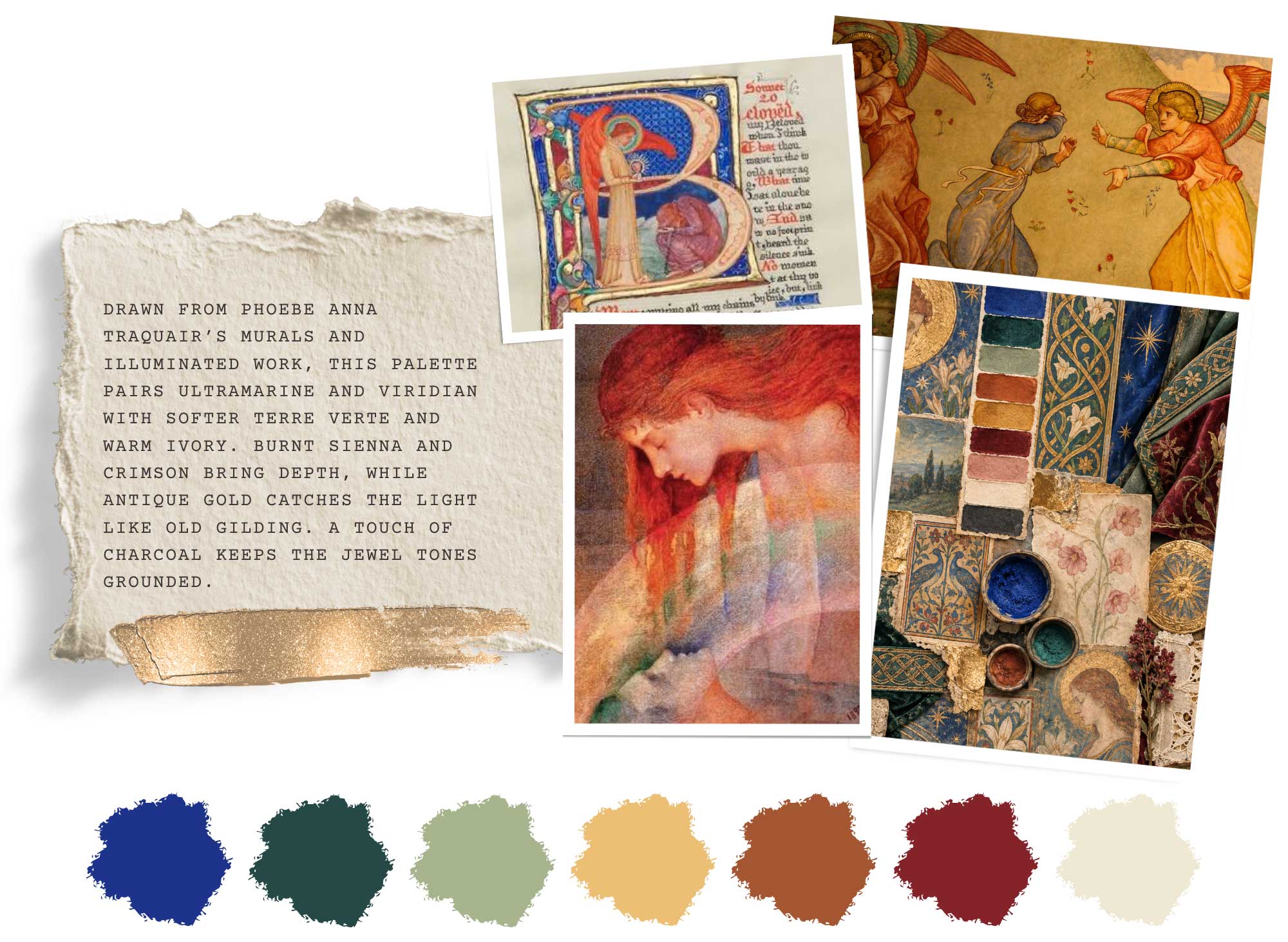
This month’s palette comes directly from the world of Phoebe Anna Traquair: ultramarine blue, viridian green, terre verte, burnt sienna, crimson, antique gold, warm ivory, and touches of charcoal.
The colors feel rich without being heavy. Ultramarine brings that deep, devotional blue you see again and again in her murals, while viridian and softer sage greens give the palette an earthy, medieval quality. Burnt sienna and golden ochre add warmth, almost like old plaster or worn pigment, and crimson brings in just enough drama.
Antique gold is what gives the whole palette its glow. It catches the light in the same way gilding does in an illuminated manuscript, while warm ivory keeps everything from becoming too dense. A little charcoal helps anchor the softer colors and gives the brighter tones somewhere to land.
If you’re using this palette in your own work, I’d let the blue and green do most of the talking, then bring in sienna, crimson, or gold more sparingly. The beauty of it comes from contrast: cool jewel tones beside warm, weathered color.
It’s a palette that feels old, but not dusty. Luminous, layered, and still very much alive.
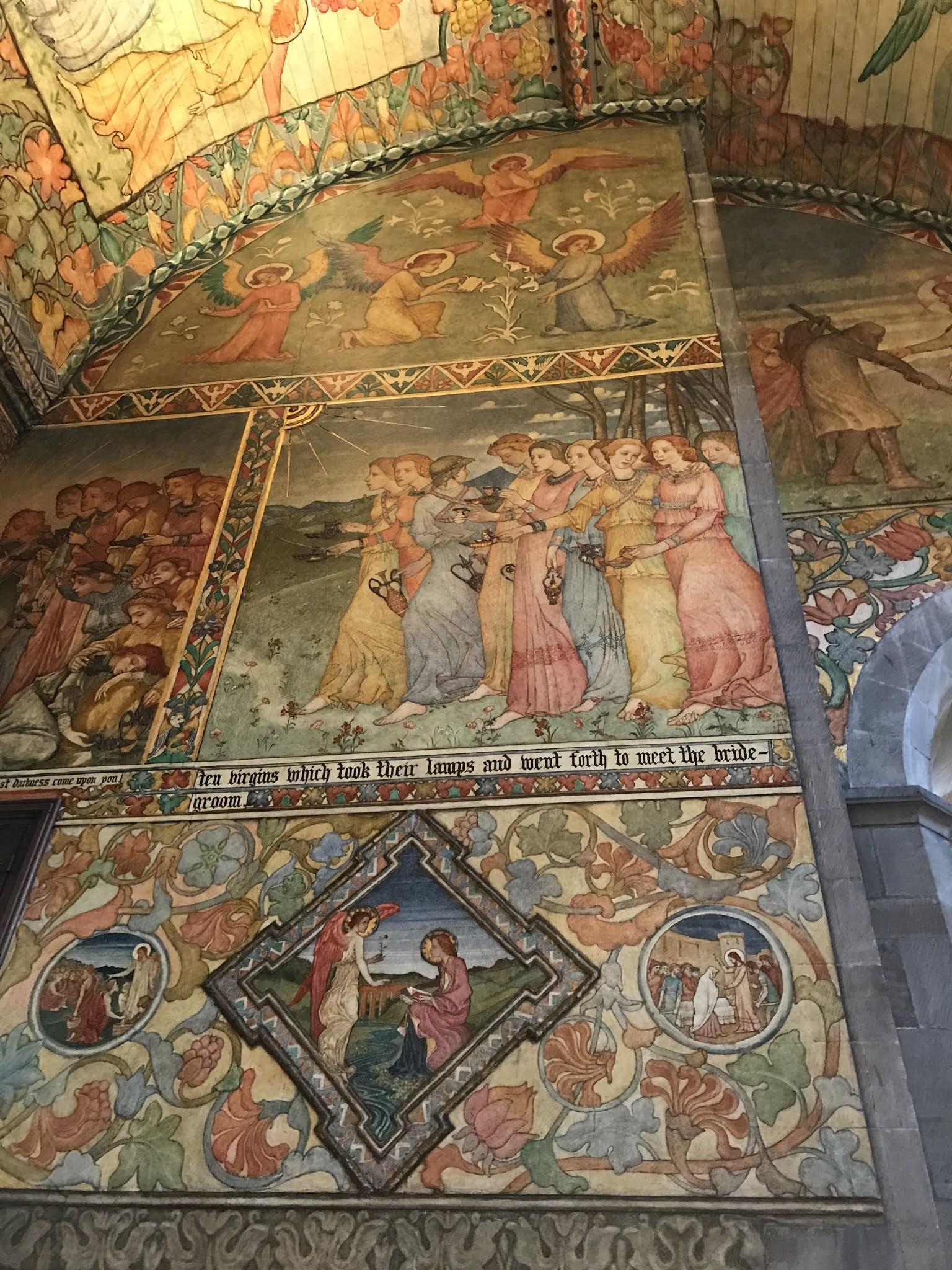
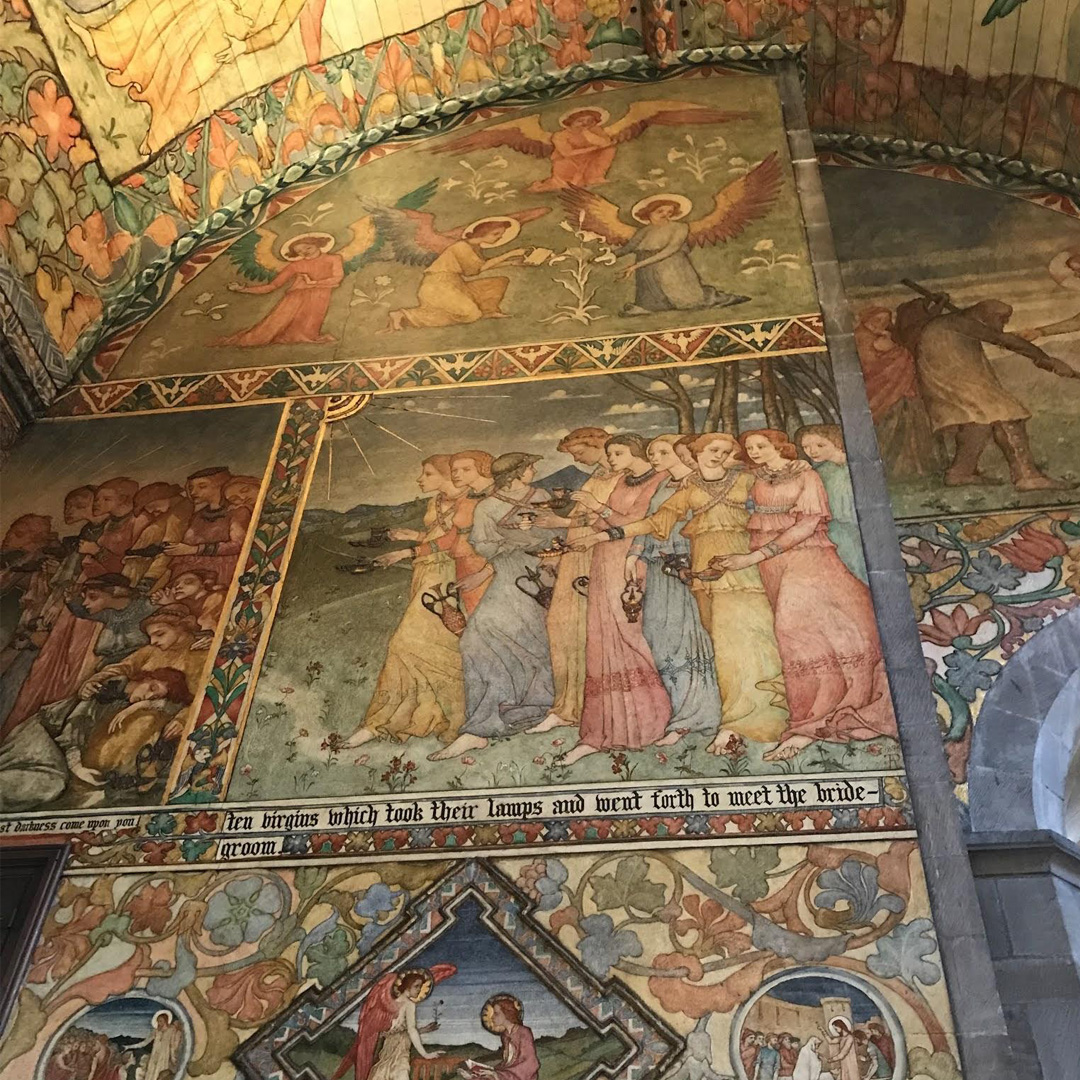
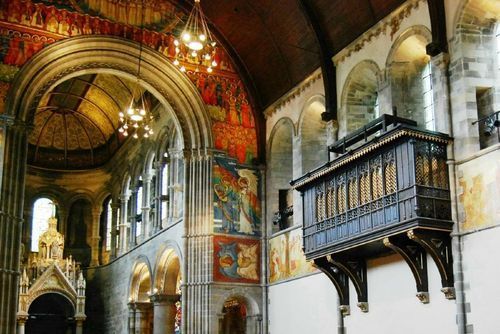
From the outside, the building gives very little away. The former Catholic Apostolic Church on Mansfield Place in Edinburgh is handsome enough, built in warm red brick with round Romanesque arches, but nothing about the exterior really prepares you for what happens when you walk inside.
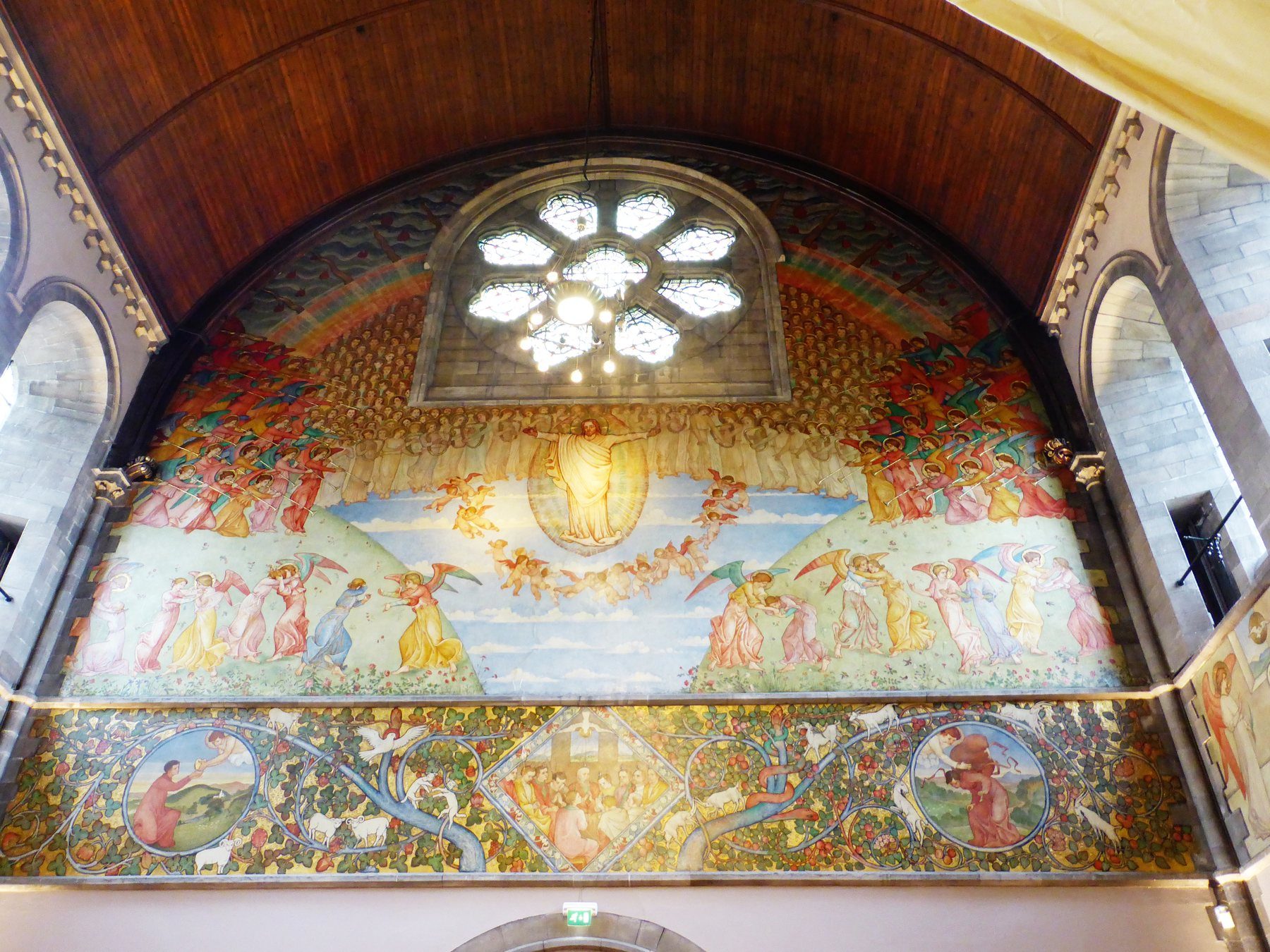
The walls rise around you covered in angels, saints, stars, flowering ornament and great processions of figures. Deep blues meet burning reds. Wings stretch across the architecture. Everywhere there is pattern and movement, until the church itself begins to feel less like a building and more like a world.
Phoebe Anna Traquair spent eight years creating it, from 1893 to 1901. Today the building is known as the Mansfield Traquair Centre, and the murals have earned it the nickname “Edinburgh’s Sistine Chapel.”
The comparison is grand, of course. But standing beneath those walls, you understand why people reach for it. What fascinates me more is that the person responsible for all of this was a woman working at the end of the nineteenth century, moving between painting, embroidery, illuminated manuscripts, enamel, jewellery and design with very little interest in deciding which one of those things she was supposed to be.
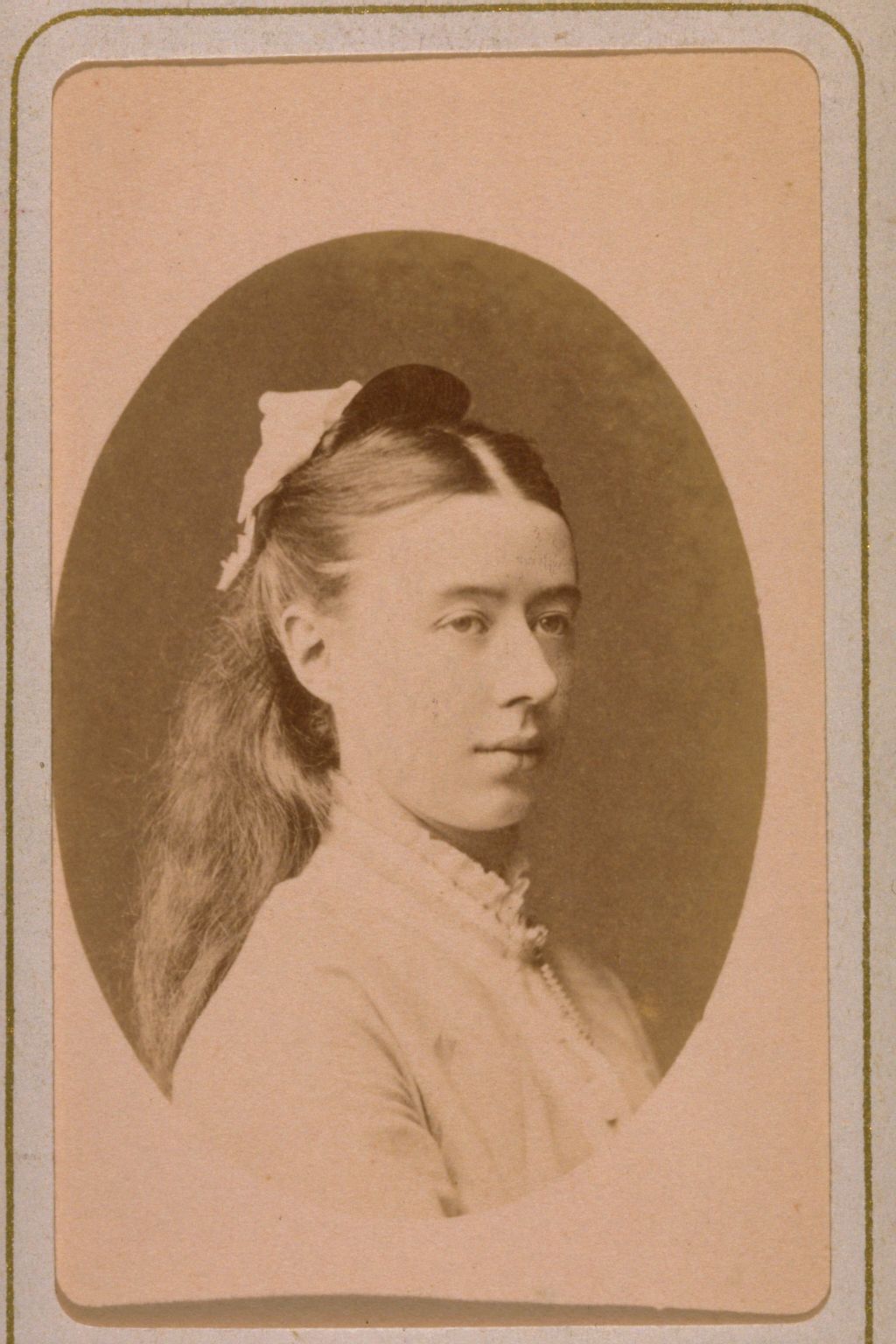
She was born Phoebe Anna Moss in 1852 near Dublin and received formal art training there before marrying the Scottish naturalist Ramsay Heatley Traquair. The couple moved to Edinburgh in the 1870s when Ramsay became Keeper of Natural History at the Museum of Science and Art.
Long before the enormous church commissions, though, another influence had already lodged itself firmly in her imagination. As a child, Traquair had regular access to the Book of Kells. Imagine seeing those pages when you are young enough not to have decided what art is supposed to be yet: tiny creatures tangled into letters, bodies folded into pattern, color pressed into every possible corner. The boundary between picture, decoration, language and devotion almost disappears.
Traquair never really lost that way of seeing. Her later work is filled with the same belief that ornament can carry meaning, that pattern can tell a story, and that beauty does not have to sit politely around the edges of something more important.
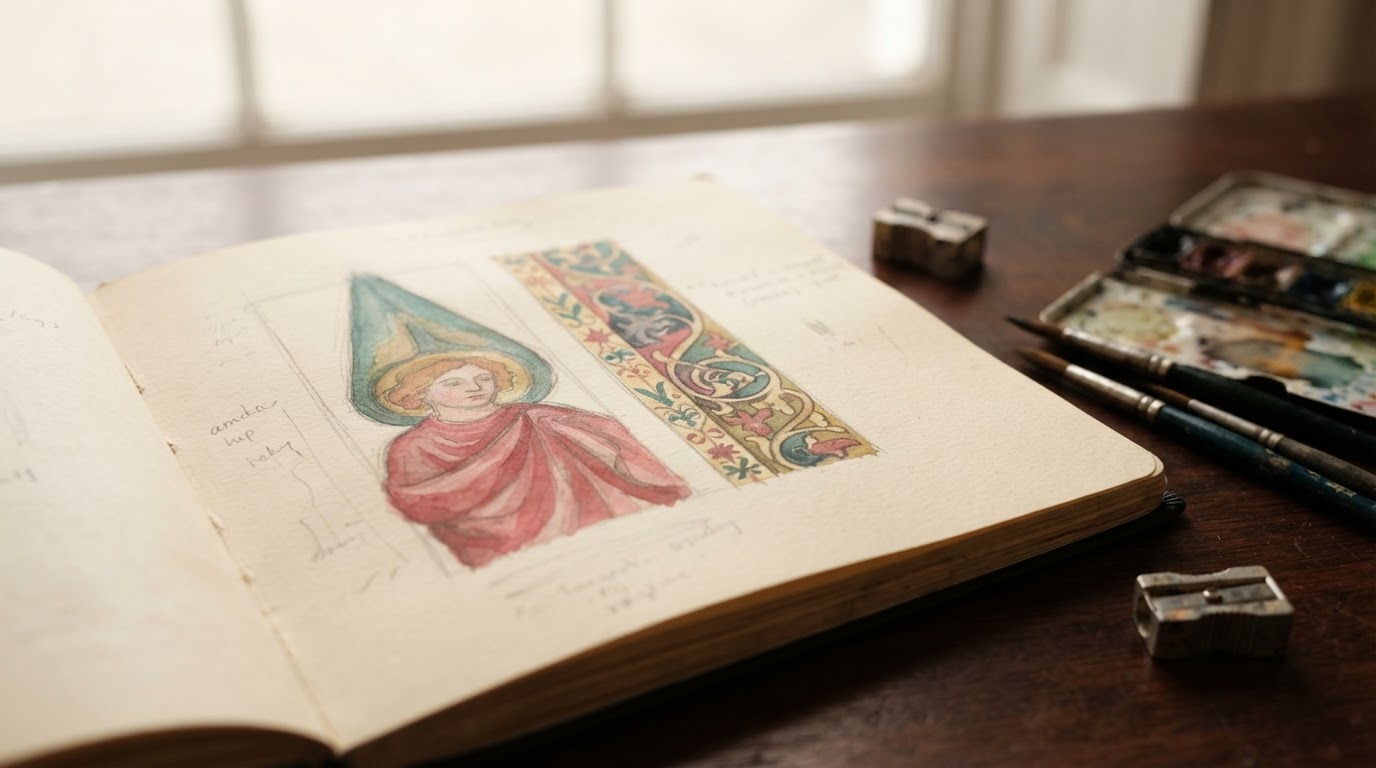
Years later, when she began illuminating manuscripts of her own, she studied medieval originals in Edinburgh and London and borrowed thirteenth- and fourteenth-century manuscripts from John Ruskin.
The past, for Traquair, seems to have been less a place to visit than a place to work from.
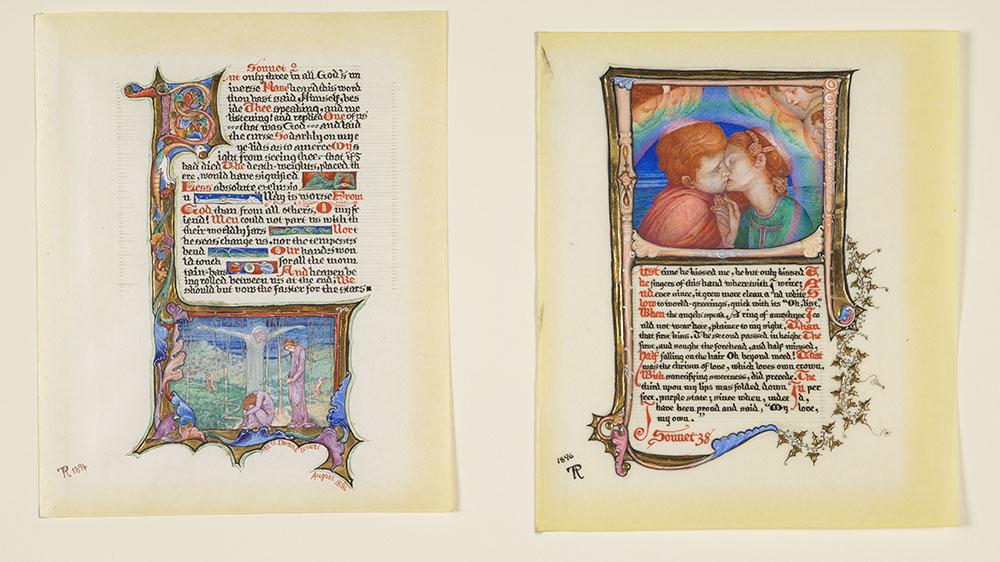
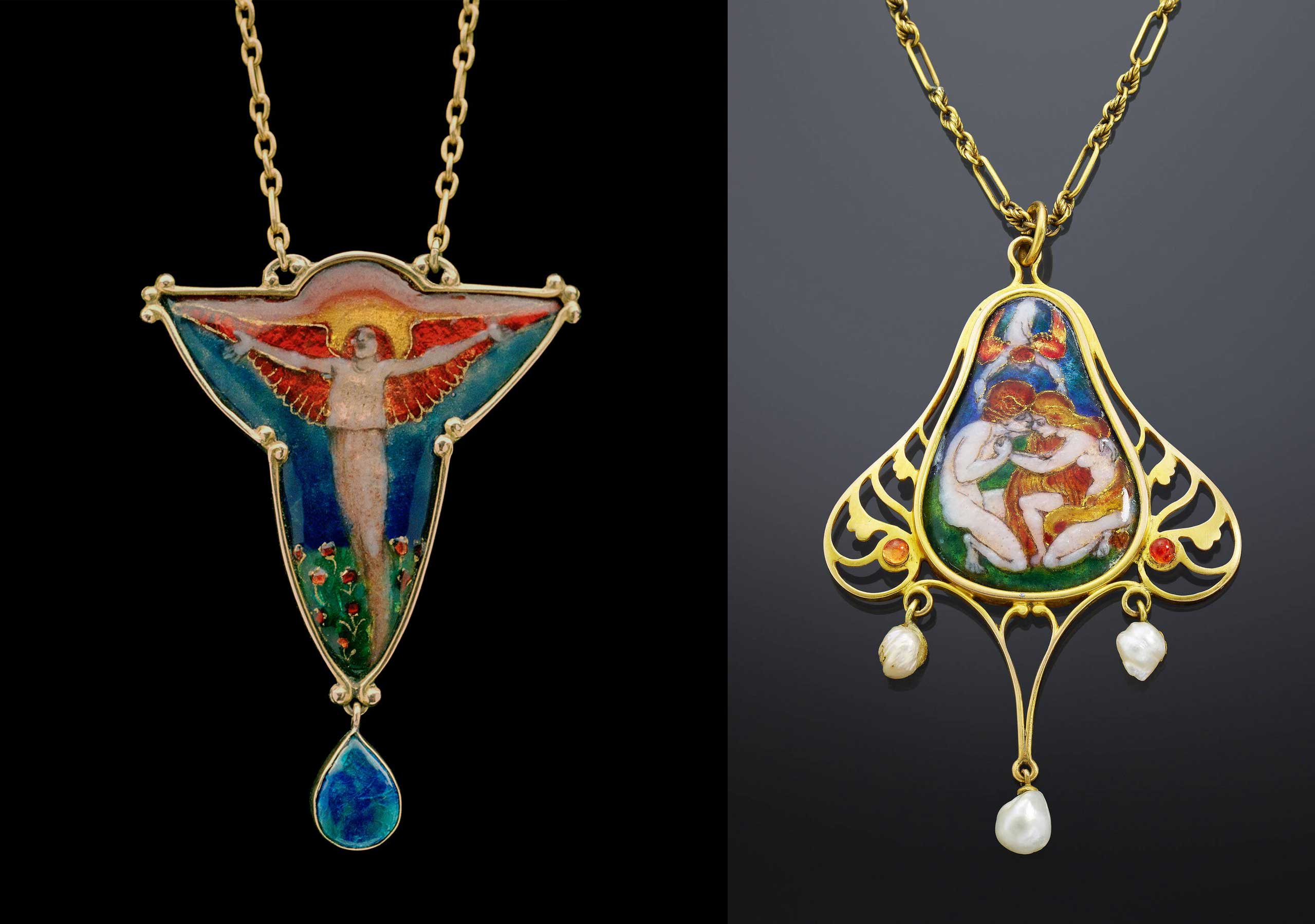
Traquair painted walls, worked on vellum, embroidered elaborate narrative panels, made jewellery and enamel objects, decorated furniture and designed book covers. The National Galleries of Scotland now describes her as one of the most accomplished artists of the Arts and Crafts movement, but even that neat description can’t quite contain the range of what she made.
Her first major mural commission came in the 1880s, when she decorated the mortuary chapel of Edinburgh’s Royal Hospital for Sick Children. She went on to paint the Song School at St Mary’s Episcopal Cathedral and, eventually, the vast scheme at Mansfield Place.
I imagine there must have been something wonderfully inconvenient about an artist like Traquair.
Victorian art culture was very good at separating things. Painting belonged over here. Embroidery belonged somewhere else. Fine art carried one kind of status, decorative work another.
Traquair simply kept crossing the lines. She could move from an enormous mural to something small enough to wear around the neck and still treat both with the same seriousness. That feels surprisingly modern.
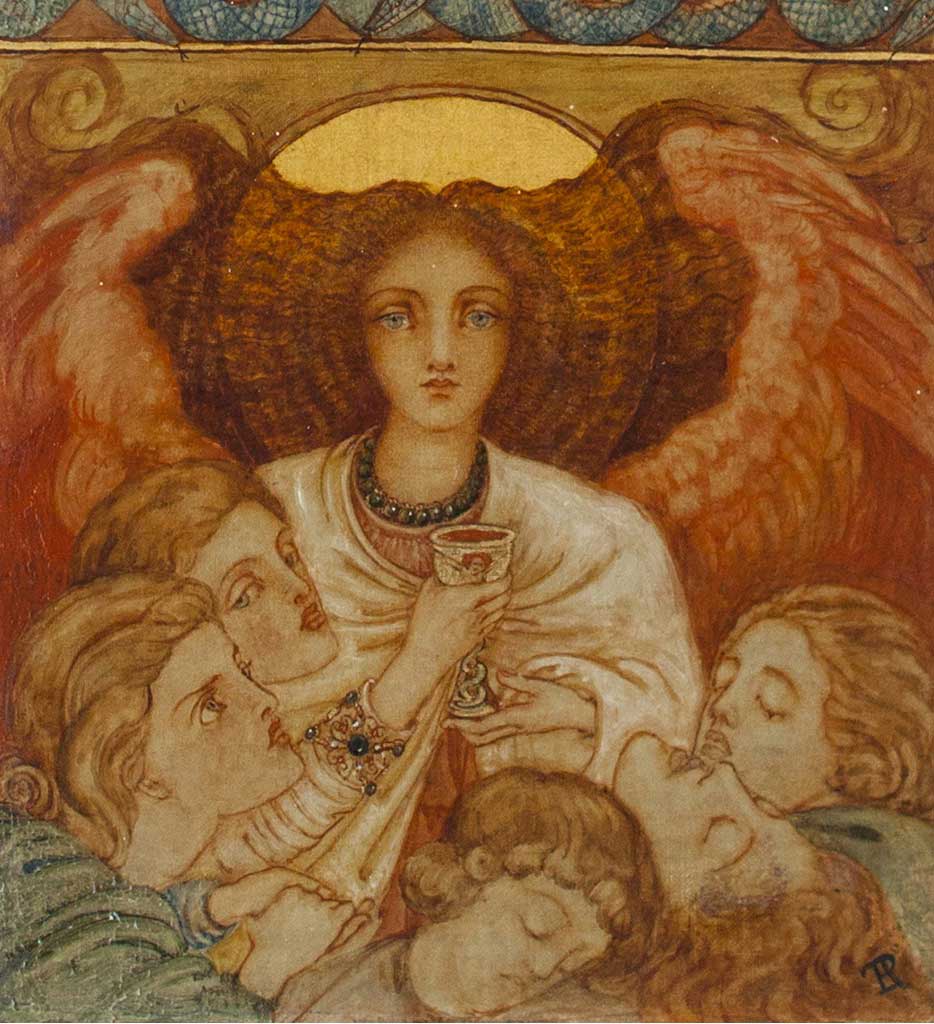
Traquair did not create her strange visual world from nowhere. The Celtic manuscripts of her childhood remained important, but so did medieval art, the early Renaissance, William Blake and the Pre-Raphaelites. Her work sits inside the larger Arts and Crafts movement and the Celtic Revival that was unfolding in Scotland around her.
John Ruskin mattered too. She corresponded with him and sought his advice about illumination, and he lent her medieval manuscripts from his own collection to study.
But she never became a tidy follower of any one influence. That’s what makes the work feel alive to me. You can see the Pre-Raphaelite love of saturated color and beautiful figures. You can see medieval illumination in the crowded decoration. There are Renaissance echoes, Celtic forms, religious symbolism and, here and there, something almost dreamlike that belongs entirely to Traquair.
She absorbed freely, then she rearranged everything. One of her own comments about art gives us a glimpse of how she thought about this. Writing to her nephew, she described the world as a “great treasure house” filled with material for the artist to use. The rest of the letter moves through buds, leaves, hills and birdsong, as if looking itself were a kind of creative education.
I think that idea sits at the center of her work: nothing is off limits if you are truly paying attention.
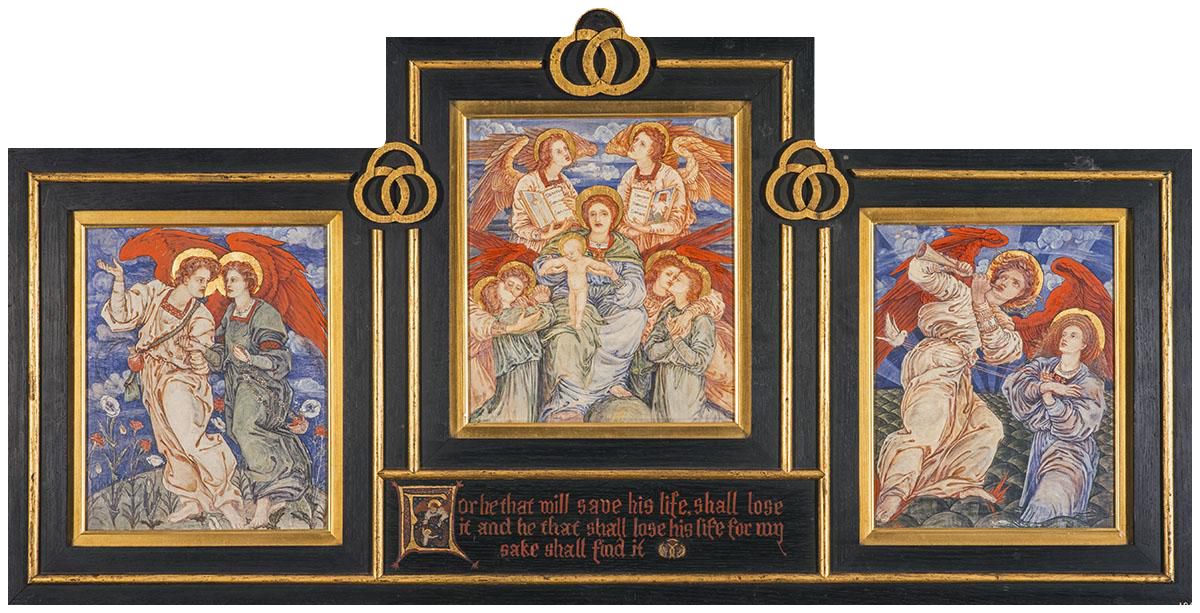
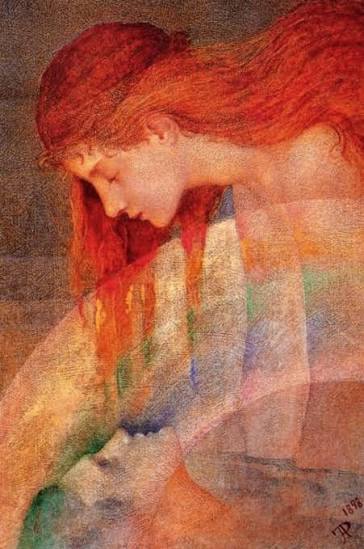
For all the scale and ambition of her work, Traquair’s place in the official art world was not straightforward. She was proposed for associate membership of the Royal Scottish Academy in 1900 and again in 1901, and was not elected. The Academy itself now acknowledges that her gender, along with the fact that much of her work sat outside the narrow category of “fine art,” may have counted against her.
Only much later did recognition come. In 1919 she was elected an Associate of the RSA, and in 1920 she became an Honorary Academician. By then she was in her late sixties.
I find that quietly maddening. Not because Traquair spent her life ignored. She didn’t. Her murals brought her recognition, her embroidered Progress of a Soul was admired publicly when exhibited in London, and her work reached an international audience.
But the categories mattered. An artist who painted on walls, stitched narratives into cloth and made tiny enamel jewels did not fit comfortably into a system still invested in deciding which materials counted as serious.
Perhaps that is one reason her name is still unfamiliar to so many people. She was too large for the drawer she was supposed to fit inside.
I don’t want to turn Traquair into a simple story of the overlooked woman finally getting her due. Her career was richer than that.
She had access to education. She moved within intellectual and artistic circles in Edinburgh. She had patrons and commissions. Her work was seen.
And still, there was a cost to moving between worlds. The very breadth that makes her so interesting now may also have made her harder for later art history to classify. Embroidery could be pushed toward the decorative arts. Jewellery could become “craft.” Murals stayed attached to buildings rather than travelling neatly into museums.
Even Mansfield Place itself nearly disappeared. After the Catholic Apostolic congregation faded away in the twentieth century, the building changed hands and eventually fell into serious decline. Damp and neglect damaged Traquair’s murals before a major campaign rescued and restored the building and paintings around the turn of the twenty-first century.
There’s an uncomfortable lesson in that. Art history doesn’t only lose things because nobody valued them in the first place. Sometimes it loses them because they were made on walls, stitched into fabric, built into rooms, or created in forms that weren’t considered important enough to protect.
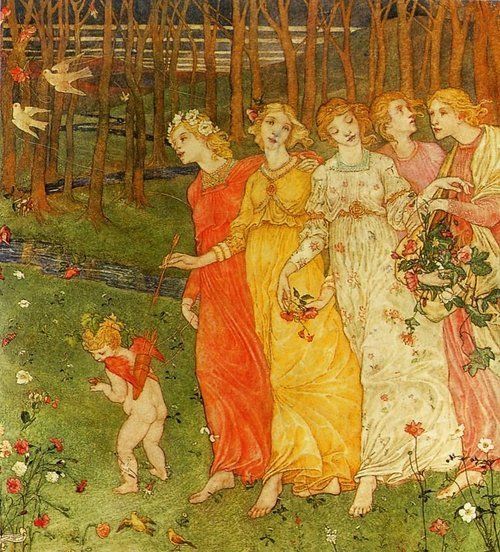
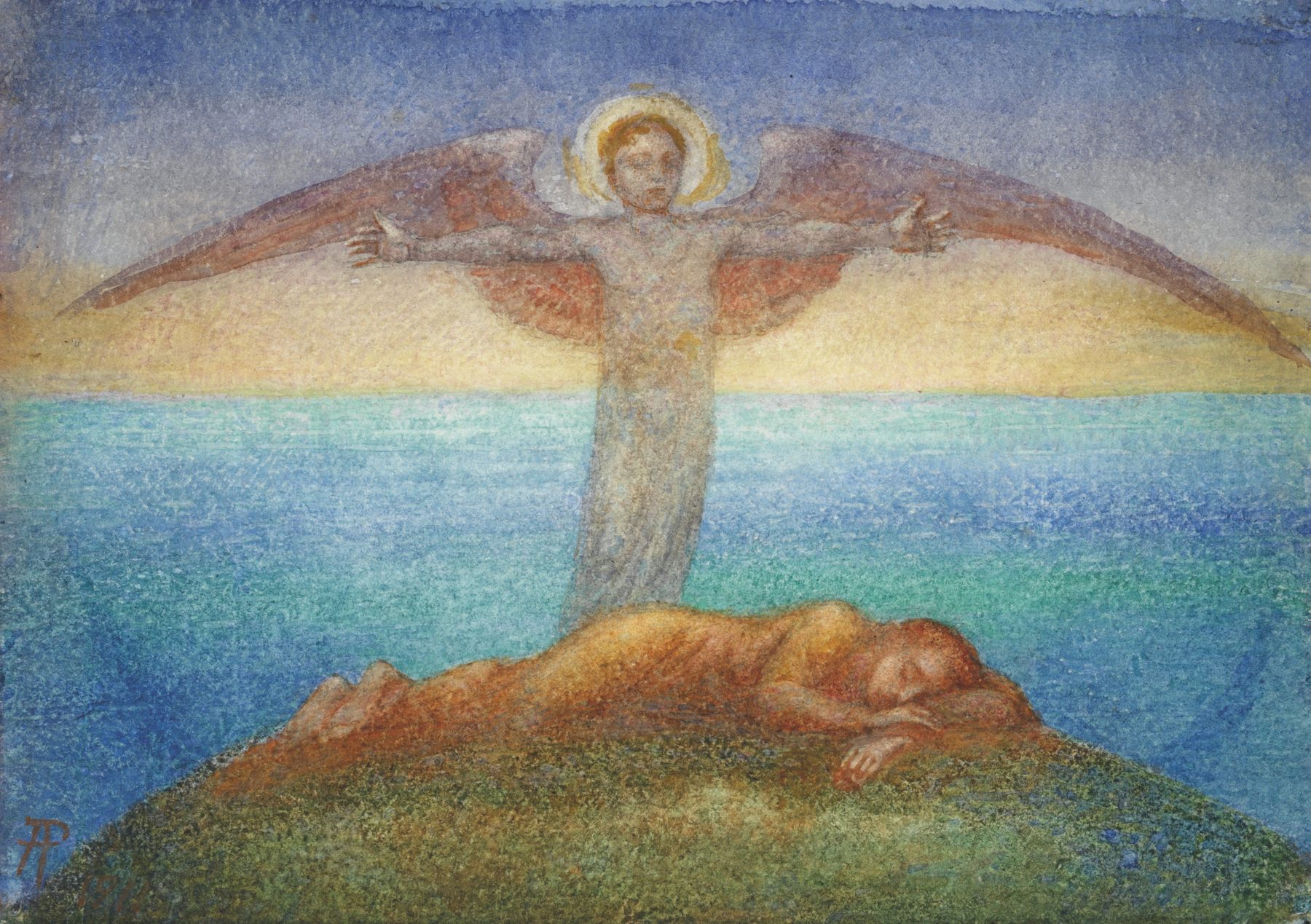
I keep picturing Traquair high on the scaffolding at Mansfield Place, not because I want to make a romantic myth out of the hard physical work involved, but because the scale of her commitment is difficult to ignore. Year after year, she returned to those walls and added another figure, another stretch of pattern, another piece of an imagined universe.
And none of it came from a desire to erase what came before. Quite the opposite. She carried the Book of Kells with her. She carried medieval manuscripts, Blake, the Pre-Raphaelites and the early Renaissance. She borrowed, studied, remembered and recombined.
Then she made something unmistakably her own.
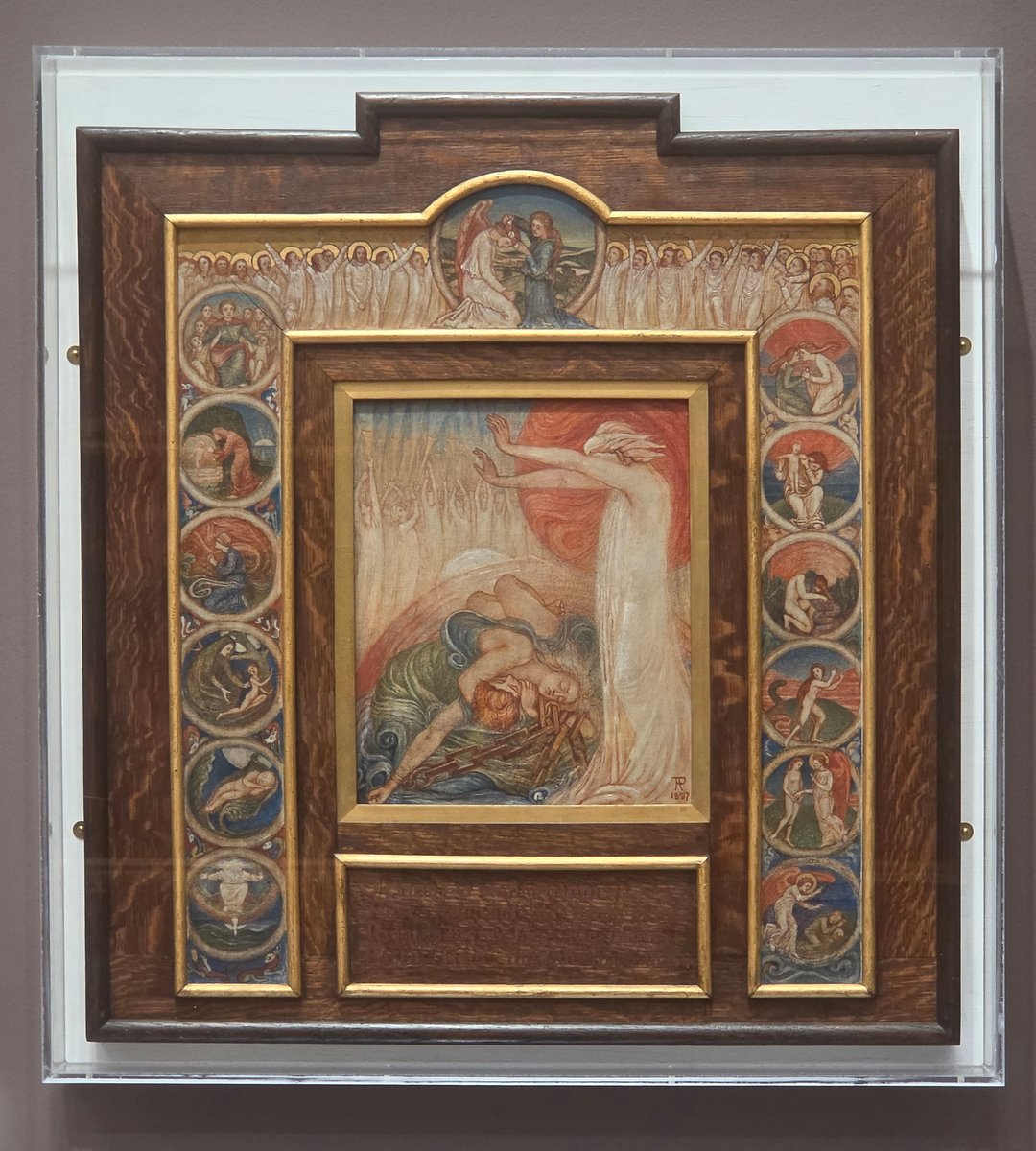
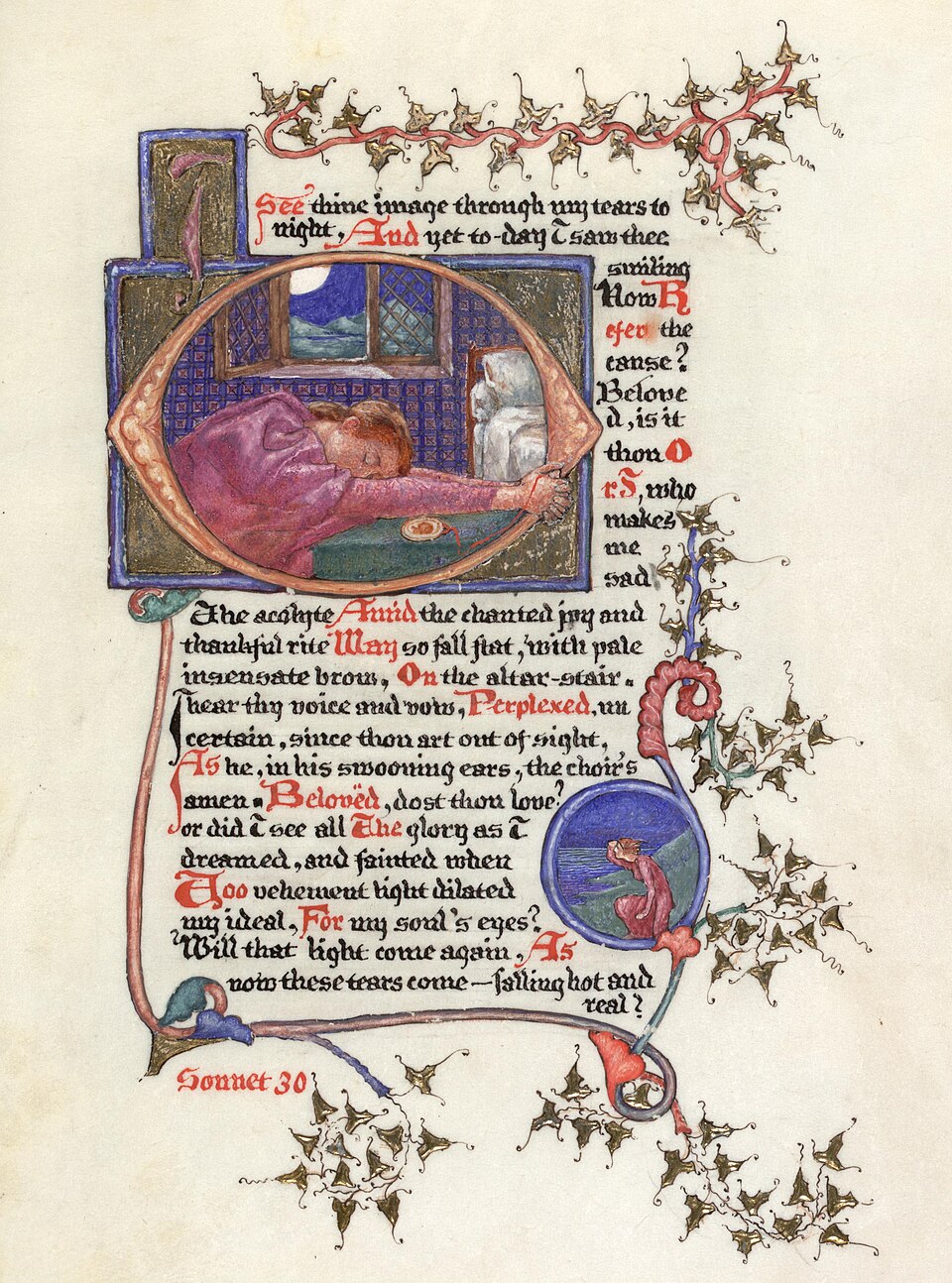
We spend so much time wondering whether we are influenced too much, borrowing too much, returning to the same things too often. Traquair offers another possibility. Perhaps the task is not to escape what has shaped us. Perhaps it is to notice it, to look closely enough at the things we have inherited that eventually we begin changing them without even meaning to. And somewhere in that process, the borrowed thing becomes ours.
Traquair once wrote that the world was a great treasure house for the artist.
I think she spent her whole life proving it.
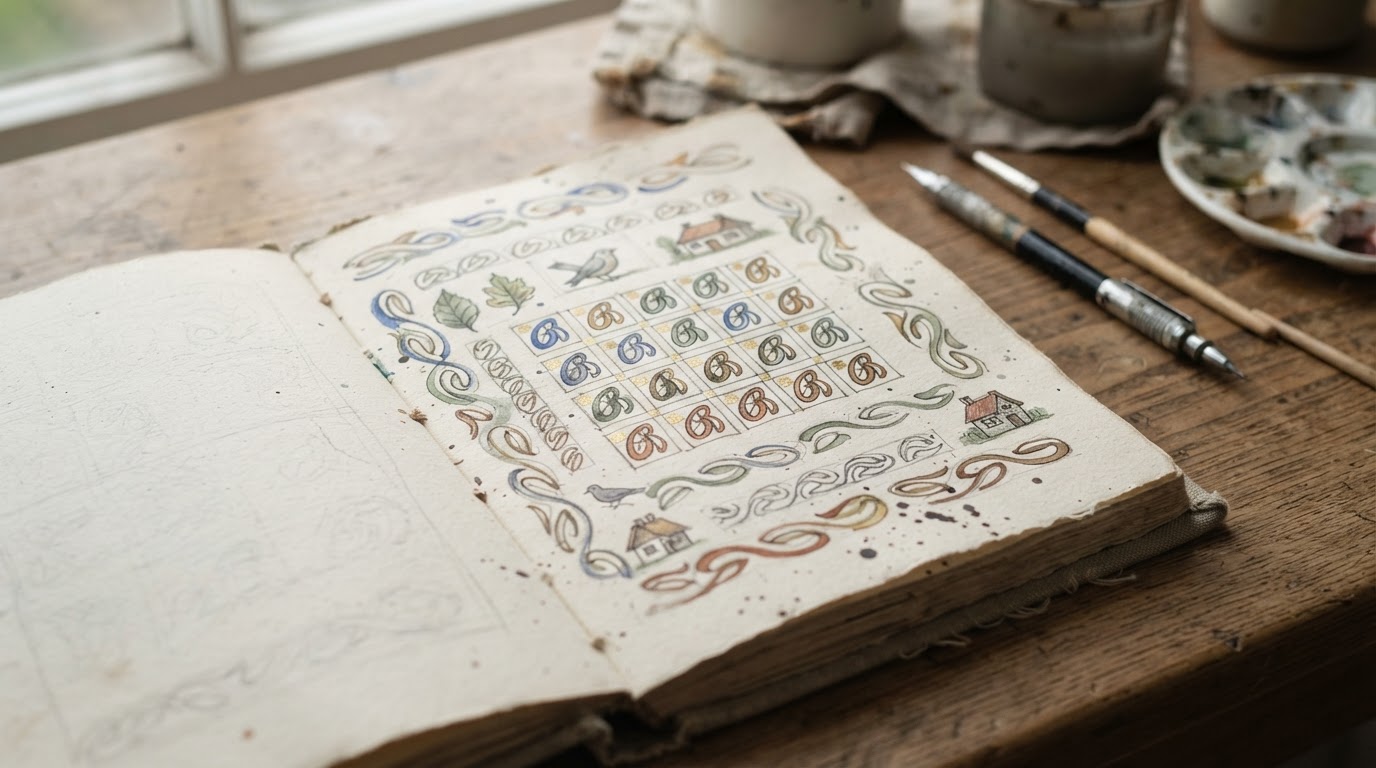
Think back to something visual that moved you before you had language for it, a shape, a color, a scene from childhood. On a fresh page, translate that memory into a single simple motif: a curve, a border, a small repeated symbol, the way Traquair pulled interlaced patterns from the Book of Kells into her own murals centuries later.
Repeat the motif across the page in a border or grid, letting small variations happen naturally as your hand tires and loosens. Don't aim for precision. Let the repetition do the remembering for you.
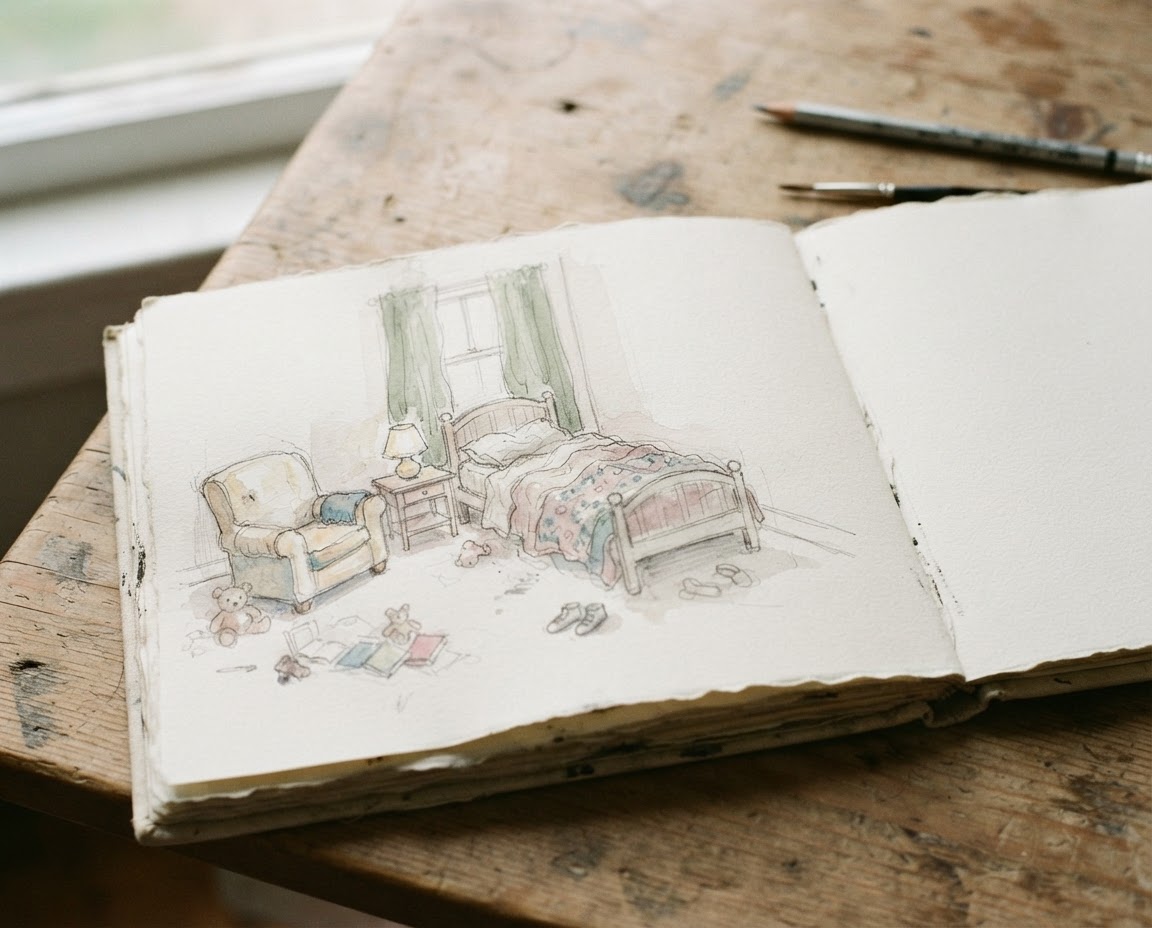
Close your eyes and picture a room from your childhood, not a photograph of it, just what's left in memory. Draw it quickly, without checking details, letting gaps stay blank rather than inventing what you can't recall. Notice which details arrived instantly and which ones simply aren't there anymore.
Choose a small section of Traquair's murals or manuscript work, a single figure, a border pattern, a fold of drapery, and spend time simply looking before you begin. Notice how she layers pattern within pattern, and how gold and jewel tones sit against quieter neutral ground.
Make a slow, careful copy of that small section. Work in layers if you can, building color gradually rather than reaching for the final shade right away. Let yourself feel the patience her process required.
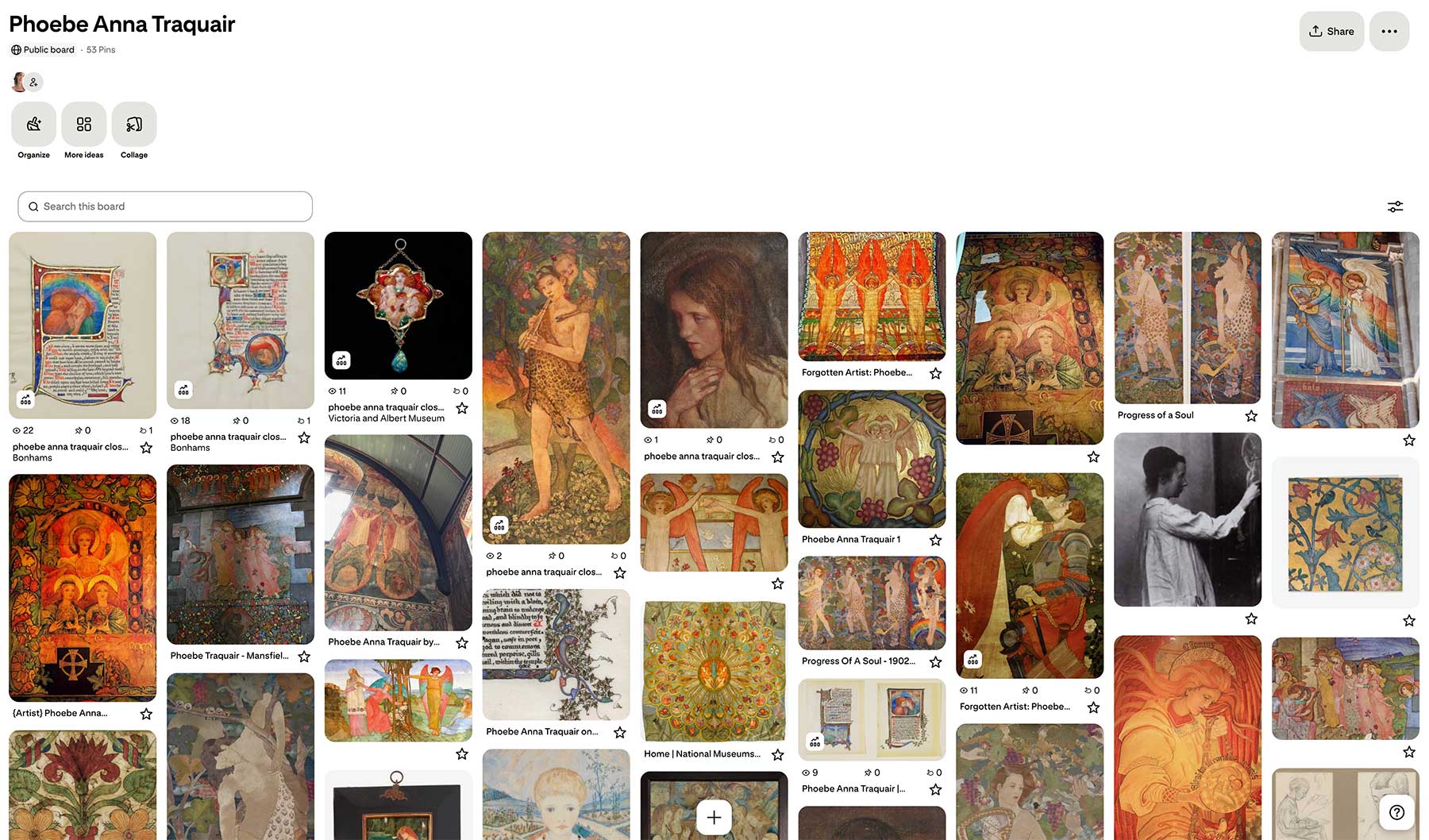
You can view our Pinterest board to see more of her work…
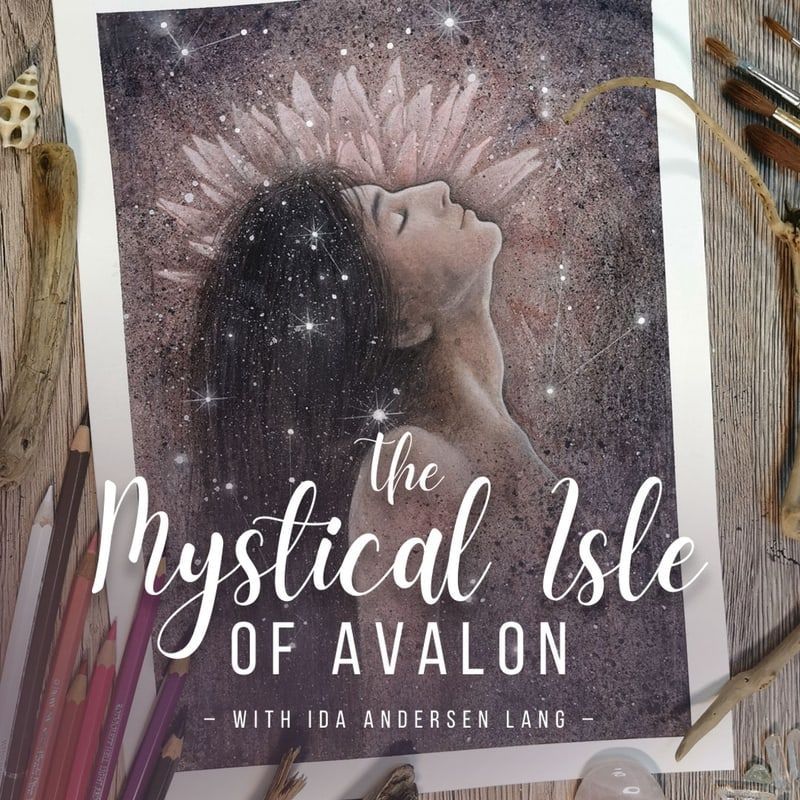
I chose this class for October because it feels like it's already living in the same landscape this issue is. Ida's journey through Avalon works with the Lady of the Lake, the divine feminine, and imagery pulled straight from Arthurian legend, the same well of myth and inheritance we've been circling all month. Her layered mixed media technique, watercolor, dry pastel, and colored pencil built up slowly in stages, mirrors something we've talked about too. Nothing about this process happens quickly. The image reveals itself the way an old story does, one layer at a time.
If you've been drawn to this month's essay on borrowed myth, or to Traquair's own instinct to reach backward for material still worth using, this class gives you a direct, hands-on way to do the same.
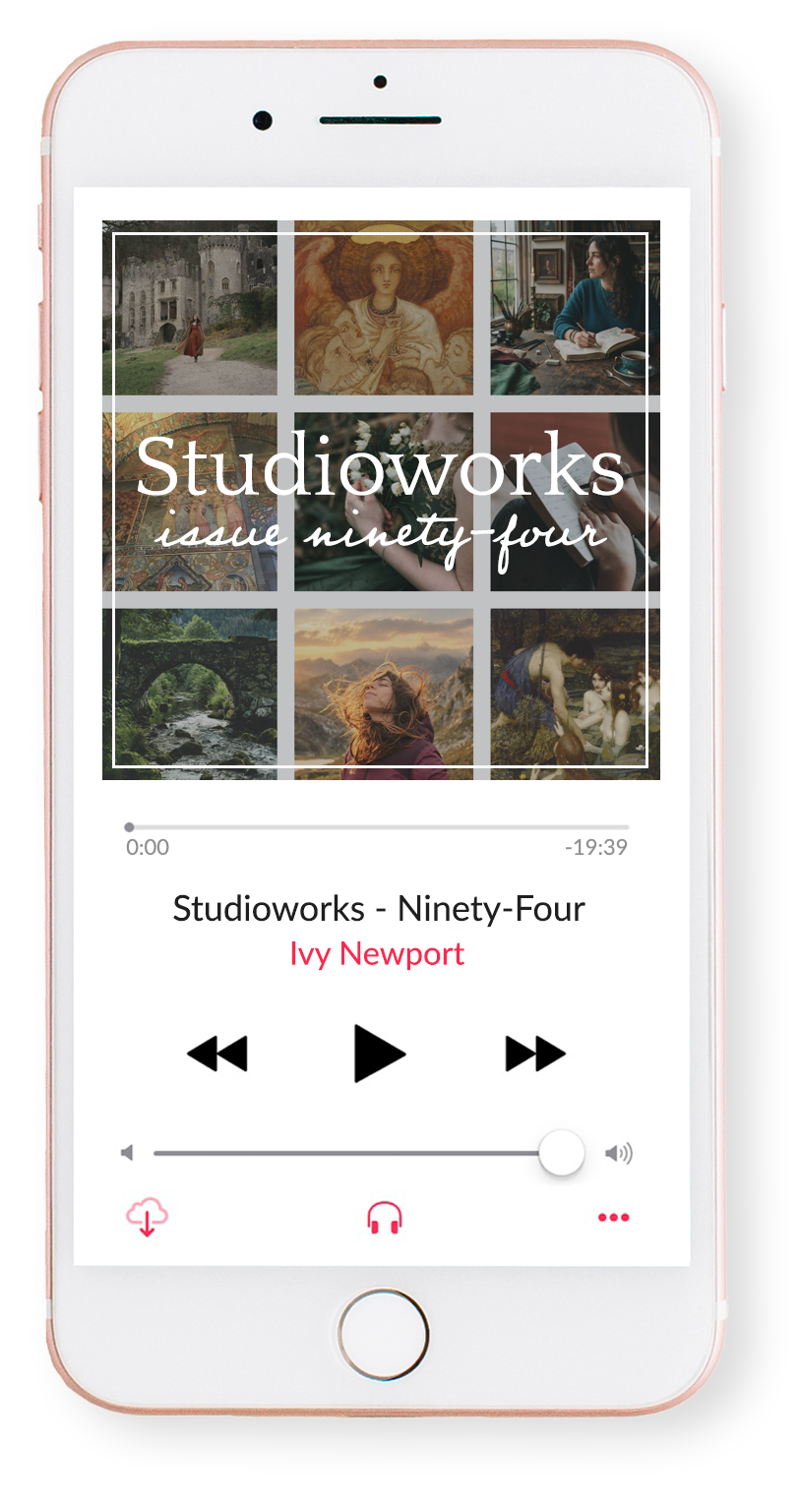
You can also listen to this month’s issue of the Studioworks journal. I find I love listening to books, podcasts and music while I draw, paint or go on a long walk. Enjoy.
One of my favorite things to do is to curate inspiration. From Pinterest boards to books, resources, playlists and more - I love to share anything that might facilitate learning, expansion, and sparks of curiosity! Being an artist, we naturally crave these things so here are some of this month’s picks from me to you.
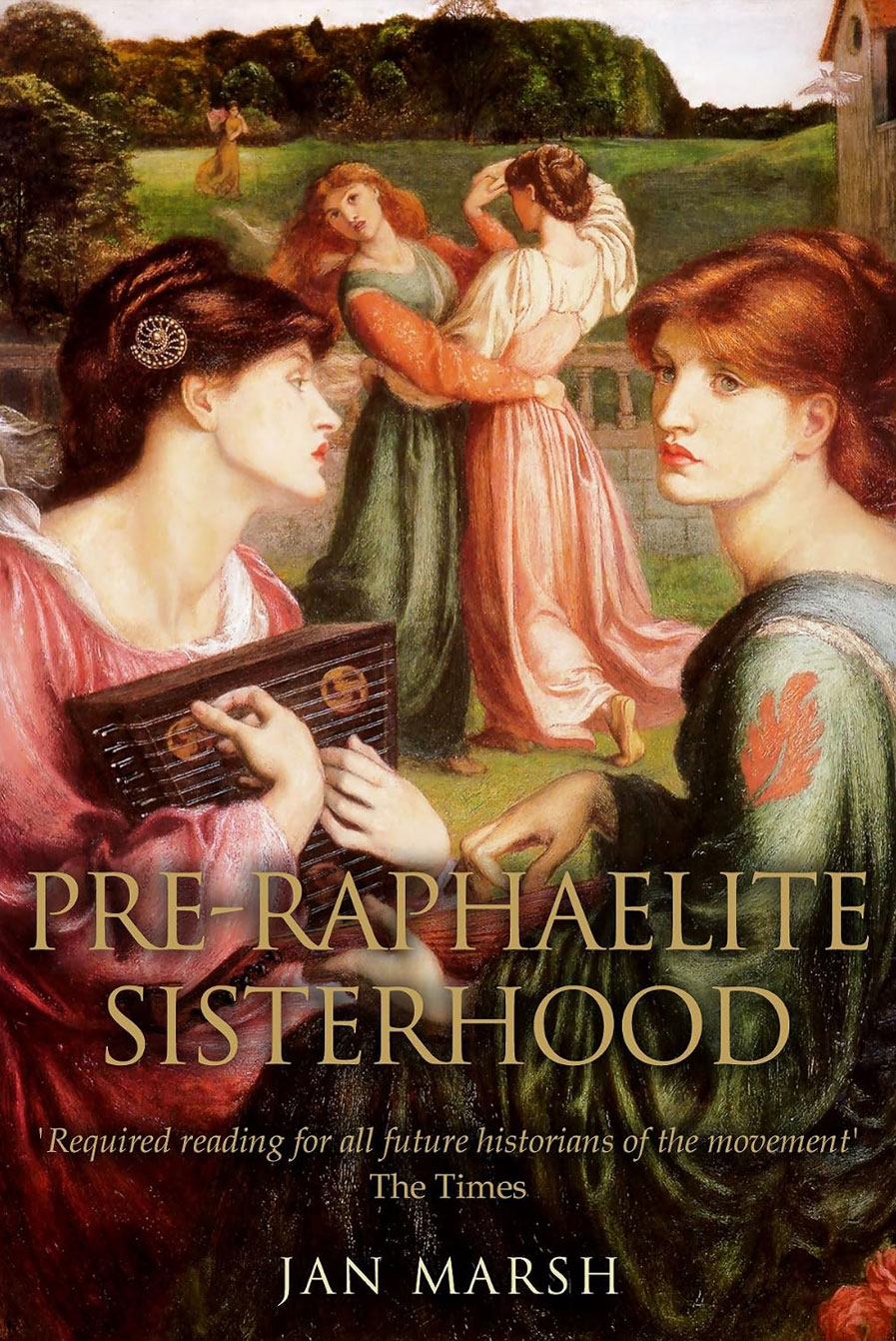
Pre-Raphaelite Sisterhood by Jan Marsh looks past the paintings to the actual lives of the women who modeled for them, Elizabeth Siddal, Jane Morris, Fanny Cornforth, and others long flattened into muse and myth. Marsh recovers their independence and ambition from a century of being written as passive. A useful companion to this month's essay on borrowed gods and inherited symbolism, since it asks who was actually doing the inheriting, and who was simply cast in it.
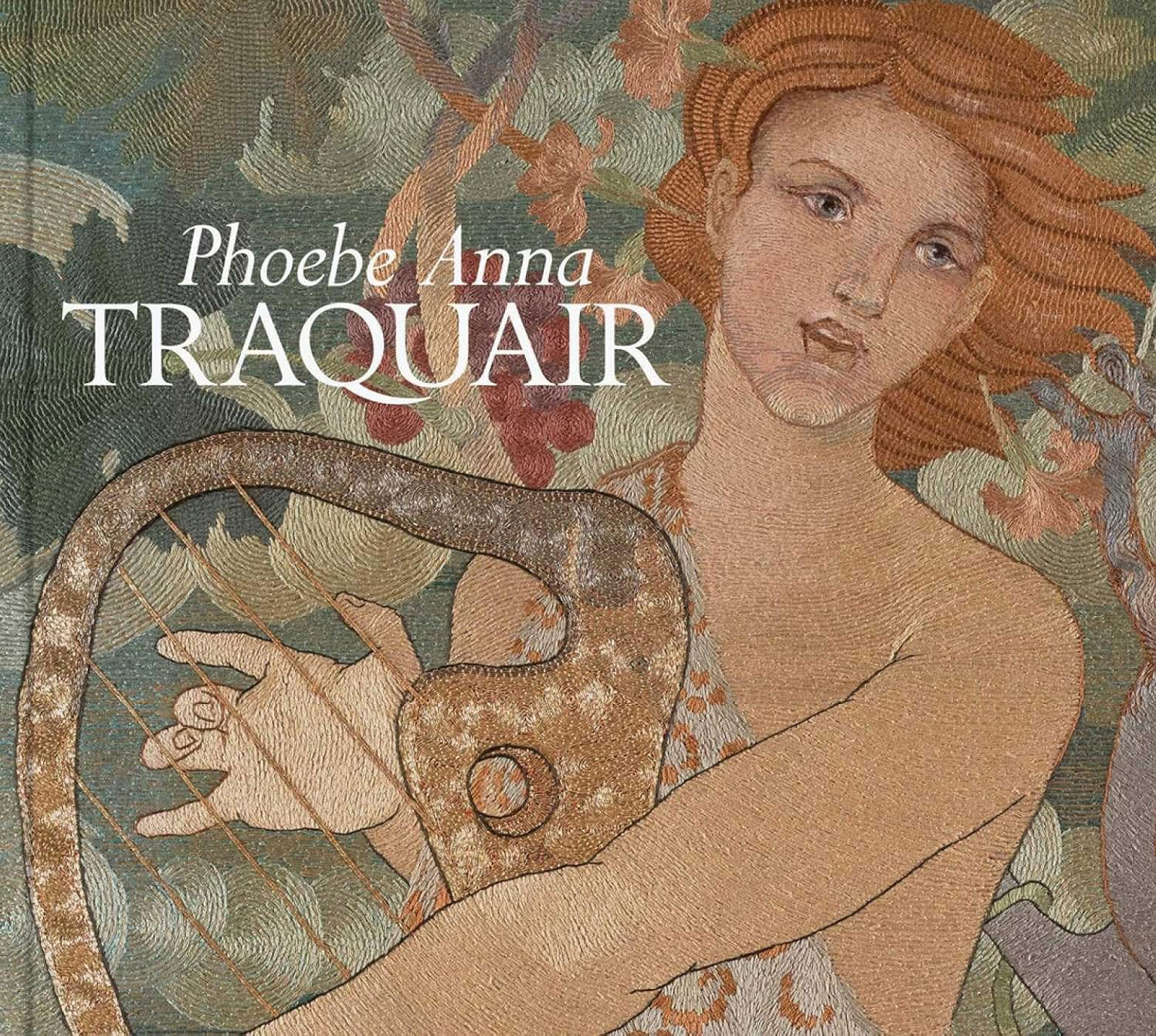
Phoebe Anna Traquair by Elizabeth Cumming offers a richly illustrated account of the artist's life and career, drawing on her own letters and correspondence with John Ruskin. Written by a historian who has researched Traquair for over forty years, it's the most thorough entry point into a career that spanned murals, manuscripts, embroidery, and enamel work. For anyone captivated by this month's master artist, it's essential reading.
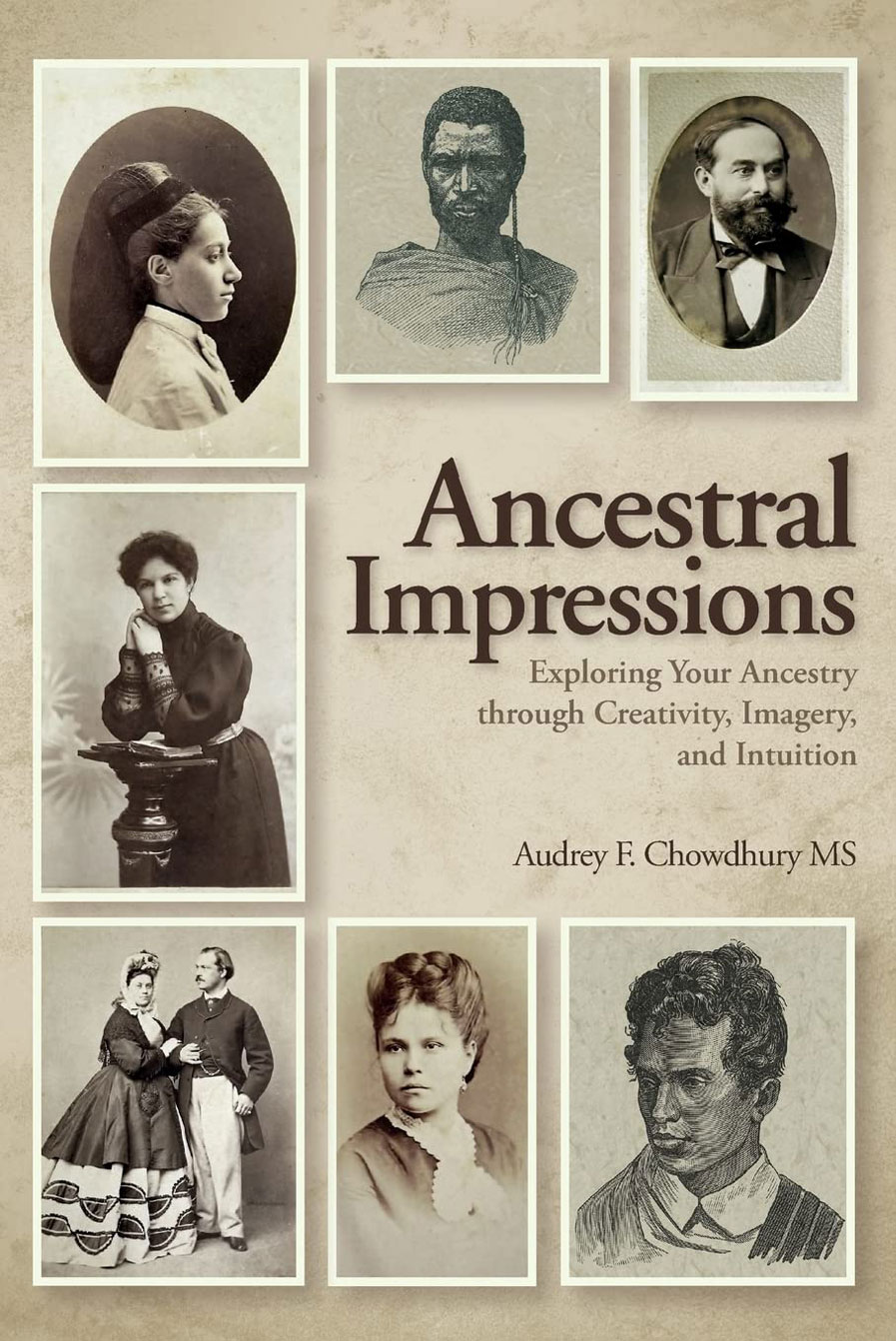
Ancestral Impressions by Audrey F. Chowdhury takes ancestral memory out of the realm of family trees and genealogy charts and into the studio, offering collage, writing, and drawing exercises meant to surface what's been passed down rather than simply researched. It pairs naturally with this month's sketchbook explorations, less a history lesson and more an invitation to let inheritance show up on the page before you've fully named it.
I had so much fun curating this list. I hope you enjoy!!
Classes that pair well with this month’s theme in your Studioworks Creative Library
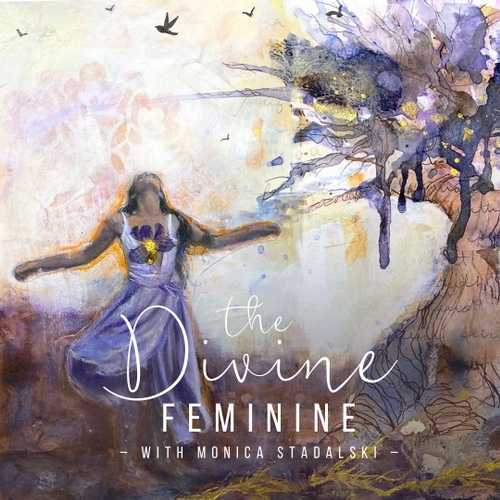
This class works with the Kuan Yin Oracle deck to explore the feminine energy Monica describes as living in all of us, regardless of gender, using it to build a mixed media art journal spread and, later, a full portrait. Given how much of this issue leans on feminine archetypes, Traquair's overlooked career, the goddesses borrowed by the Pre-Raphaelites, this class offers a hands-on way to sit with that same energy rather than just read about it.
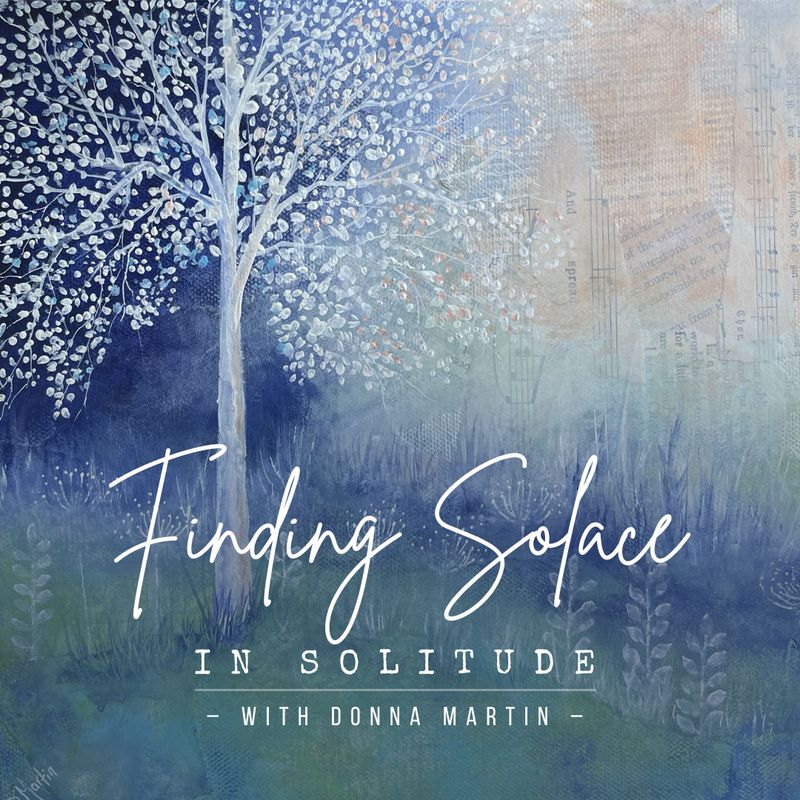
Donna's class centers on painting a single, solitary tree as a symbol of quiet strength, working through the layering of collage and acrylic to build a piece that holds stillness rather than noise. It's a natural companion to this month's studio reflection piece, solitude as its own kind of listening, the same quality this issue asks you to bring to old echoes and inherited habits.
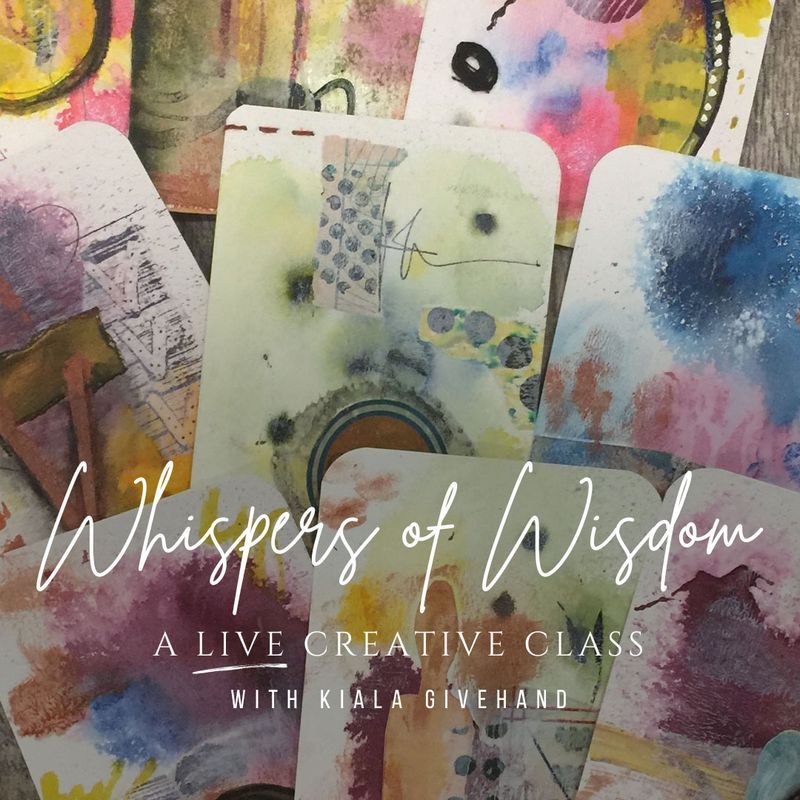
Kiala teaches you to build your own oracle or affirmation deck, drawing on two decades of her own collecting to help you trust a voice that's already yours rather than borrowed from elsewhere. It pairs well with this month's oracle spread and journal prompts, since both are really asking the same question, what does your own inner wisdom sound like when you finally sit still enough to hear it.