Dear creative friends,
Last month I told you to just be in it. The garden, the slow evenings, pleasure with nowhere particular to go. No agenda. I meant every word, and I hope you took me up on it.
But I've noticed something happens after a month like that. The fullness doesn't just sit there quietly. It starts looking for a way out.
This month I'm doing something I haven't done in a while. I'm going back to being a student. I'm spending the first part of August in Scotland, sitting in someone else's classroom again, taking notes, asking basic questions. Then almost without pause, I fly to Italy, where I become the teacher. A room full of students will be looking at me the way I was just looking at my own teacher days before.
It's a strange, but wonderful flip, to receive, then give, inside the same few weeks. And it's made me think about transmission as something bigger than just travel and trading roles. Some of the most honest creative work doesn't start with a plan. It arrives, in a class, on a walk, in a dream you can't shake until you've painted it. And once it's arrived, it rarely stays put. It wants to move through you and land somewhere else, in a piece you make, in something you say to a student, in a stranger who finds your work years from now and feels exactly what you felt.
This issue's featured artist understood that idea more literally than almost anyone in the history of art. I won't say more yet. You'll meet her properly a little further in.

Last month was about letting an experience be enough on its own. A garden afternoon, a slow hour, pleasure with no destination and no obligation to turn it into anything. That's a real and necessary kind of receiving. But fullness rarely stays still for long. Sooner or later, what we've taken in starts looking for somewhere to go.
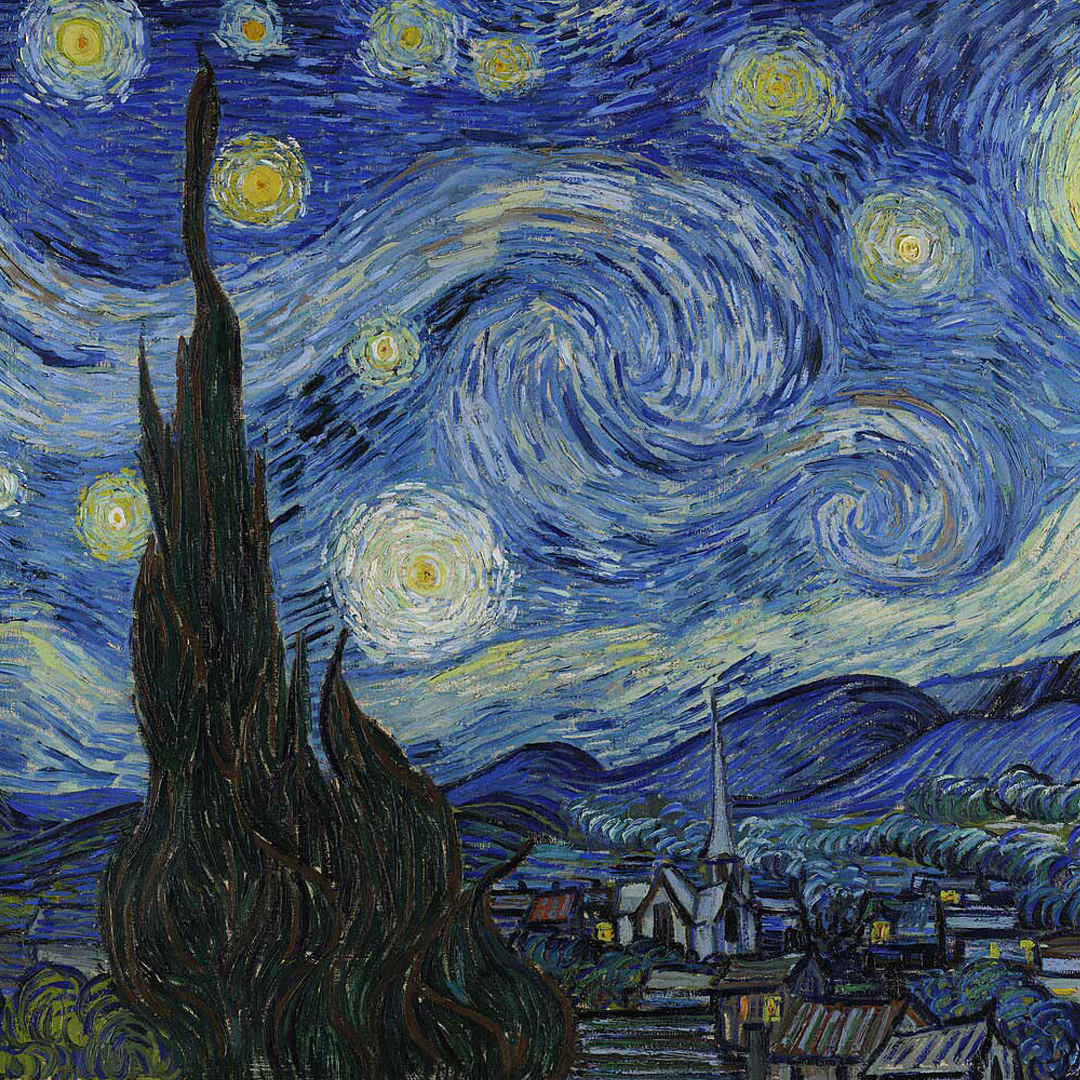
Vincent van Gogh knew that pressure well, though he might not have called it that. He wrote to his brother Theo one morning in 1889, describing what he'd seen from his window before sunrise. Nothing but the morning star, he said, looking unusually large against the fading dark. That single observation, a few quiet minutes at a window, became the seed of The Starry Night, one of the most recognized paintings in the world. He'd been writing to Theo for months about wanting to paint the night sky properly, restless with the idea, and then one ordinary morning gave him exactly what he needed, and he didn't sit on it. He went straight to the canvas.
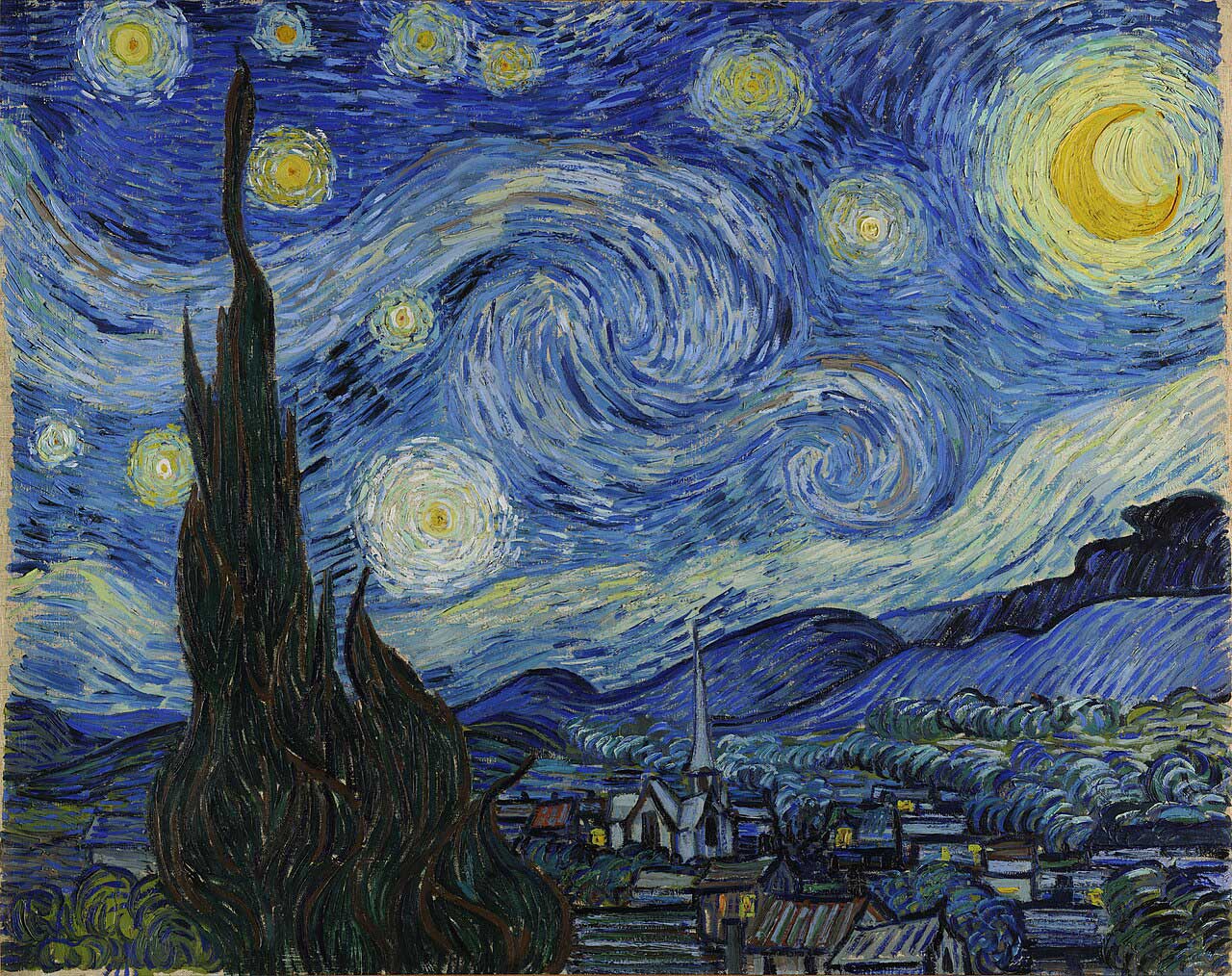
Starry Night
By Vincent van Gogh, 1889
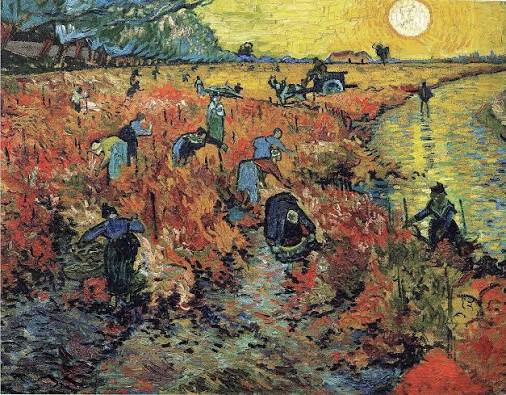
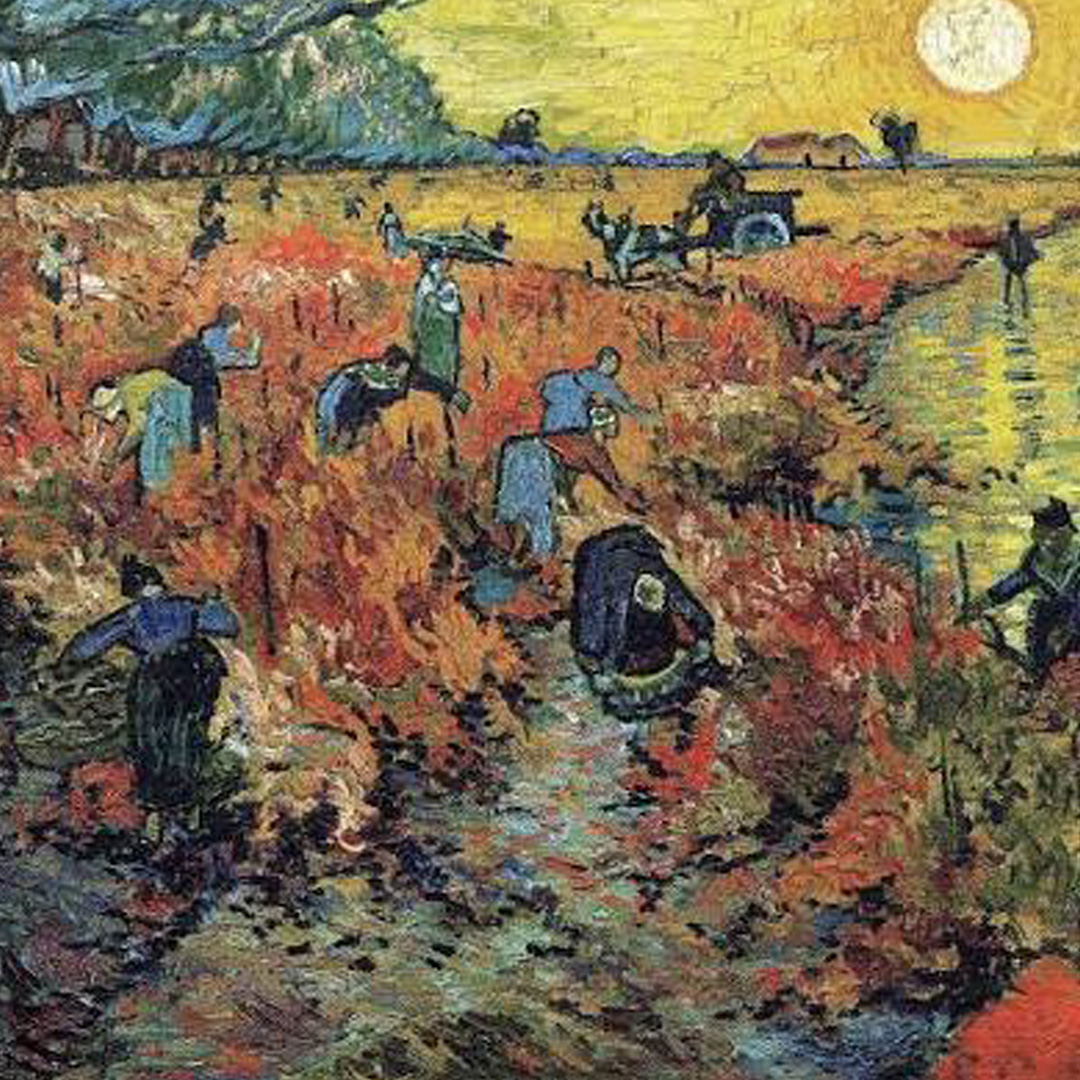
The Red Vineyard
By Vincent van Gogh, 1888
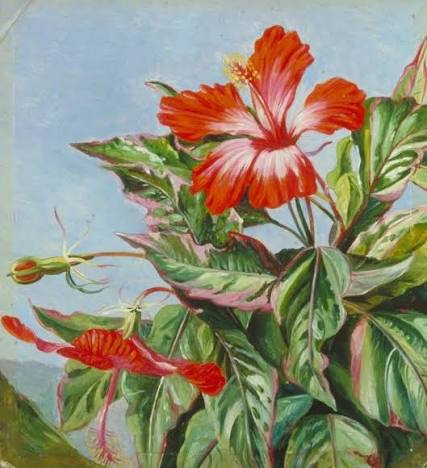
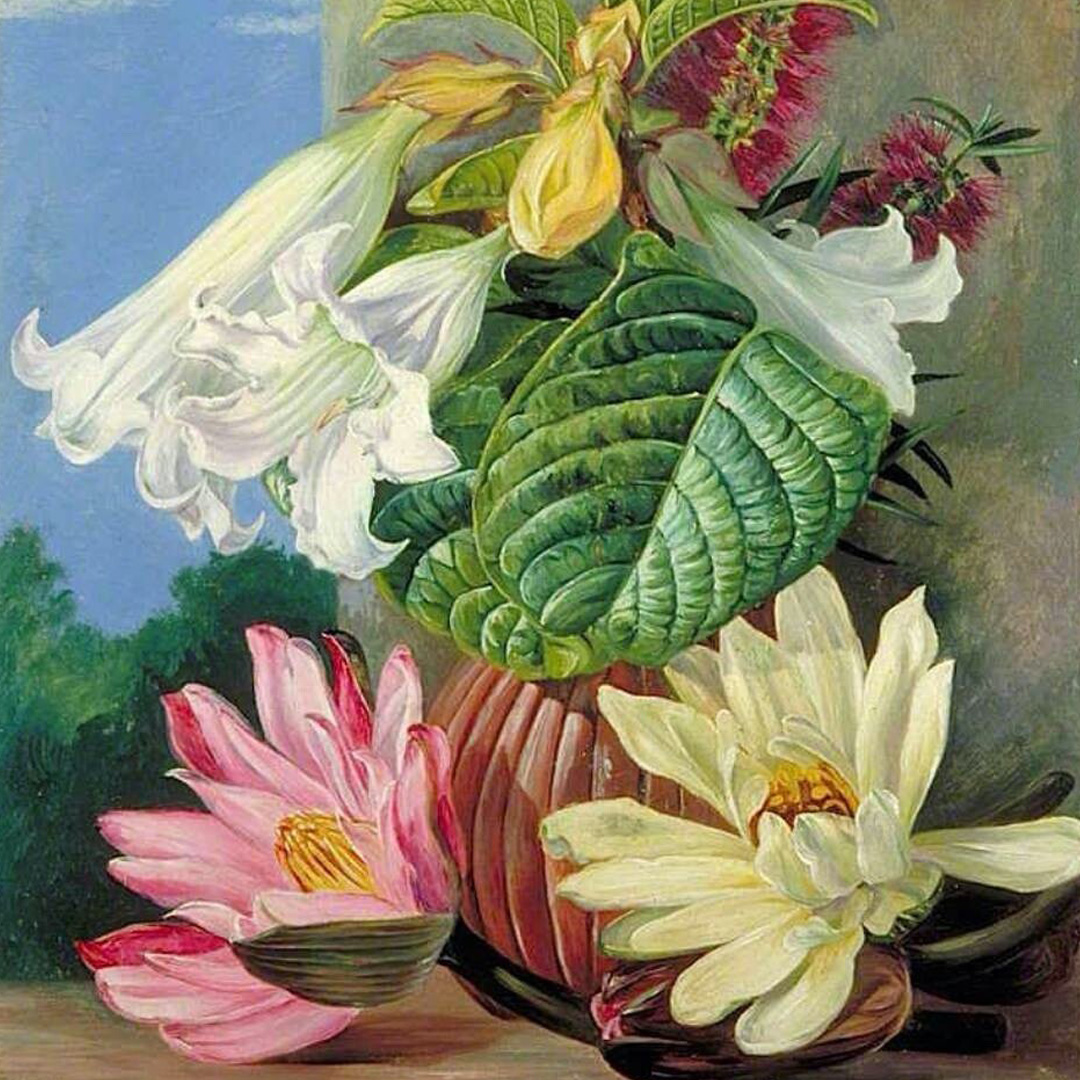
A New Caledonian Plant, Hibiscus Cooperi
By Marianne North, 1870
Van Gogh's letters are full of moments like this. A walk along a deserted shore at night that he described simply as beautiful. A field of ripe wheat under stars that wouldn't leave him alone until he painted it. He didn't wait for an abstract idea of inspiration. He paid close attention to actual mornings, actual walks, actual skies, and let those specific moments move straight through him and onto canvas.
Marianne North did something similar, but on a far larger scale. A Victorian Englishwoman with no formal art training and no real precedent for what she was about to do, North set off in her forties to travel the world alone, at a time when respectable women didn't travel anywhere without a chaperone. Over the next two decades she crossed six continents documenting plants most of her countrymen would never see in their lives, painting in oils with a saturation that scandalized some critics as too vivid, too bold, simply too much.
She wasn't inventing these plants. She received an experience, the heat, the color, the specific tangle of a jungle clearing, and turned it directly into paint as fast as she could get it down, then carried that work home and gave an entire gallery of it away to Kew Gardens so other people could stand in front of what she'd seen. Arriving in Jamaica for the first time, she wrote in her diary that she was in a state of ecstasy and hardly knew what to paint first. She didn't keep that ecstasy to herself. She built a room for it and opened the door.
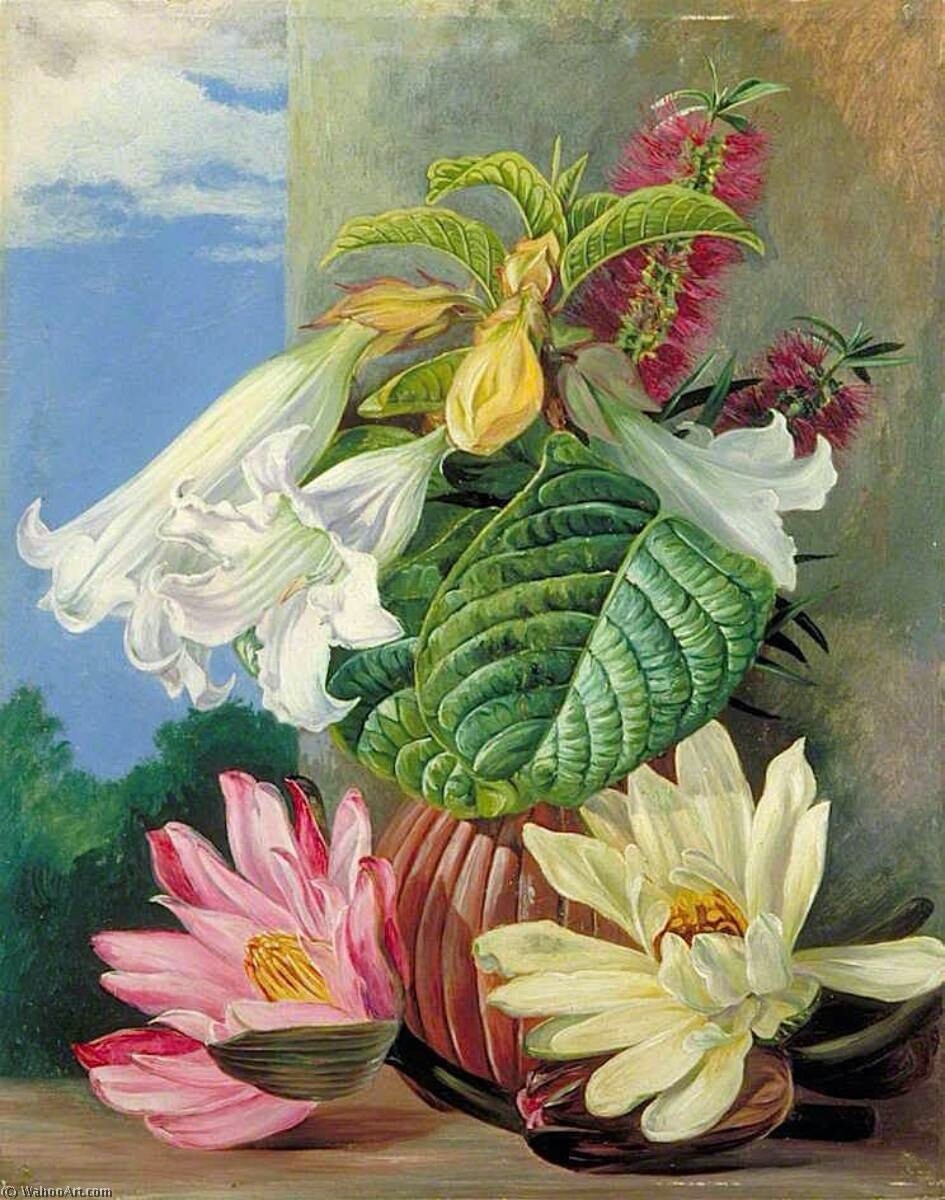
Garden Rio de Janeiro
By Marianne North, Brazil circa 1870
What connects Van Gogh and North, despite how different their lives looked, is the same two-part motion. First the experience arrives and fills them completely, a sky, a jungle, a feeling with nowhere obvious to go. Then it moves, onto canvas, into a gallery, out toward someone who wasn't there to see the original moment firsthand. Neither stopped at simply having the experience. Each one passed it forward.
Most of us know a smaller version of this. A trip that changes how we see color for months afterward. A class that hands us a technique we can't stop using and end up teaching someone else. Experience doesn't just fill us up and stay there. Sooner or later it looks for a way out, onto a page, into a conversation, toward whoever's ready to receive it next.
Somewhere along the way, most of us pick up an idea about teaching. That you need to be an expert first. That you need years, or a certificate, or a body of finished work behind you before you're allowed to hand anything to anyone else.
Van Gogh didn't wait for permission to paint what a single morning gave him. Marianne North didn't wait until she'd mastered botanical illustration before she started giving her paintings away. Both of them moved fast, took what had just landed in them, and passed it on while it was still warm.
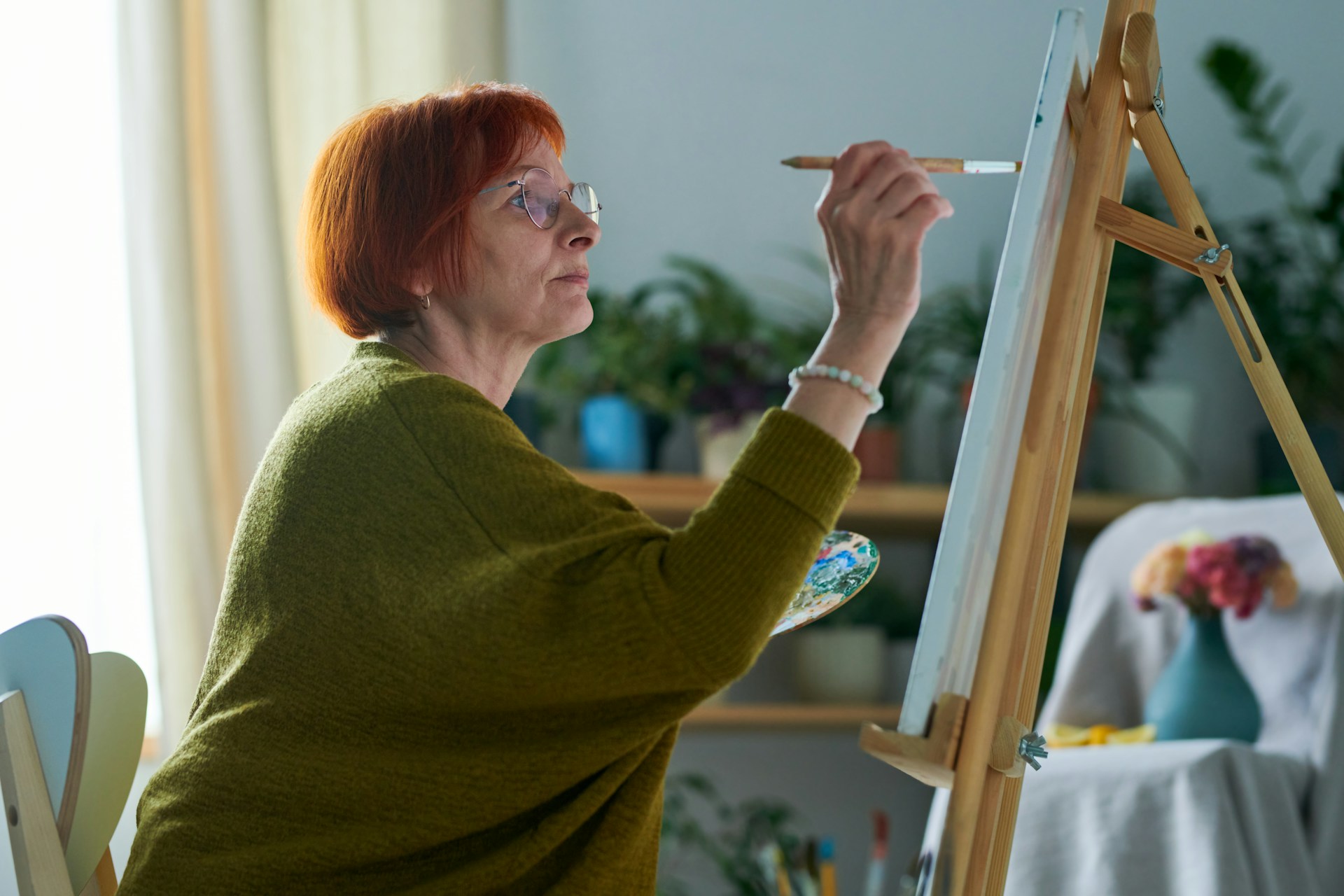
Most of us are sitting on more than we think. A technique a teacher once showed you that's become second nature, so familiar you forget it was ever new information. A way of mixing a color, a trick for getting unstuck, a lesson from a class you took years ago that quietly shaped everything you've made since. We tend to assume none of that is worth sharing because it doesn't feel remarkable to us anymore.
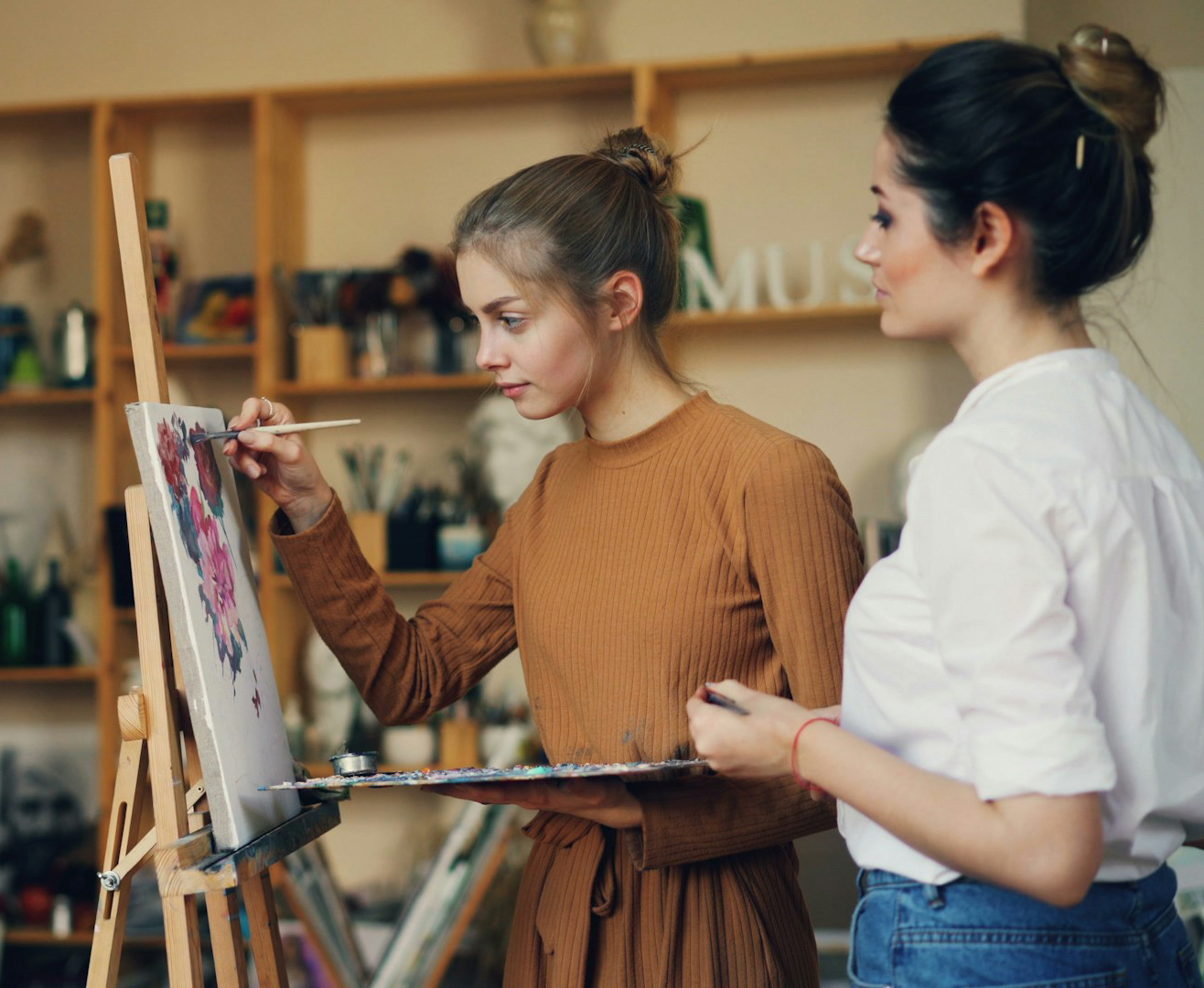
Somewhere in your life right now, there's almost certainly a person who would love thirty minutes (or a whole afternoon) spending time learning from you! Someone who genuinely gets excited about your artwork or who gently touches your art supplies with a hushed reverence. I bet you have some people in your life like this right?
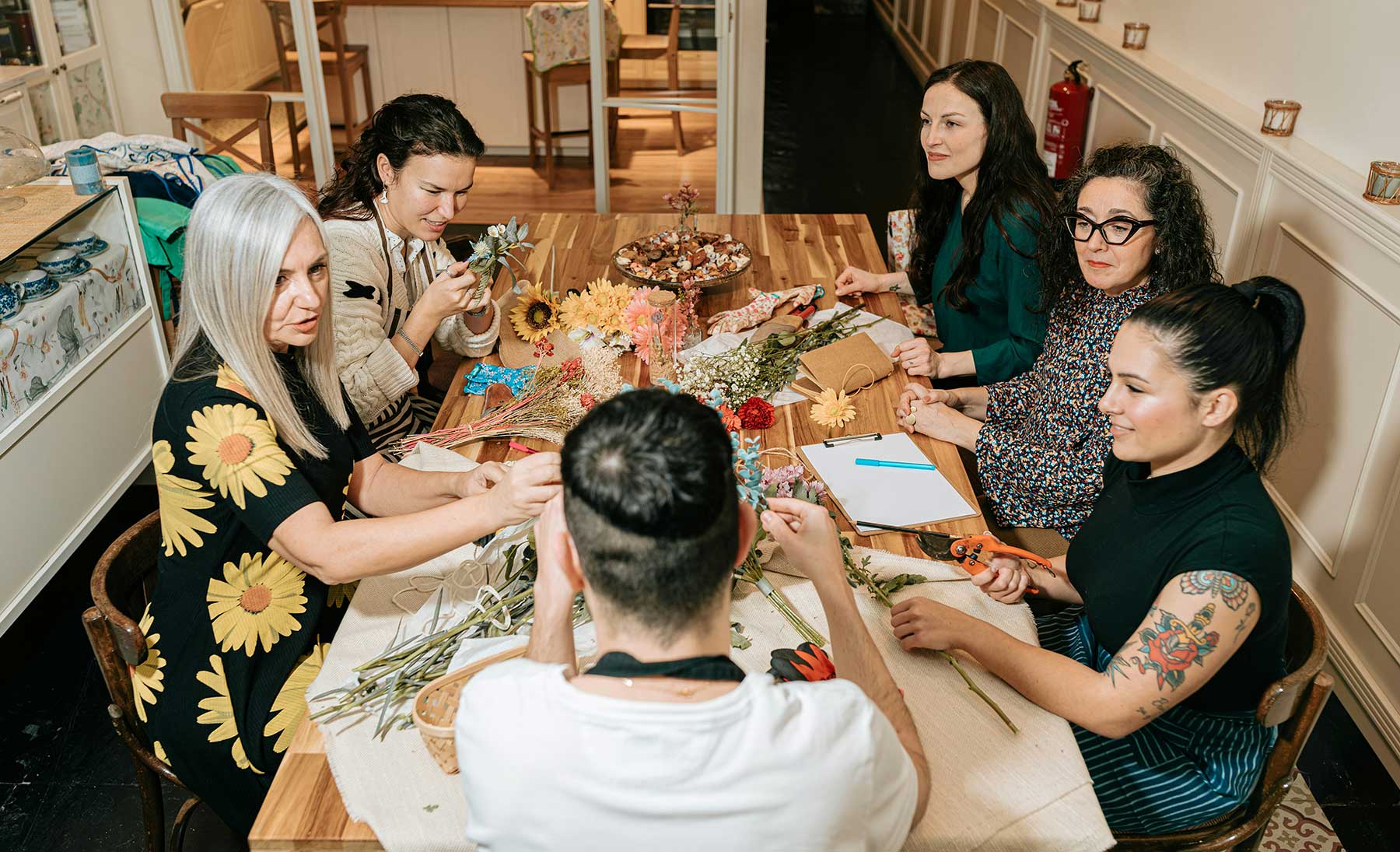
So here's the challenge for this month. Gather a few people, family, friends, a neighbor who's mentioned wanting to get back into art, and teach them something. It doesn't need a lesson plan. It doesn't need to be impressive. Show your daughter how you blend a wash. Sit your sister down for twenty minutes and teach her the one trick that changed how you draw hands. Invite a friend over with a bottle of wine and make a collage with them.
You don't need to feel ready. You already are, because you've already carried something home that someone else hasn't been given yet.
According to the Oxford English Dictionary, transmission is defined as the action or process of transmitting something, or of being transmitted. To pass from one place, person, or thing to another.
It's a word that sounds technical, the language of radio towers and signal strength, but underneath the clinical surface is something much older. A transmission is never one-sided. Something has to be received before it can be passed on.
We tend to think of inspiration as something that arrives and then simply belongs to us. A thought, an image, a feeling, ours to keep. But the most alive creative work rarely stops there. It moves through the artist toward someone else, a viewer, a student, a stranger who hasn't been born yet.
Think about the last time someone taught you something that changed how you work. A teacher's offhand comment. A trick a friend showed you once and never explained twice. That knowledge didn't originate with you, and it won't end with you either. You're a single link in a much longer chain, receiving from someone, passing to someone else.
This month, notice the chain you're part of. What did you receive that you're ready to send forward? Who's standing on the other end, waiting for exactly what you already have?
Who taught me something that quietly shaped my whole creative practice, and have I ever properly thanked them?
What do I know right now that someone else needs, and what's stopping me from offering it?
Let's tap into our creative intuition and do some self-reflective work inspired by our theme. Below you will see our month's Oracle/Tarot card spread. But fear not, if you are not one drawn to using oracle or tarot cards, no worries, just use the accompanying reflective questions as writing prompts for your journals!
Here's a three-card oracle spread that fits seamlessly with our monthly theme. Take a deep breath, grab a cup of tea and enjoy.
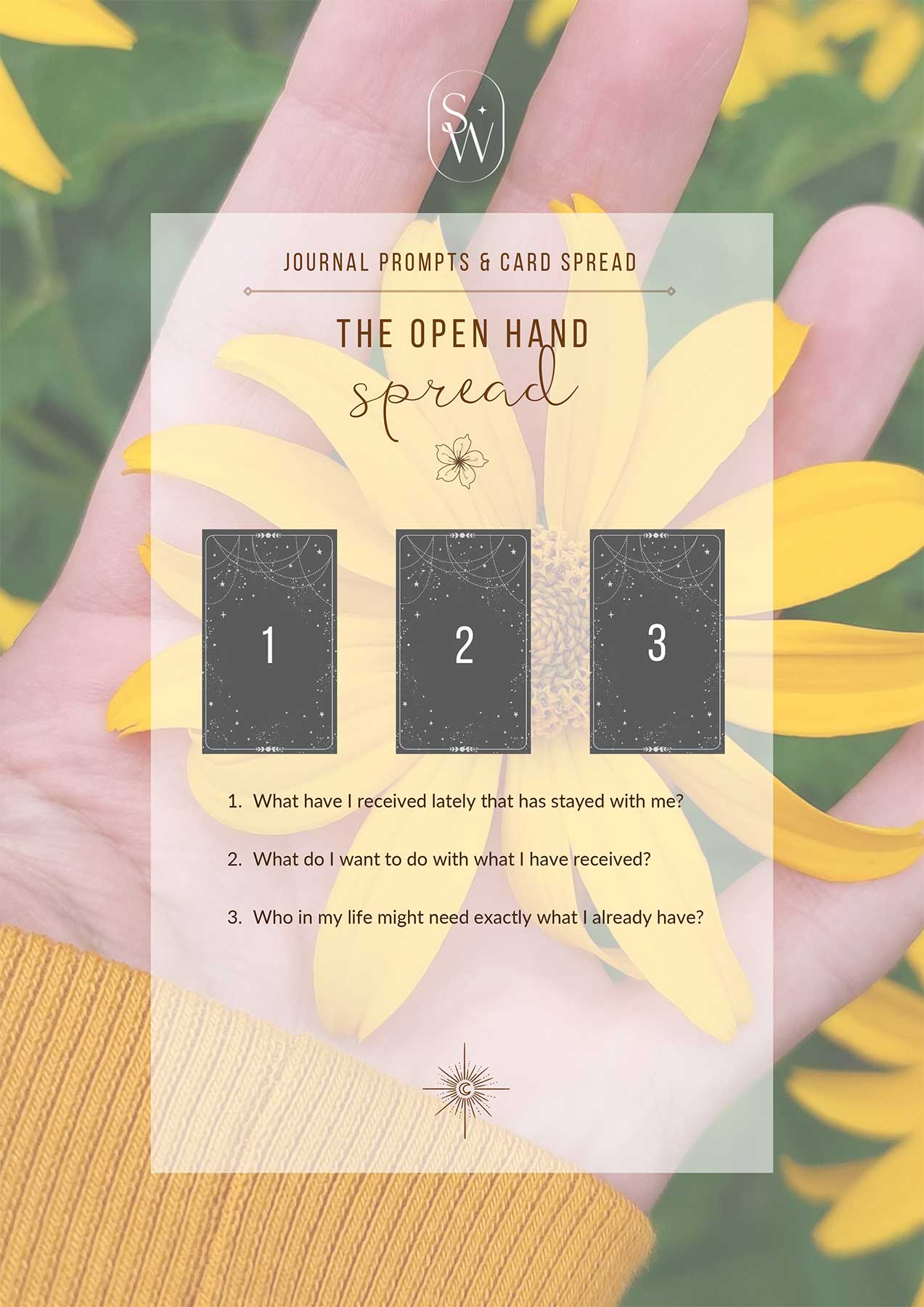
A three-card spread for noticing what's arrived in you, and where it wants to go next.
Card 1: What Arrived
What have I received lately that has stayed with me?
This card names something that's landed in your creative life recently, a lesson, a feeling, an image that arrived uninvited and stayed. It might have come from a class, a trip, a dream, a conversation that lingered longer than expected. This card simply asks you to notice it before deciding what it means.
Journal Prompt: What has shown up in my creative life lately that I didn't go looking for?
Card 2: What I'm Holding
What do I want to do with what I have received?
This card asks you to sit honestly with what you've received. Some things are meant to be kept close for a while, turned over privately before they're ready to be shared. Others are already restless, looking for somewhere else to land. This card helps you tell the difference.
Journal Prompt: Is there something I've learned or received that feels ready to leave my hands?
Card 3: Who Is Waiting
Who in my life might need exactly what I already have?
This card points toward the receiving end of transmission, the student, the friend, the future version of someone you haven't met yet, who would benefit from what you're currently holding. It asks you to think outward, past your own practice, toward the person on the other side of the exchange.
Journal Prompt: If I shared what I know without waiting to feel like an expert, who would I share it with first?
Find a quiet moment before drawing your cards, somewhere you won't be interrupted mid-thought. As each card turns, pause and notice your first reaction before you start interpreting it. This spread works just as well using the journal prompts alone, no deck required, if cards aren't part of your practice.
This month's meditation arrived with a title that needed no searching, Spoken Word Heart Transmission. Rachel created this one using voice rather than instrumentation, words moving directly from her heart toward yours, which feels like exactly the kind of receiving and passing on this whole issue has been circling. It's short and sweet, just over six minutes, easy to fit into even the busiest part of your day. Find somewhere quiet, let the words land without trying to hold onto every one of them, and trust that whatever's meant to stay with you will.
Here's a little more information from Rachel…
This is a short but powerful spoken-word piece I have created for you to simply close your eyes, listen and meditate to. Receive the energies I am intending through my words and the creation of this session. To remind you of your true power and magic. It is heart-opening, expansive and healing. Sending you love and gratitude, I hope you will enjoy it.
xo,
Rachel
Each month we will have a positive affirmation. I recommend you print out this affirmation and put it in your sketchbook or somewhere in your studio. Recite the affirmation out loud each time you show up to create. Saying words aloud is powerful and can begin to re-write some of our own limiting beliefs or calm our fears. Try it now…
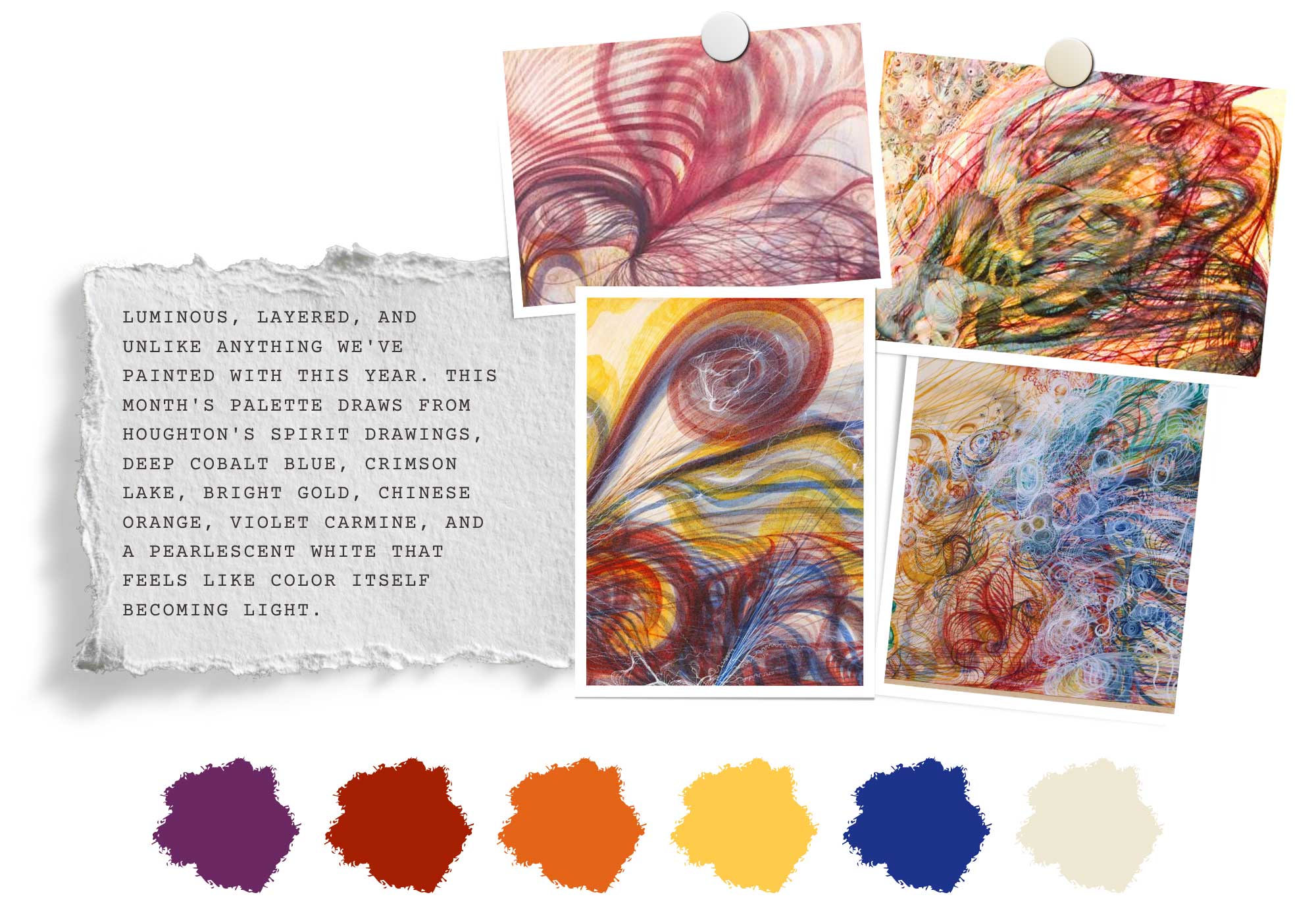
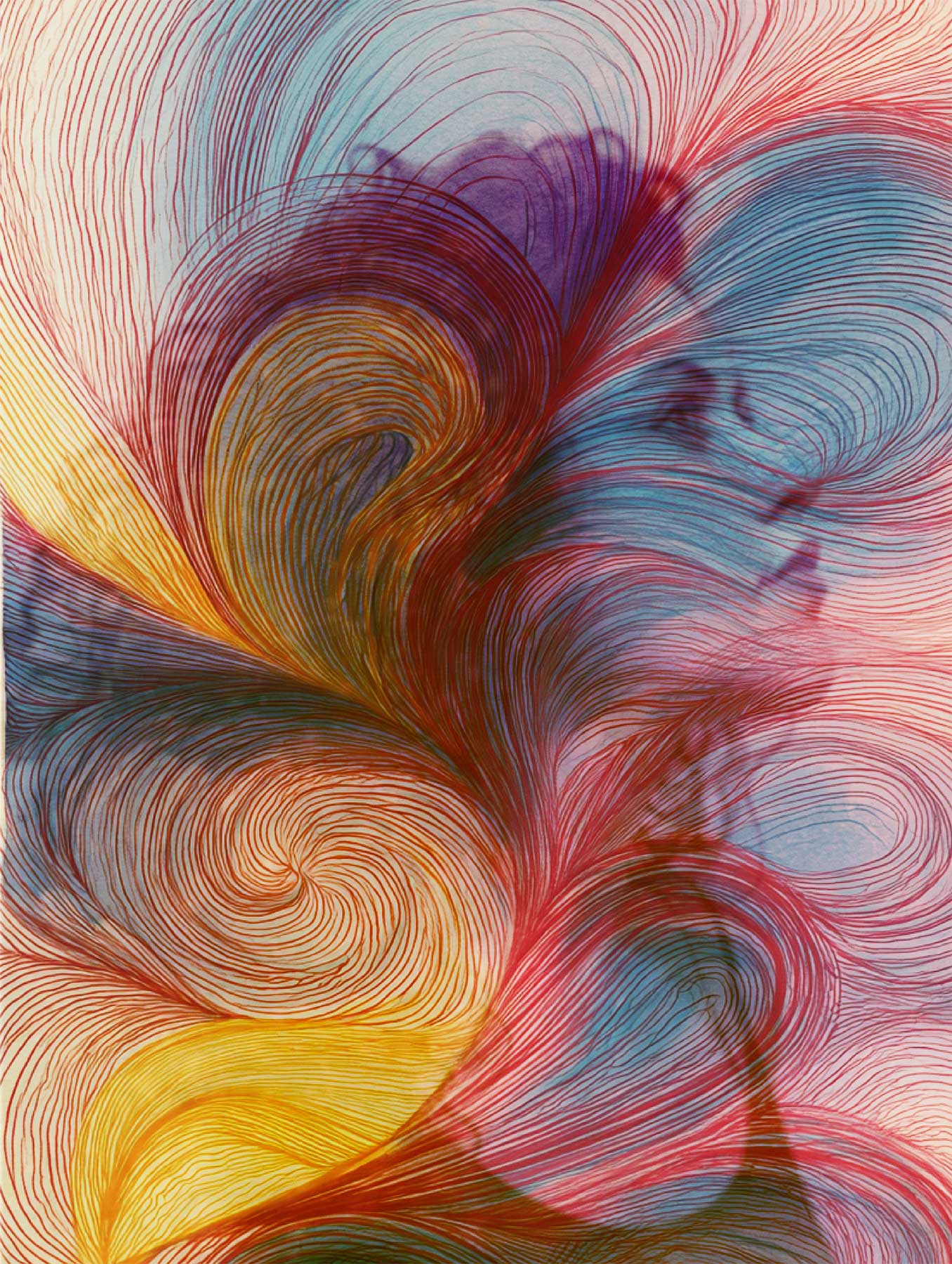
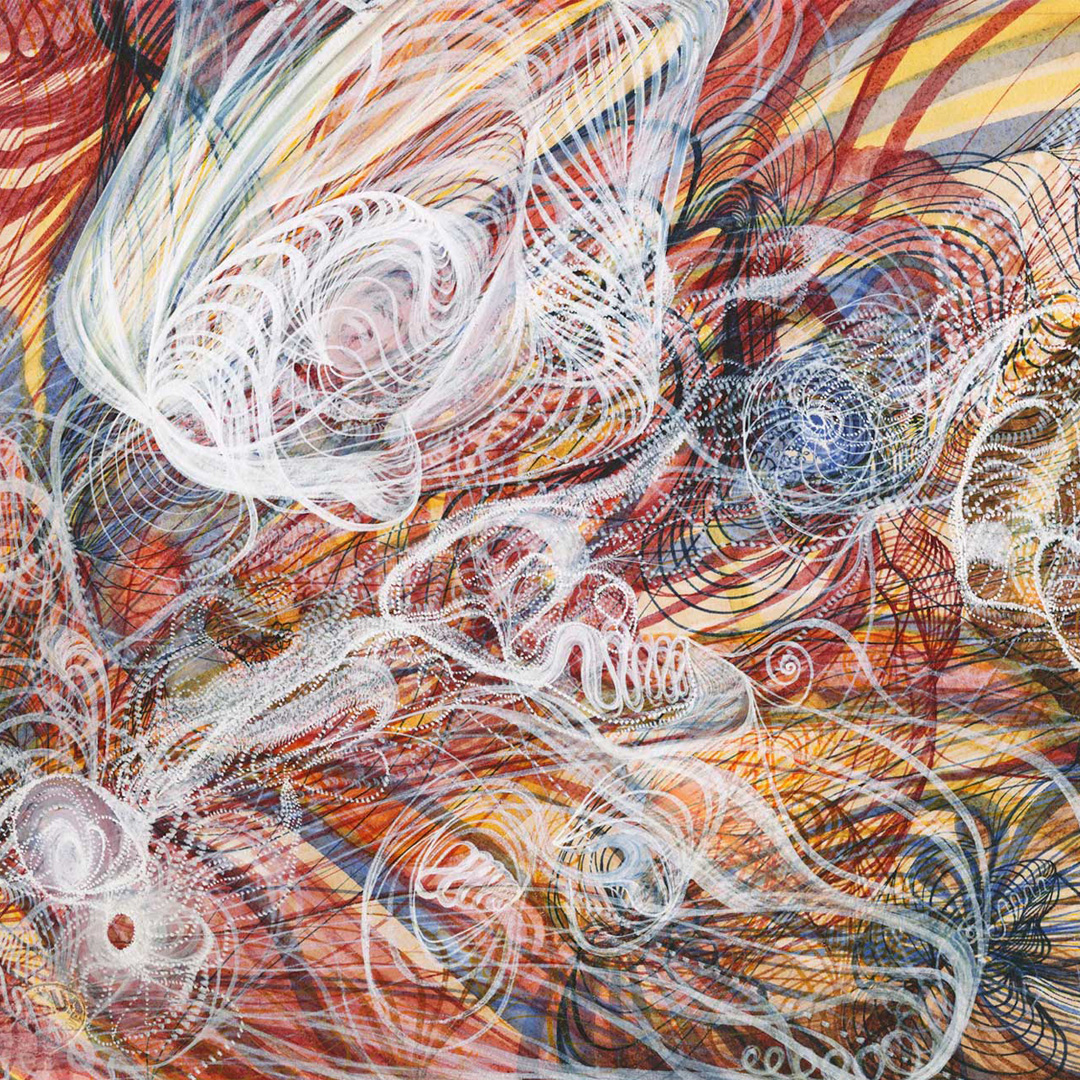
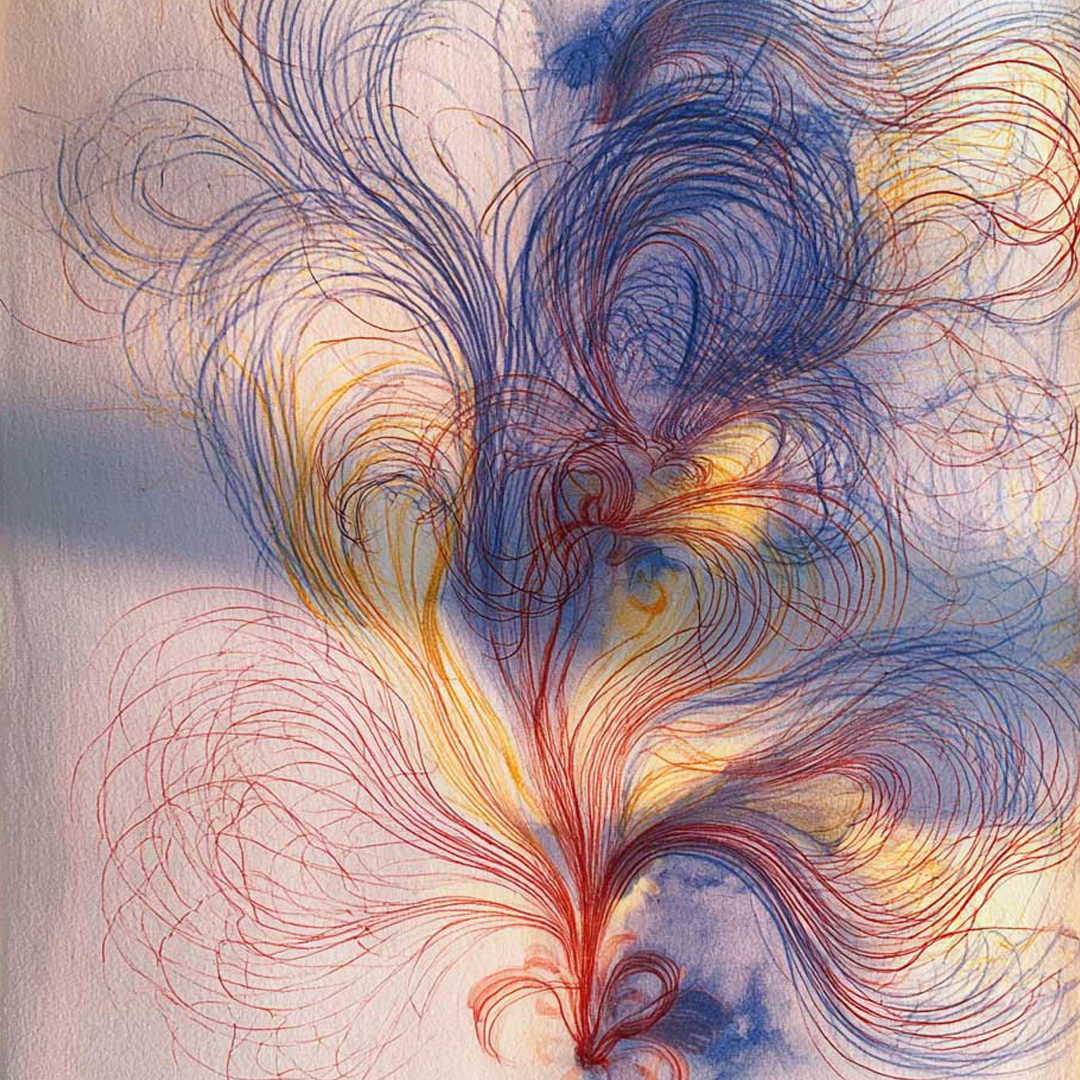
This month's palette comes from Georgiana Houghton's spirit drawings, which are much bolder than they first appear. She worked with intense yellows, reds, greens, blues, violets, and white, layering them into fine, tangled passages of color. Nothing sits still. Everything seems to flicker, loop, and reach toward something just beyond sight.
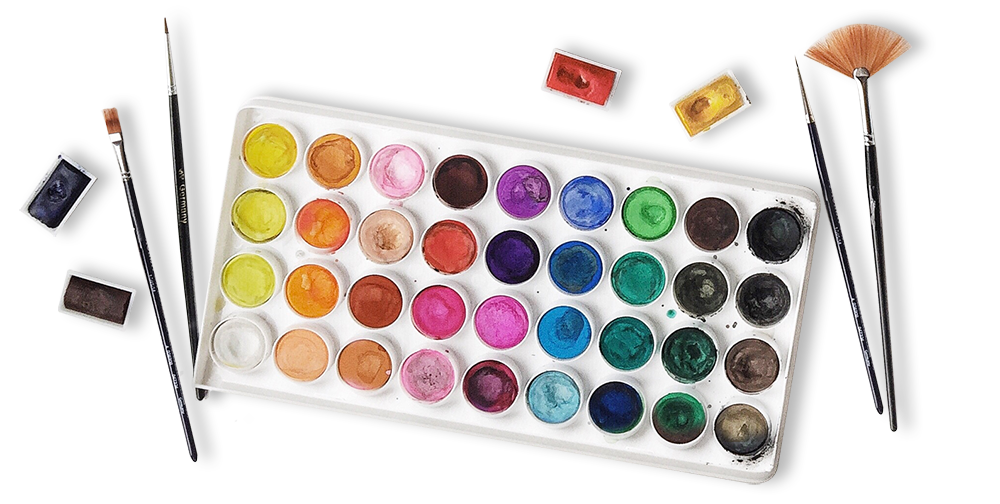
Gamboge yellow brings the glow, warm and almost electric. Crimson lake and carmine add heat, devotion, and a little drama. Prussian blue deepens the shadows without deadening them, while cobalt and ultramarine give the palette its clear, spiritual blue. Emerald green and sap green move through the work like living threads, keeping the warmth from becoming too heavy. Violet carmine and purple madder add mystery, and fine white lines lift the whole thing back into light.
Let the yellow and red carry the energy. Use the blues to steady the composition, not to cool it down completely. Thread the greens through in small, winding marks, then save the white for the end, like a veil or a final stitch of light.
This is a palette for movement, feeling, and trust. Let the colors cross over each other. Let them tangle. Houghton reminds us that color doesn't always have to describe the world we see.
Sometimes it can describe the one we sense.
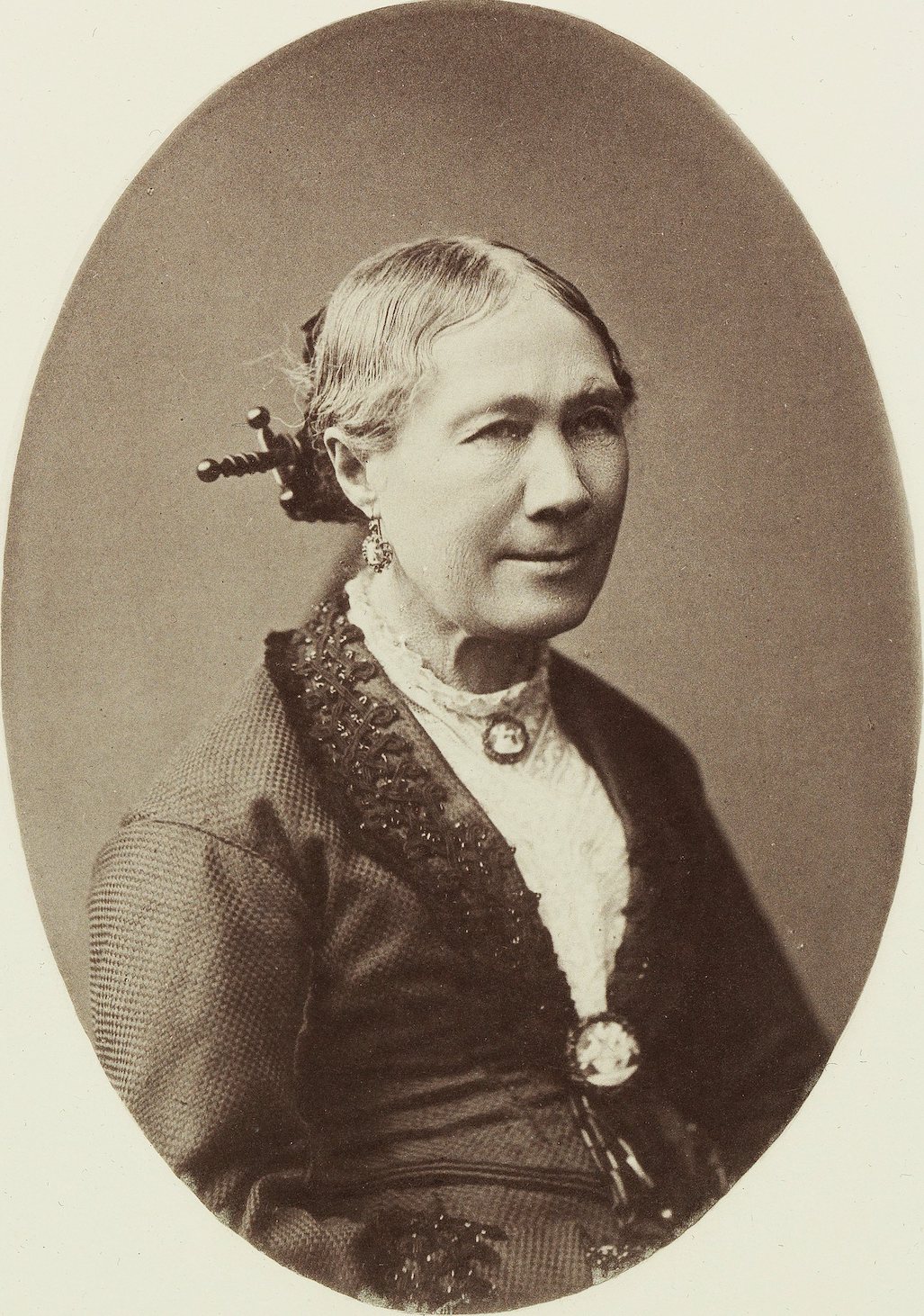
On New Year's Eve, 1859, a table tipped in a quiet London sitting room. Georgiana Houghton sat with her mother in the half dark, as they had for three months running, simply talking about spiritual matters, waiting. Nothing had happened in all that time. Then, that night, the table moved beneath their hands, and the messages began.
Within two years, the messages had become pictures. Houghton, a trained artist already in her forties, began attaching colored pencils to a planchette, then took up a brush directly, and let her hand move where it wanted to move. She didn't plan the compositions. She didn't sketch first. She simply began, and watched shapes accumulate that looked like nothing she, or anyone in London, had ever painted before.
She called them spirit drawings. We would now call them abstract art, the first ever made, by several decades, by anyone.
Houghton was born in 1814 in the Canary Islands and spent most of her life in London, the daughter of a prosperous family, educated and conventionally trained as an artist the way respectable Victorian women sometimes were. Her earliest spirit drawings gave little hint of what was coming. They were modest: stylized flowers, small botanical studies, attributed to the guidance of a spirit she called Lenny.
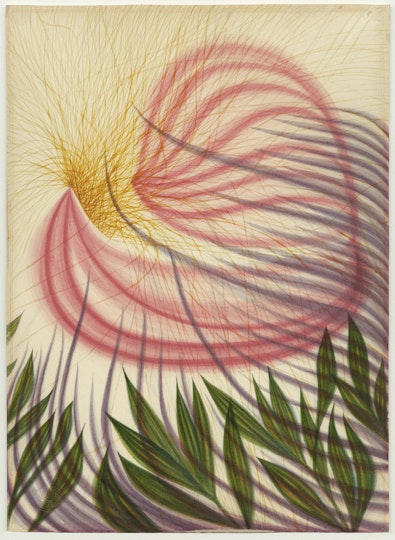
The Flower of Helen Butler
By Georgiana Houghton, 1861
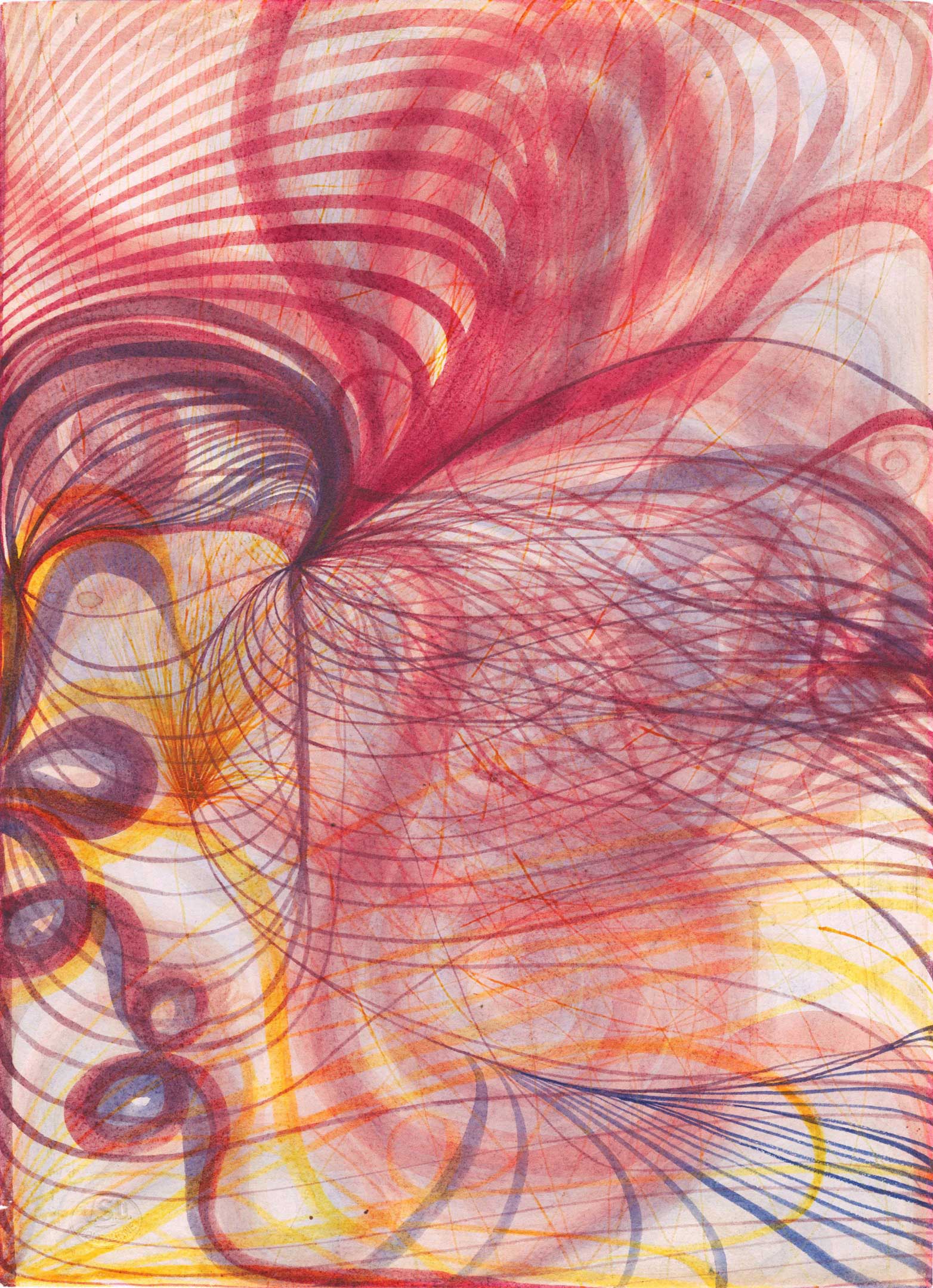
The Flower of Samuel Warrand
By Georgiana Houghton, 1862
The work kept changing. Under what she described as the instruction of a sequence of guides, first family members, then Renaissance masters like Titian and Correggio, eventually what she called seventy archangels, her paintings dissolved into pure color and line. Swirling, layered, untethered from any object in the visible world. She didn't believe she was inventing these images. She believed she was receiving them, her hand merely the instrument something larger moved through.
She assigned meaning to every choice she made. Yellow stood for God the Father and for wisdom. Crimson lake meant love. Cobalt blue meant truth. Almost nothing in her pictures was recognizable, and yet nothing in them was random either. By her own account, she was a conduit, not a creator. The distinction mattered enormously to her.
In 1871, after a decade of private work, Houghton did something audacious. She rented a prestigious gallery on Bond Street, in the heart of fashionable London, and hung 155 of her spirit drawings for public view, funding the entire exhibition herself.
London did not know what to do with her. One newspaper called it the most astonishing exhibition in the city at that moment. Another described the paintings as tangled threads of colored wool, intending it, mostly, as an insult. The show was a practical disaster, only one painting sold, and it nearly bankrupted her. Her larger hope, that the public might come to take spirit art seriously as a path to something sacred, never recovered.
Her timing was strange in a way that's easy to miss now. Houghton was painting pure abstraction roughly forty years before Kandinsky, and decades before Hilma af Klint, the artist now most often credited with a similar spiritual approach to early abstraction. There was no language yet for what she had made. The critics reaching for tangled wool had nothing else to compare it to.
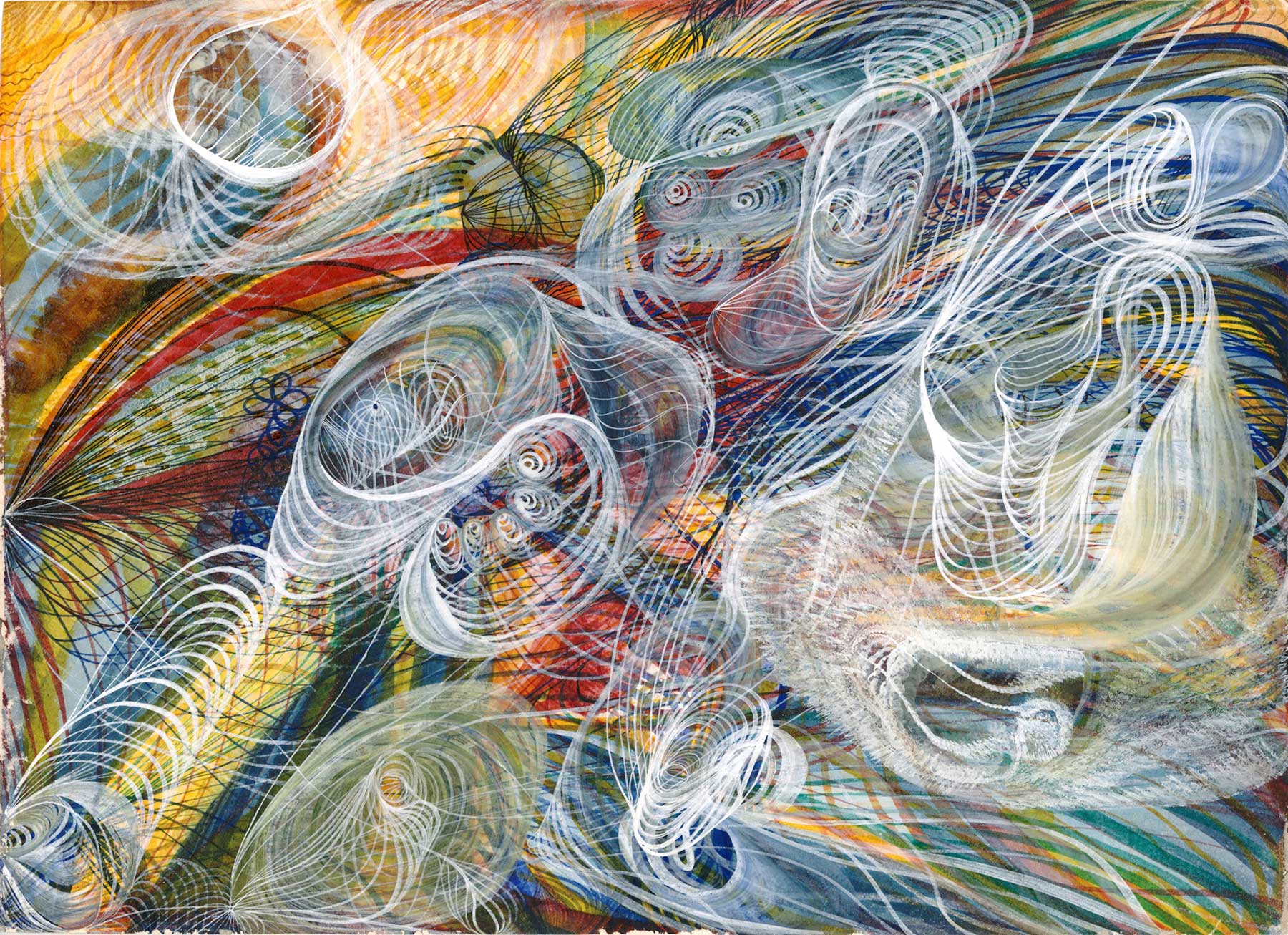
Glory be to God
By Georgiana Houghton, 1864
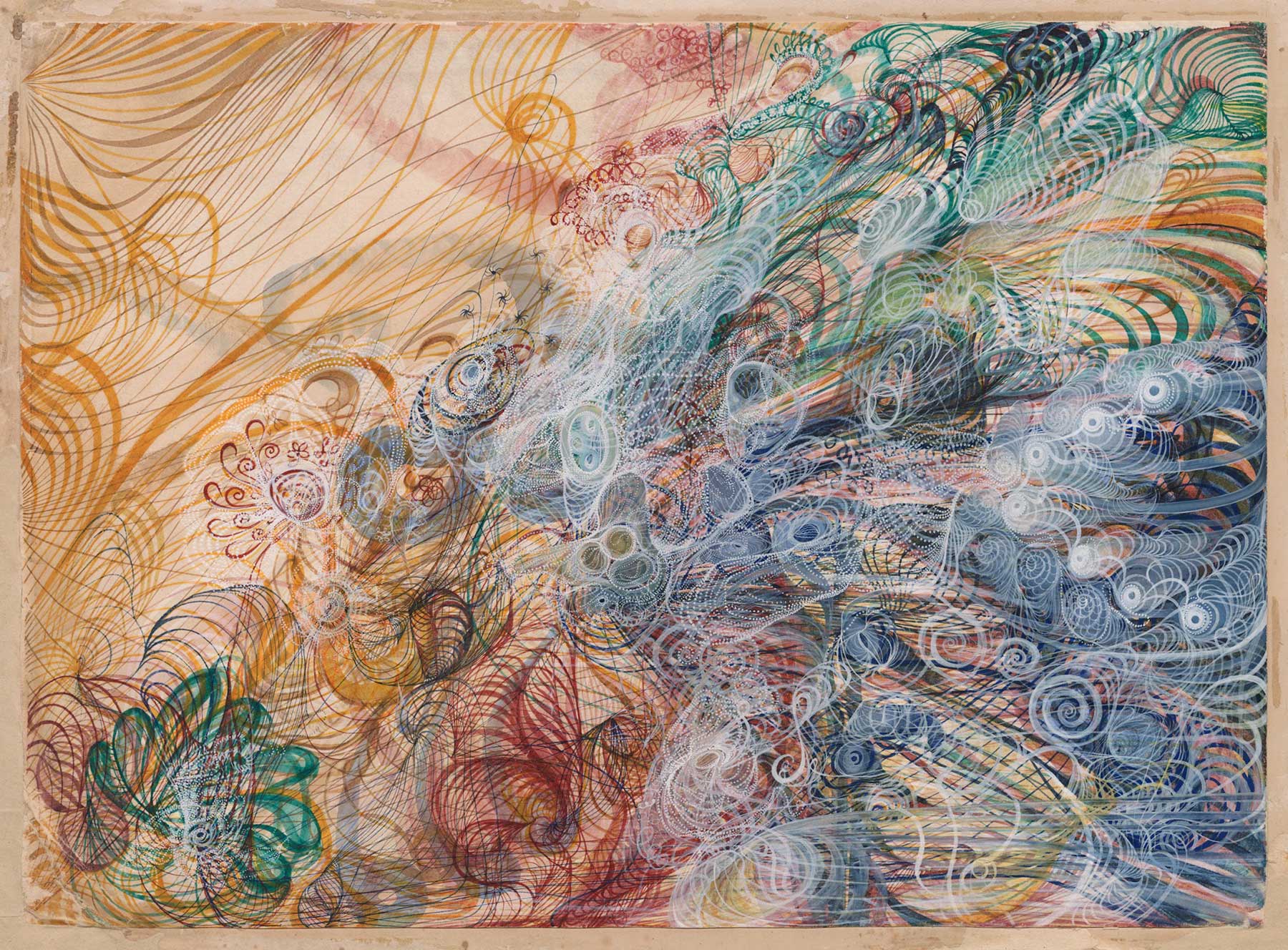
The glory of the Lord
By Georgiana Houghton, 1864
Not everyone who looked at Houghton's work in 1871 saw a visionary. The Spiritualist movement itself had a credibility problem by then, full of mediums later exposed as frauds, and critics often judged Houghton by that company. One reviewer dismissed the whole exhibition as overwrought and unconvincing, the work of someone convinced of spirit guidance with nothing to substantiate the claim. Most of the contemporary press treated the automatic, unplanned nature of her process not as a spiritual gift but as evidence of an untrained or undisciplined hand, color and line without the structure serious painting was supposed to have.
A more sympathetic modern skepticism asks a different question, not whether spirits were real, but what was actually happening in Houghton's mind and hand as she worked. Automatic drawing of the kind she practiced has a long history across cultures, and one ordinary explanation is that it draws on something already inside the artist, memory, training, the subconscious, given permission to move without the usual self-editing. By that reading, Houghton's gift wasn't contact with archangels. It was access to a part of herself most artists never let speak unsupervised.
Whether you find that explanation more or less remarkable than her own is, in the end, a matter of belief rather than evidence either way. What isn't in question is the result. Whatever moved her hand, abstraction with no precedent and no peer arrived on that paper decades before the art world had a name for it.
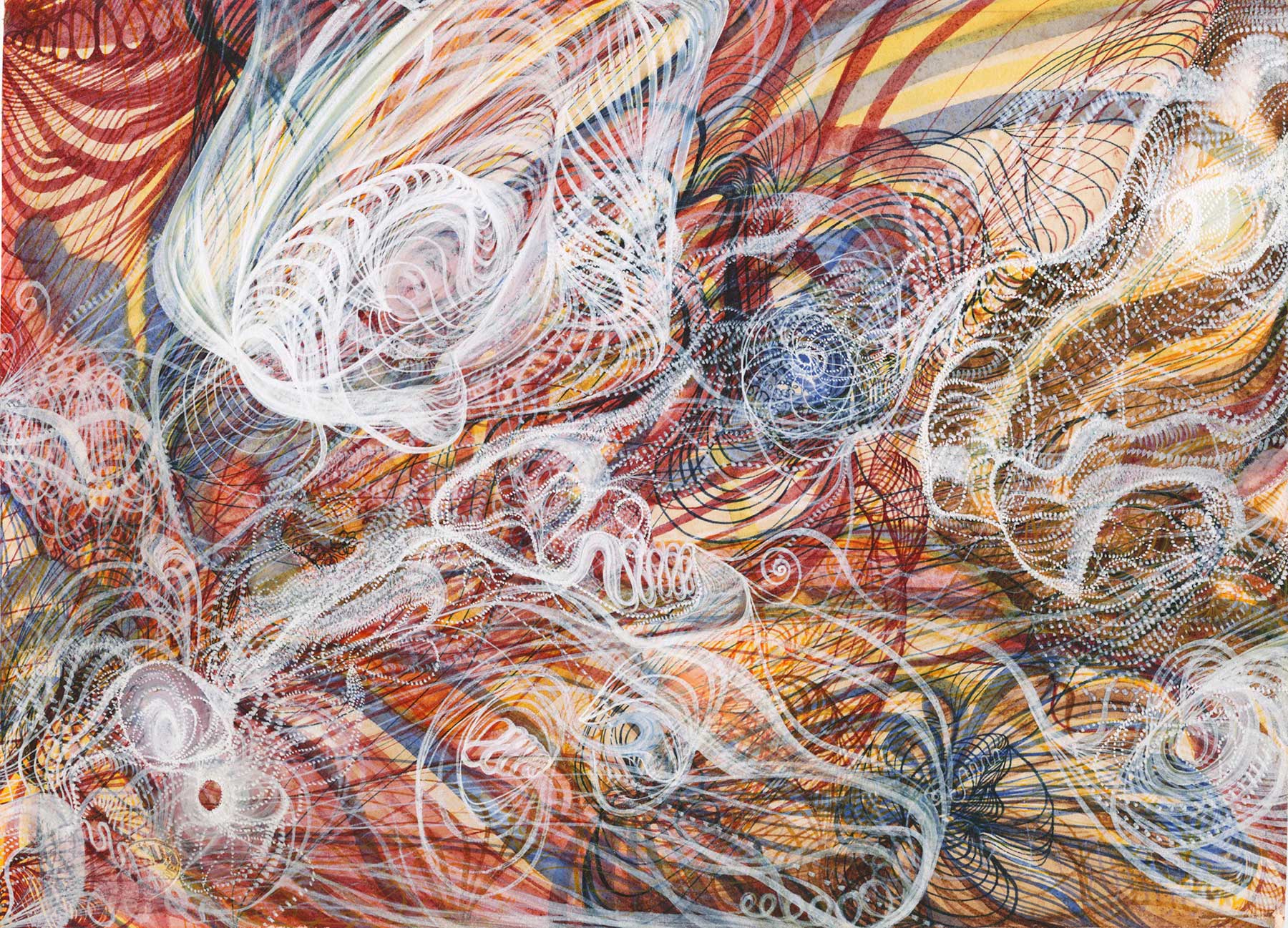
The Risen Lord
By Georgiana Houghton, 1864
The years around the Bond Street exhibition were hard on Houghton in other ways too. In 1869, within a matter of months, she lost her mother, her younger brother, and a nephew. Grief like that has ended plenty of working lives. Instead, by her own account, those losses became part of what moved through her hand, the people she'd lost reappearing, in her telling, as presences guiding the next painting.
After the exhibition's failure, she kept working, quietly, mostly outside public view, for the rest of her life. In 1882 she published a book documenting what she believed were spirit photographs, an interest that drew ridicule from skeptics of the wider spiritualist movement. She died in 1884, having watched her central hope, that spirit art might be widely embraced as a serious spiritual practice, go largely unrealized in her own lifetime.
For more than a century afterward, her paintings survived mostly by accident, kept by Spiritualist societies rather than museums, the kind of safekeeping that rarely makes it into art history books. It took until 2016, when the Courtauld Gallery finally gave her a dedicated exhibition, for the wider art world to look closely and recognize what she had done.
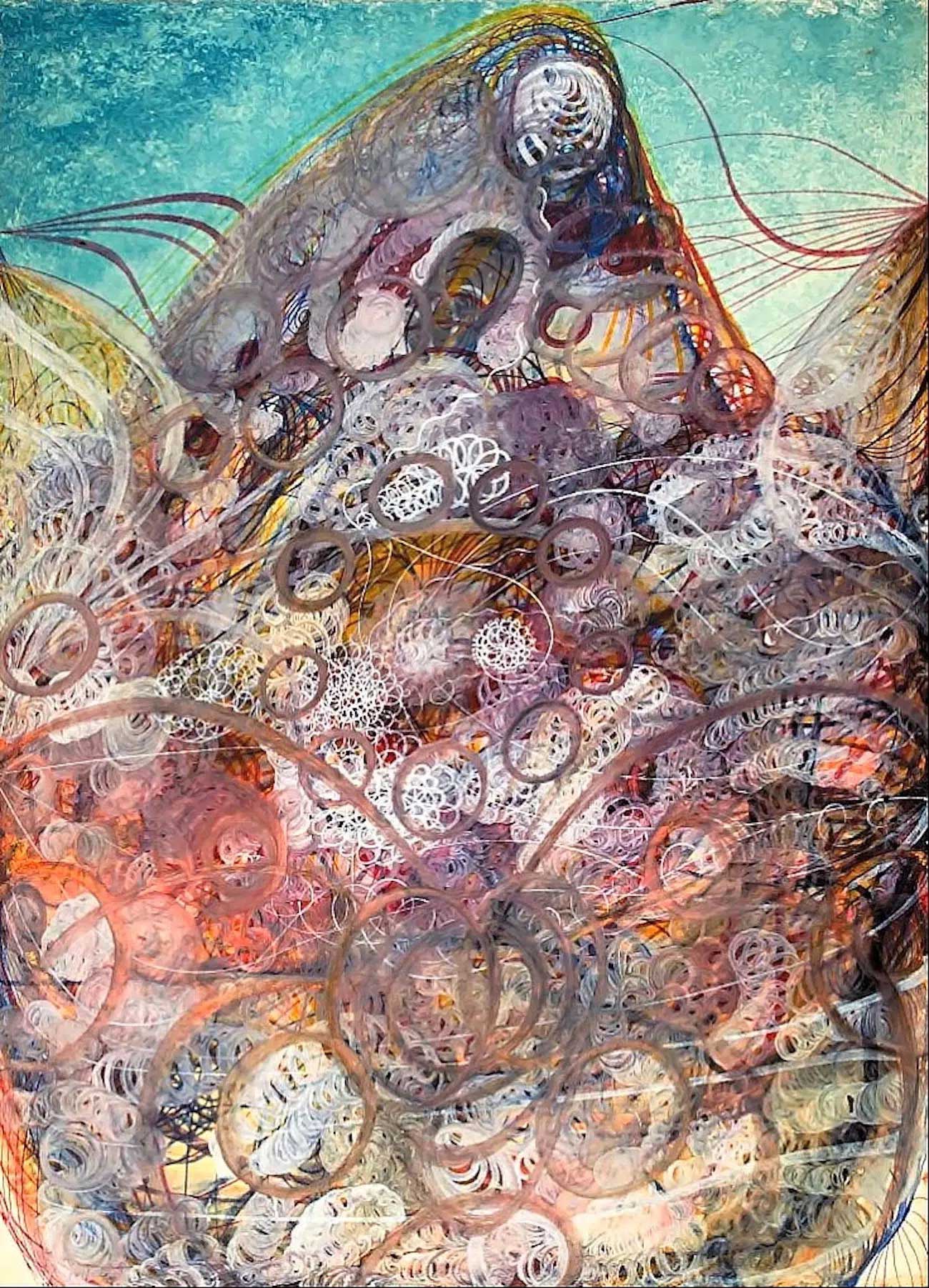
The Spiritual Crown of Annie Mary Howitt Watts
By Georgiana Houghton, 1867
Whatever you believe was moving through Houghton's hand, spirit, memory, or some part of herself she'd never been given permission to use, the work itself asks something useful of the rest of us. She made room for a process she couldn't fully explain or control, and she trusted what arrived through it.
For a woman of her era and training, with every reason to keep her work safely figurative and explainable, that took real nerve. She let the unexplainable in, and then let it back out again, onto paper, for anyone willing to look closely enough to receive it.
Most of us will never sit at a séance table or believe seventy archangels are guiding our hand. But all of us know the feeling of something moving through us toward a page we didn't fully plan and can't entirely take credit for. Houghton would tell you that feeling is real, and worth trusting, whatever you choose to call it.
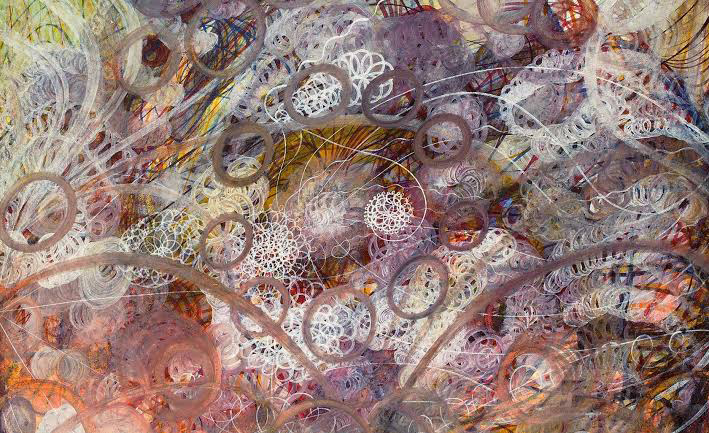
Choose one of Georgiana Houghton’s spirit drawings and spend time studying the movement before you begin. Notice how the lines loop, twist, gather, and release. Rather than trying to copy every detail, look for the main rhythm of the piece. Where does the color feel dense? Where does it open into light? Where do the lines seem to float, knot, or bloom?
In your sketchbook, create a small master study using watercolor, gouache, colored pencil, or ink. Begin with loose, looping marks, then build transparent layers of yellow, red, blue, green, and violet. Finish with fine white lines or small white dots to echo Houghton’s luminous surface.
The goal is not perfection. It is to understand how movement carries meaning.
Choose three colors from Houghton’s palette and give each one a meaning of your own. For example, yellow might become courage, blue might become truth, and green might become renewal. Let the meanings be personal. No one else has to understand them.
Create an abstract page using only those three colors, allowing each one to move differently. One color might appear as long flowing lines, another as small repeated marks, and another as soft washes. Notice what happens when color stops describing objects and starts transmitting feeling.
Let the page become a message without words.
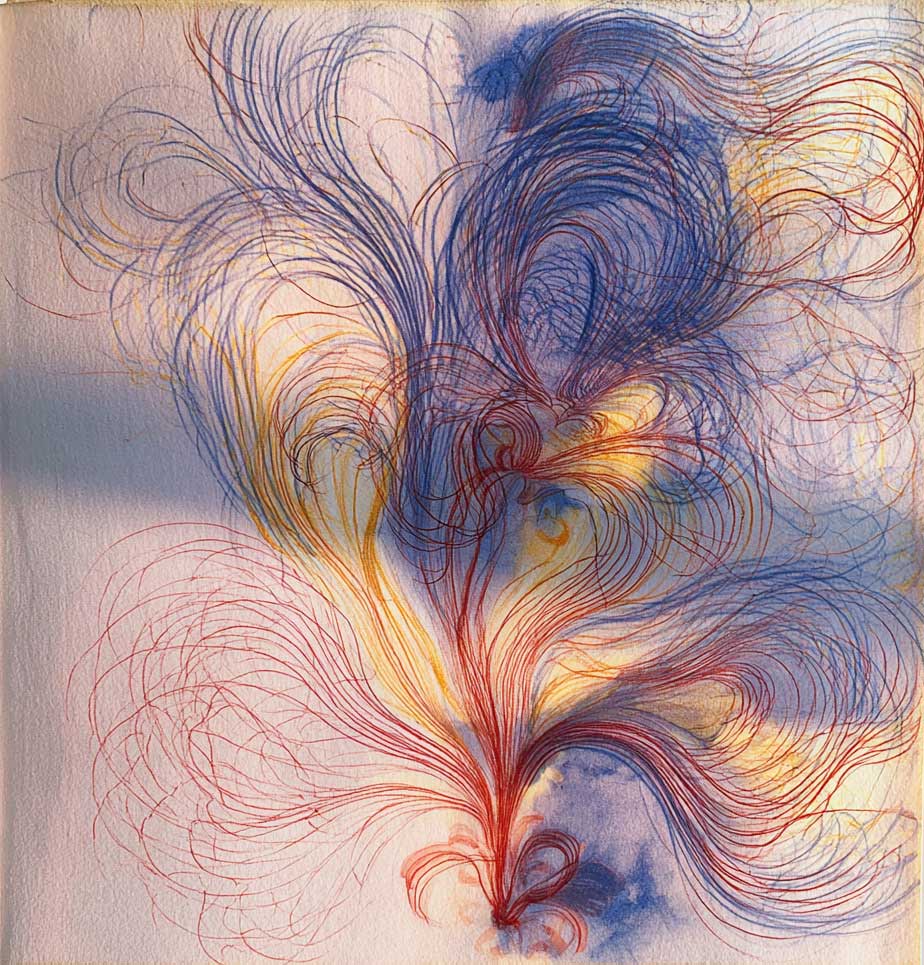
Begin with your eyes closed, or with your gaze softened. Make one continuous line across the page for one full minute without planning where it will go. Let your hand move as if it is listening. Afterward, open your eyes and look for places where the line suggests energy, connection, tension, or release.
Add transparent washes around the line, then return with ink, colored pencil, or white gouache to emphasize the areas that feel most alive. You might find a flower, a current, a veil, or nothing recognizable at all. That’s fine.
This exploration is about trust. Let the hand move first, and let the mind arrive later.
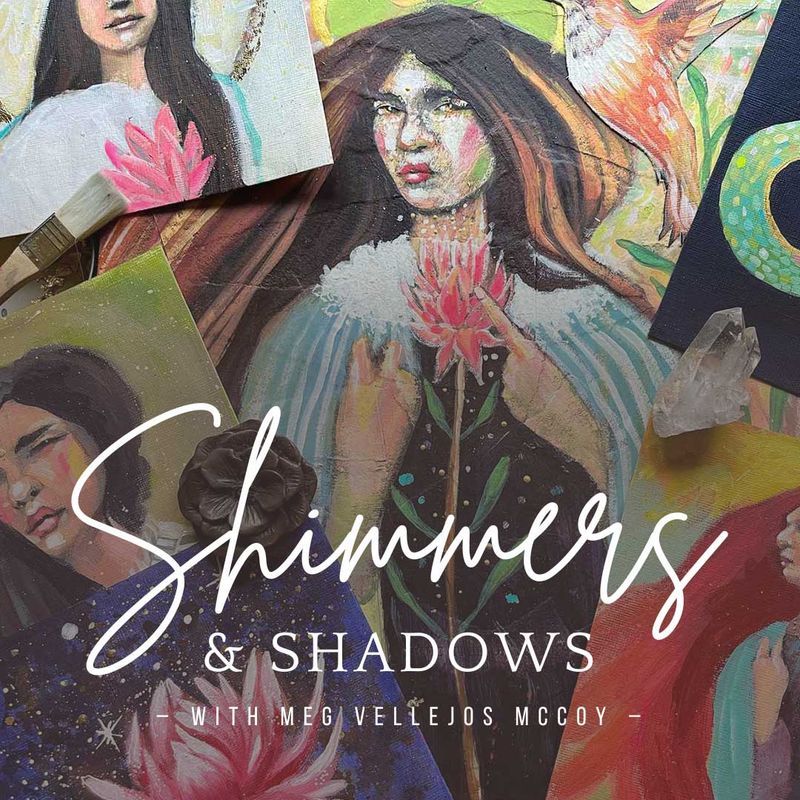
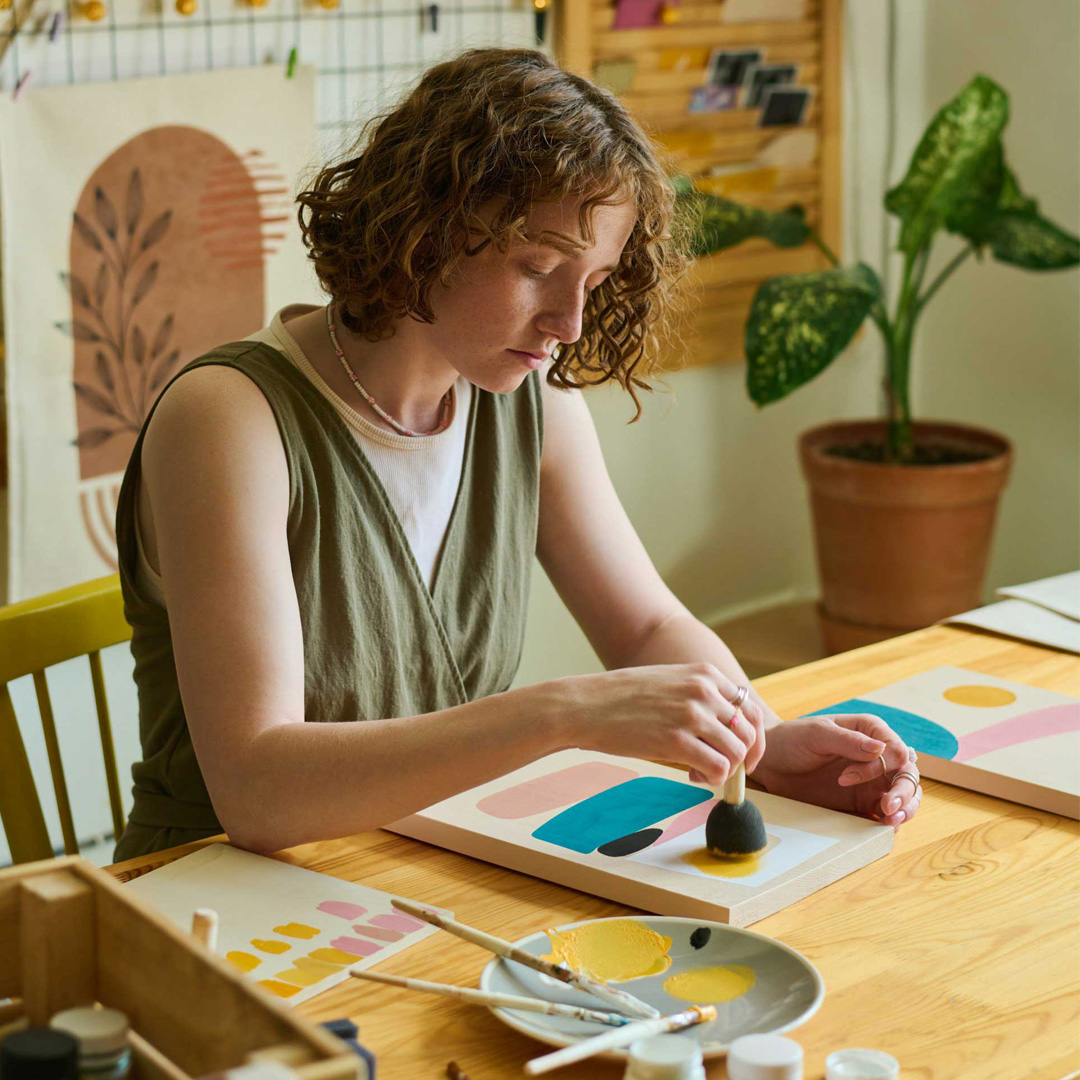
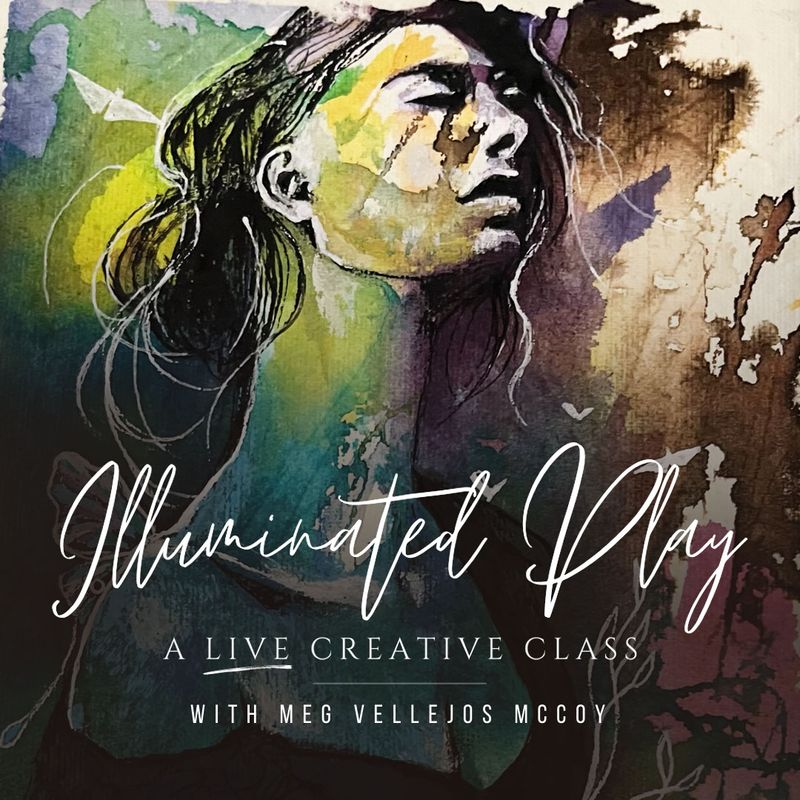
Join Meg inside a class built on the idea that creativity is a portal to play. Messing around in art, and finding out what happens, teaches you to trust the moments when life feels out of control. Something always emerges from the abstraction, and it's so often beautiful.
The process begins with a watery mess, wetting the page and letting ink fall where it wants. From there you'll look for the subject hiding in it, painting the shape around your reference with thin washes of ink or watercolor. Edges soften. Drips tell a story. Light comes through the washes as they're gently shaped into form. Then comes the mark making, and the question of who or what else wants to appear.
Wild colors, inky artifacts, and just enough definition to know what you're looking at.
You can also listen to this month’s issue of the Studioworks journal. I find I love listening to books, podcasts and music while I draw, paint or go on a long walk. Enjoy.
One of my favorite things to do is to curate inspiration. From Pinterest boards to books, resources, playlists and more - I love to share anything that might facilitate learning, expansion, and sparks of curiosity! Being an artist, we naturally crave these things so here are some of this month’s picks from me to you.
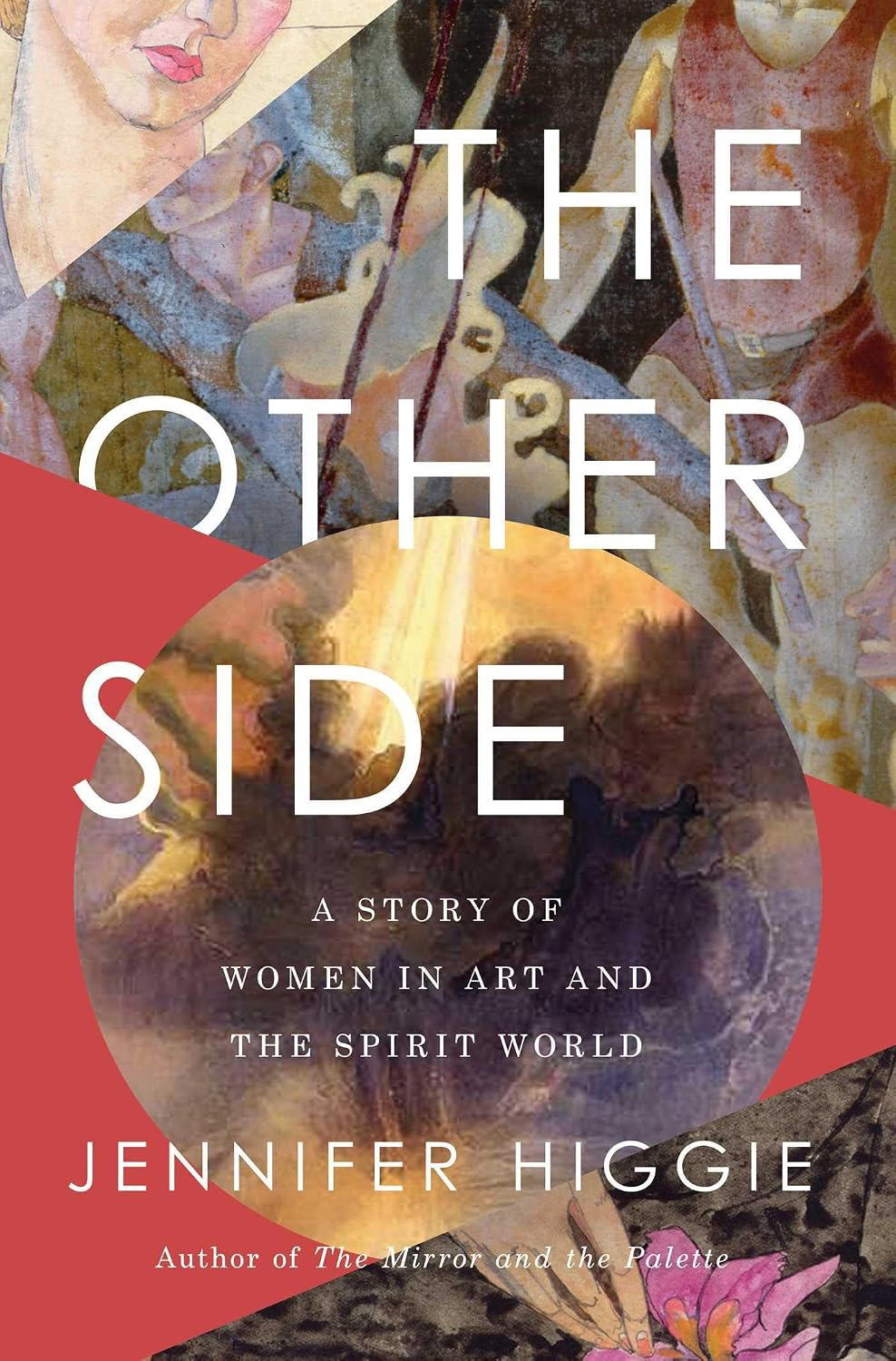
The Other Side: A Story of Women in Art and the Spirit World by Jennifer Higgie feels like a perfect companion for this issue. Moving between memoir, biography, and art history, Higgie explores women artists who looked beyond the visible world for guidance, meaning, and creative power, including Georgiana Houghton herself. It’s a fascinating read for anyone drawn to art as transmission: something received, sensed, and carried into form.
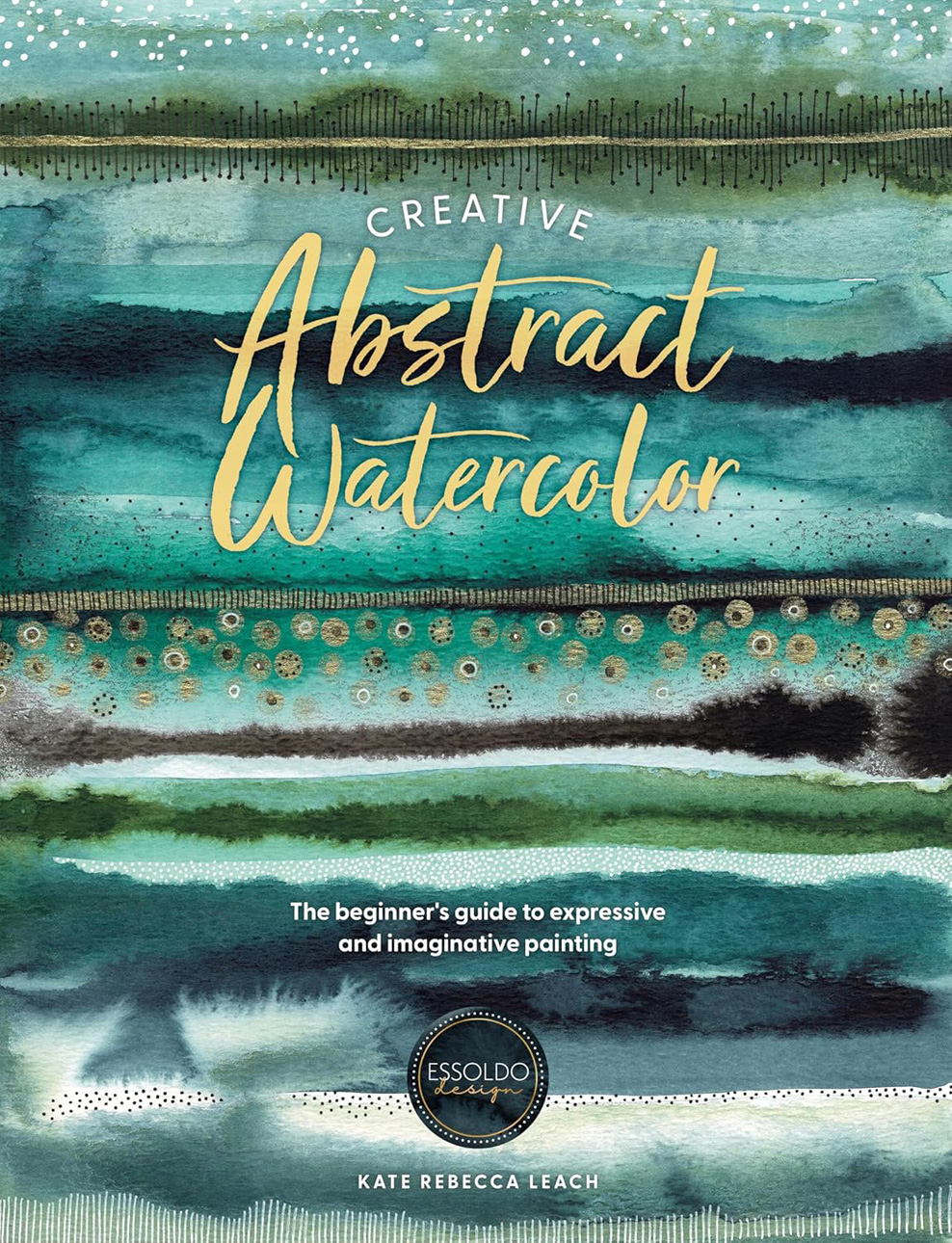
Creative Abstract Watercolor by Kate Rebecca Leach is a lovely companion for this issue’s theme of transmission. With playful exercises and expressive watercolor projects, it invites artists to loosen control, follow the movement of paint, and let color become the guide. It feels especially fitting beside Georgiana Houghton’s work, where line, color, and intuition seem to speak before language can catch up.
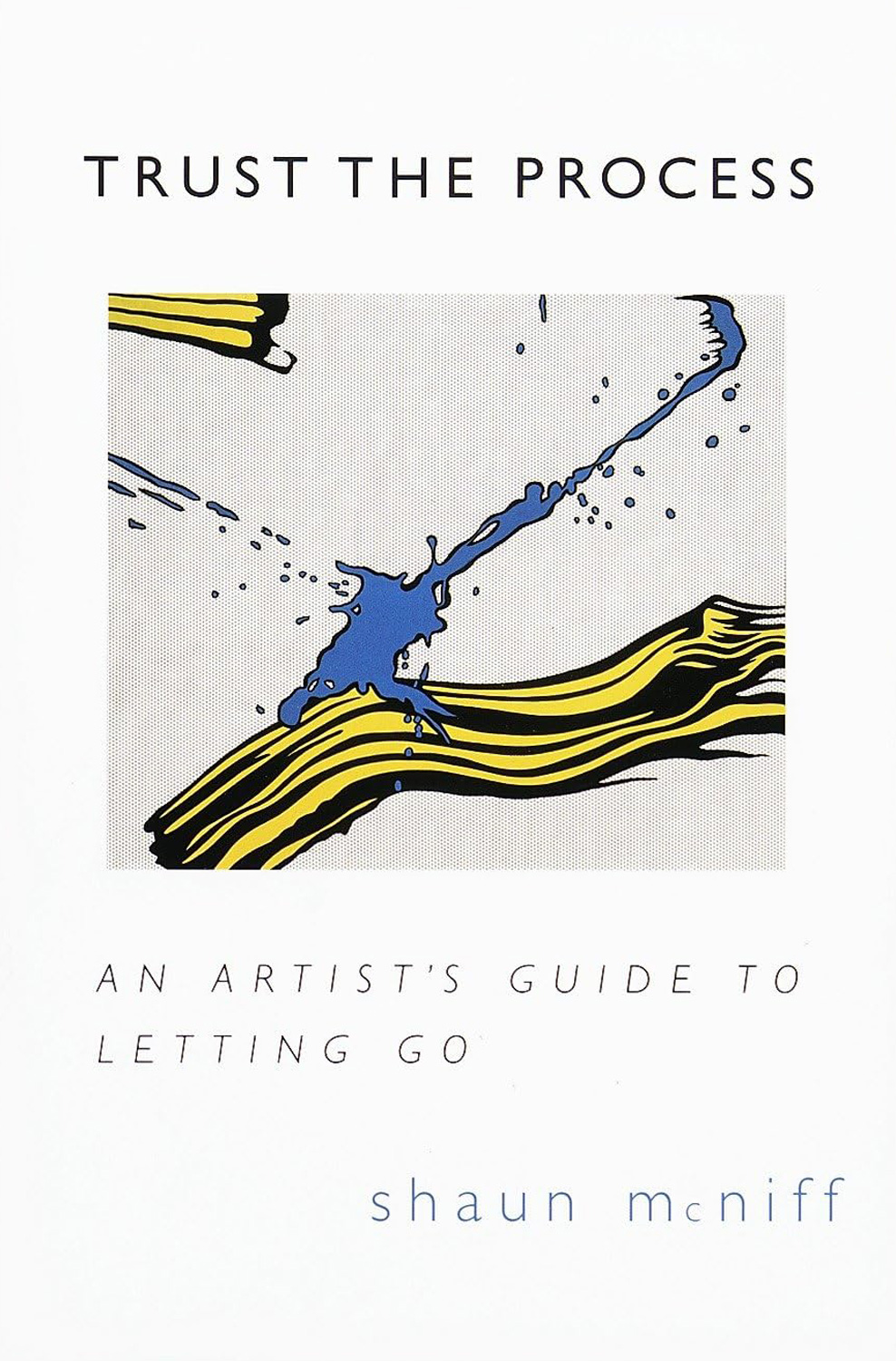
Trust the Process: An Artist’s Guide to Letting Go by Shaun McNiff is a beautiful companion for this issue’s theme of transmission. McNiff encourages artists to loosen their grip, follow the natural movement of the work, and trust what emerges along the way. It’s a gentle reminder that creativity often knows where it wants to go before we do.
I had so much fun curating this list. I hope you enjoy!!
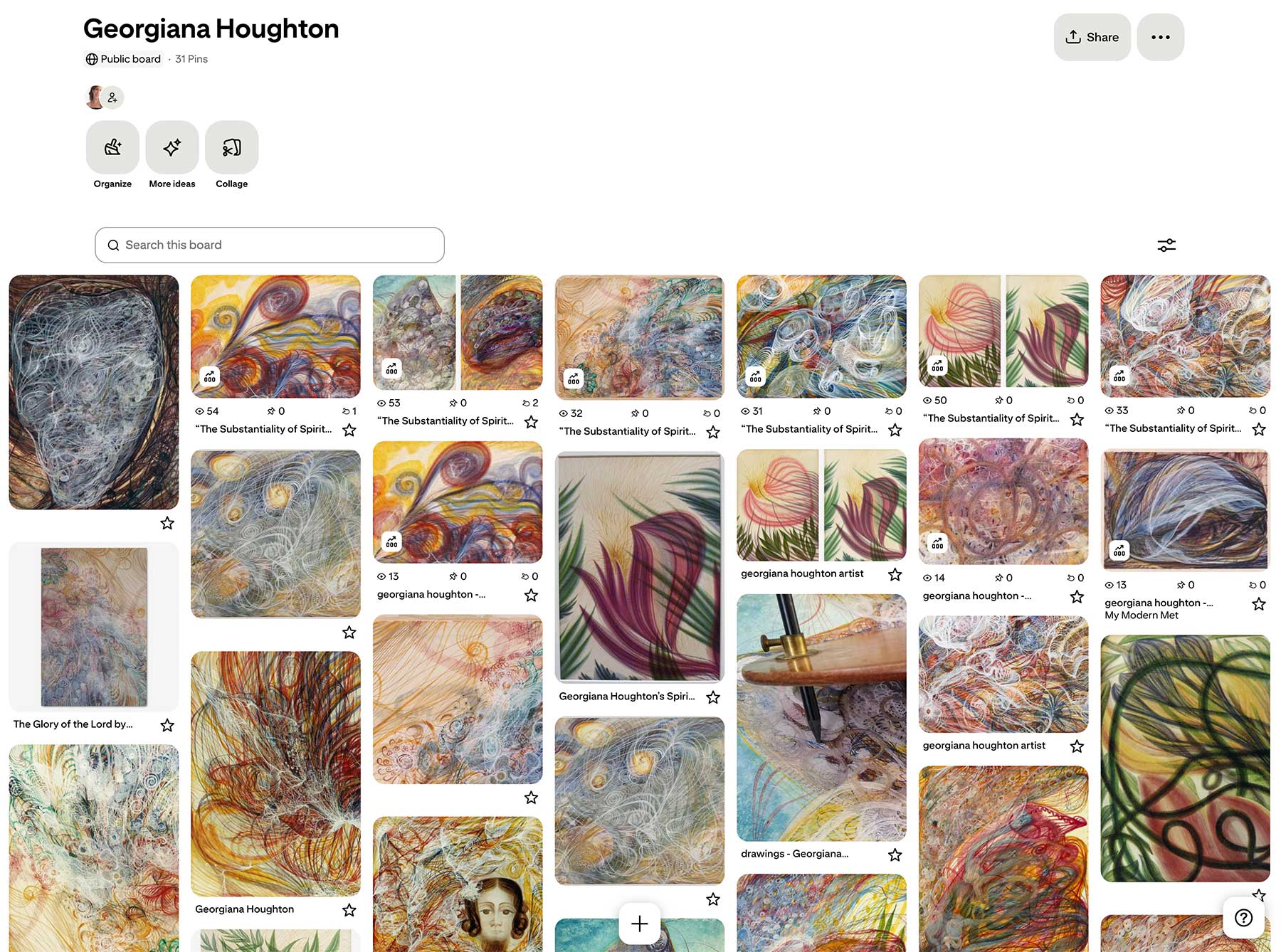
Classes that pair well with this month’s theme in your Studioworks Creative Library