Dear creative friends,
There is a moment in late March when something shifts.
It is not dramatic. It is the morning you reach for a different colour without quite knowing why. The afternoon you find yourself standing at the window longer than usual, watching the garden come slowly back to itself.
The body knows before the mind catches up.
April pulls at something in me every year. The urge to fling open the studio door. To reach for yellows and soft greens I have not touched since last year. To fill a vase with whatever is growing.
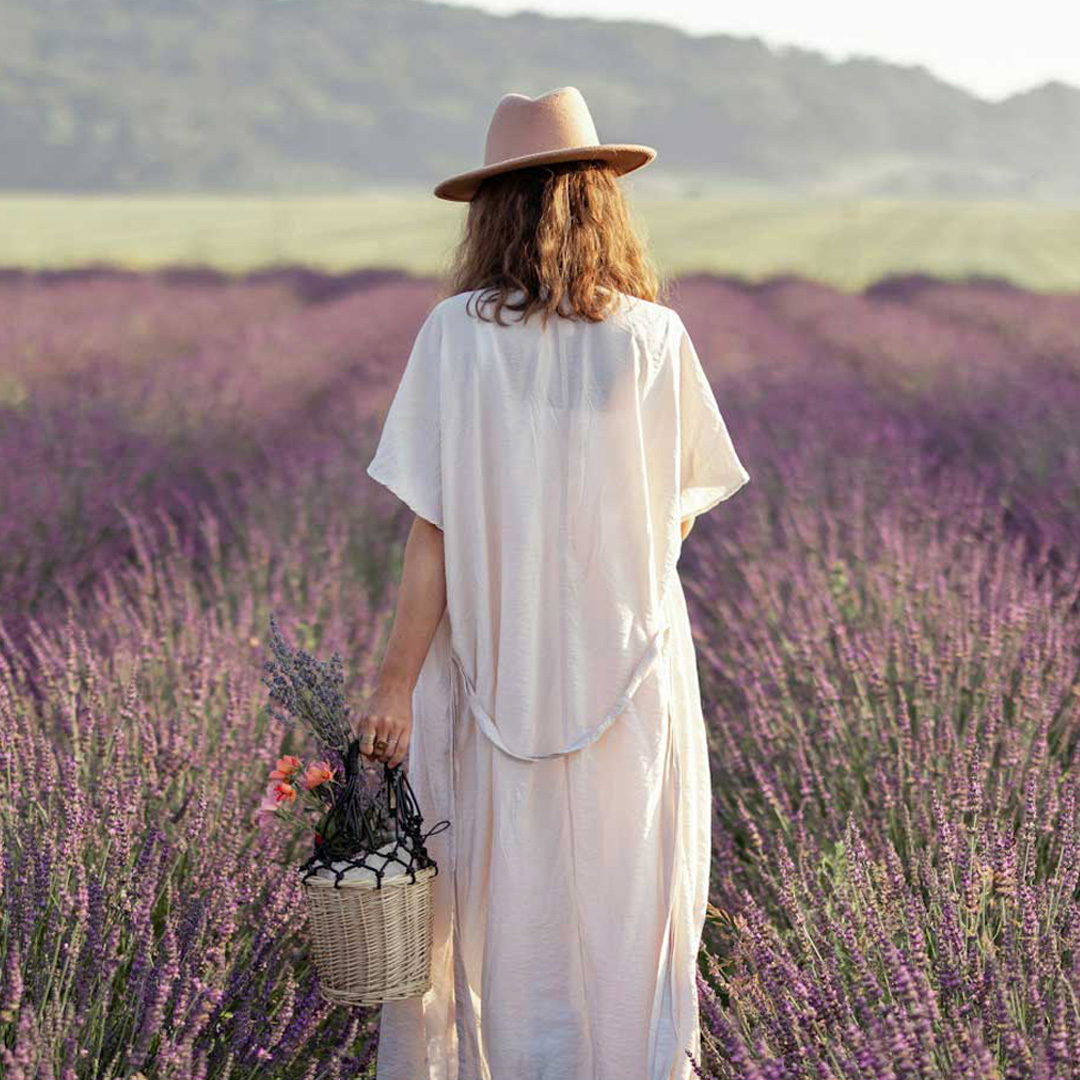
I am writing this before I leave for the South of France, where I will be teaching this month. Already I can feel the anticipation of it. That particular quality of light on old stone. The markets. The lavender. Colours so saturated they feel like warmth pressing against your skin.
But even here, before I have gone anywhere, April is doing its quiet work. The senses are stirring. The eyes are hungry again.
This issue is for that moment. The tender return of aliveness. Not a grand awakening. Just the simple, extraordinary act of noticing again.
Your senses are your first creative instrument. Before any technique you have ever learned, there is the body, paying attention.
Let April be a practice in that.
With love,

We tend to think of painting as a visual art. And of course it is. But the most compelling painters throughout history have always understood something more layered than that. A truly alive painting does not simply address the eye. It speaks to the whole body. You feel the warmth of a Rembrandt interior before you analyse its composition. You almost hear the rustle of fabric in a Vermeer. You sense the heat in a Sorolla beach scene long before your mind registers sunlight or figures or shadow.
This is not accidental. It is the result of artists who understood the senses as creative subject matter in their own right, not just vehicles for representation but the very thing being represented.
Nowhere is this evolution more vivid, or more consequential for the art that followed, than in France between roughly 1860 and 1910. In the space of fifty years, three linked movements transformed what painting could do and what it was for. The Impressionists taught us to paint light as it is felt rather than as it appears. The Post-Impressionists pushed that revelation inward, making the senses carry emotion and personal truth. And the Nabis brought it all the way home, literally, into the domestic interior, where the ordinary and the sensory became the whole subject. Each movement grew from the last. Each one asked the same essential question more deeply: what does it feel like to be alive in a body, in a world, paying attention?
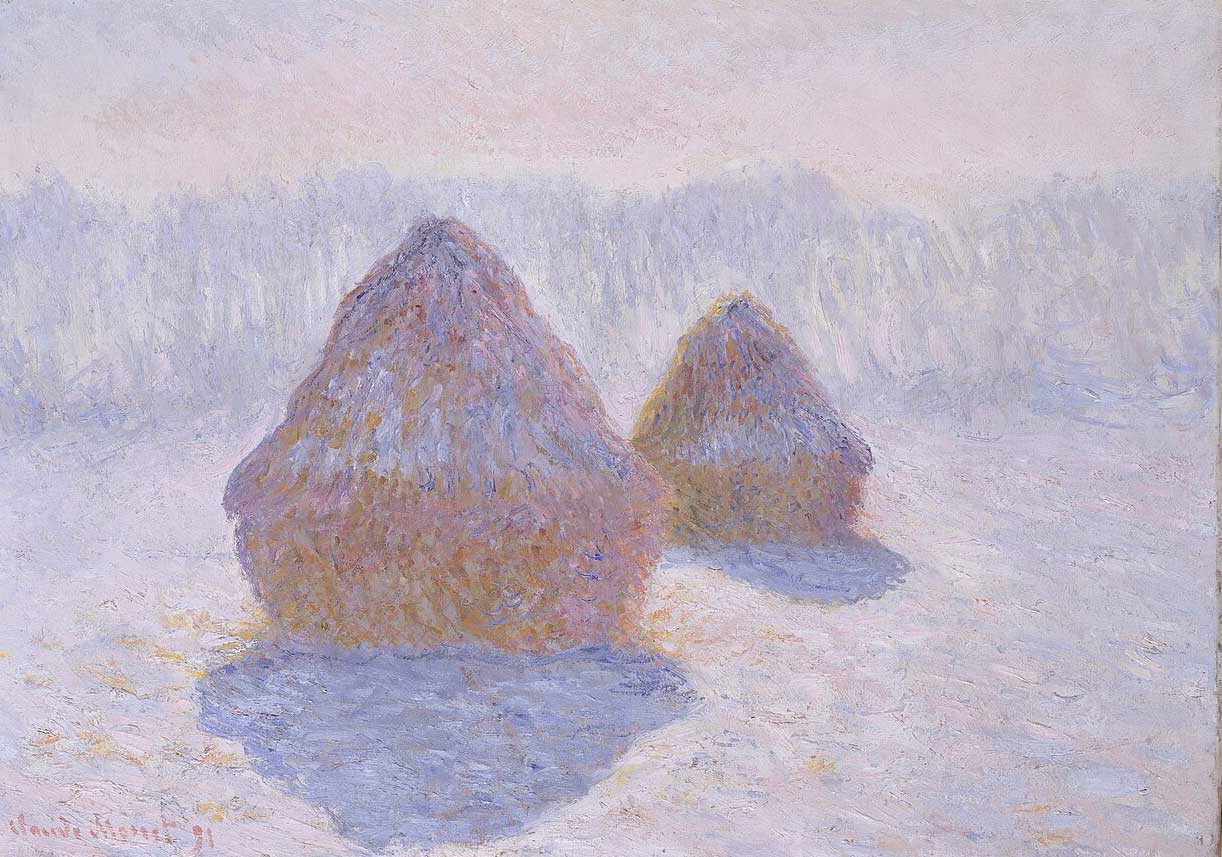
Haystacks (Effect of Snow and Sun), Monet - 1891
Impressionism arrived in Paris in the 1860s and caused something close to a scandal. The Salon, which controlled access to the official art world, repeatedly rejected work by Monet, Renoir, Degas, and Pissarro. What made this work so unsettling was not incompetence but a radical shift in intention. These painters were not trying to represent the world accurately. They were trying to paint the experience of perceiving it.
Monet's series paintings are the clearest expression of this ambition. Haystacks, Rouen Cathedral, the water lilies at Giverny, painted again and again at different times of day and in different seasons and weather. What changes is not the subject but the light, and therefore the entire sensory character of the encounter. Monet was painting perception itself. The way the world arrives to us through the senses rather than the world as it exists independently of our sensing of it.
This was genuinely new. It placed the sensing body at the centre of art in a way that had no real precedent. The painting was no longer a window onto a fixed world. It was a record of an encounter between a particular pair of eyes and the world at a particular moment. Renoir extended this into the realm of warmth and touch. His garden scenes and cafe paintings are fundamentally about the pleasure of sensation, dappled light on skin, the sound implied by gathered people, the feeling of a warm afternoon. Nothing cerebral. Everything felt.
The Post-Impressionists inherited the Impressionist revolution and immediately asked what more it could do. If Monet had shown that painting could capture the sensation of light, what else could sensation carry? The answers each painter arrived at were entirely different, which is what makes this such a rich and strange moment in art history.
Cezanne used sensation to interrogate structure. He painted the same mountain, the same apples, the same card players, over and over, building up a felt understanding of form through sustained looking. His brushstrokes are themselves sensory events, small tilted planes of colour that the eye must assemble into coherence. Looking at a Cezanne is an active physical experience. The eye works. The brain works. The whole perceptual body is engaged.
Van Gogh used sensation differently, as a carrier of emotional intensity. Those swirling, thickly loaded brushstrokes are not descriptions of what the night sky or a cornfield looks like. They are records of what it feels like to be Van Gogh looking at those things, the turbulence of a particular inner life pressing outward through the hand. His colour is equally felt rather than observed. The yellows burn. The blues vibrate with something that has nothing to do with accurate representation and everything to do with lived, bodily experience.
Gauguin pushed further still, using sensation as symbolic language. His Tahitian paintings reach for something beyond description, colour and form as carriers of spiritual and emotional meaning that could not be stated directly. What united all three was the conviction that painting should communicate a felt experience rather than simply record a seen one. The senses were no longer just receiving the world. They were shaping it, interpreting it, giving it meaning that was inseparable from the body doing the sensing.
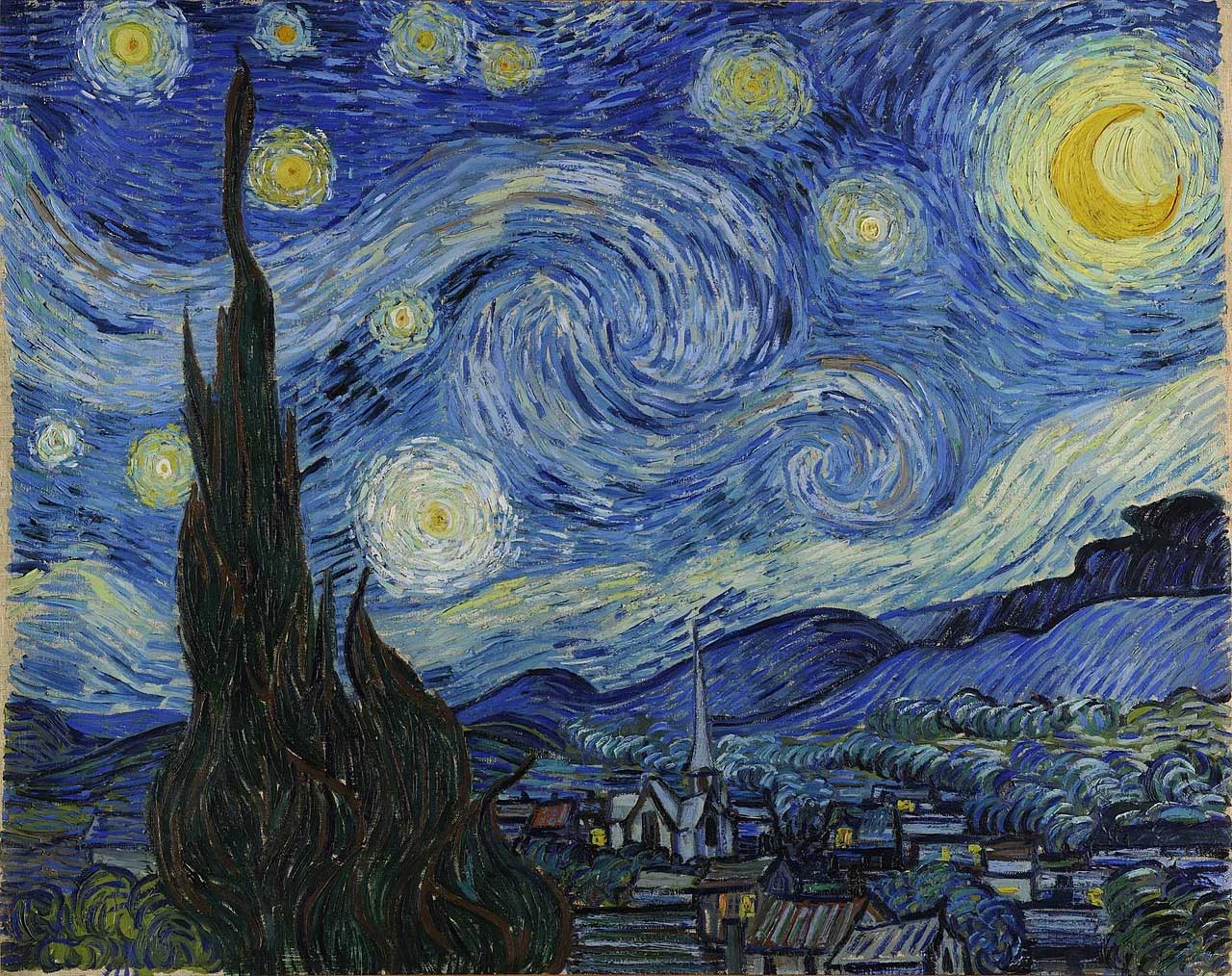
The Starry Night, Van Gogh - 1889
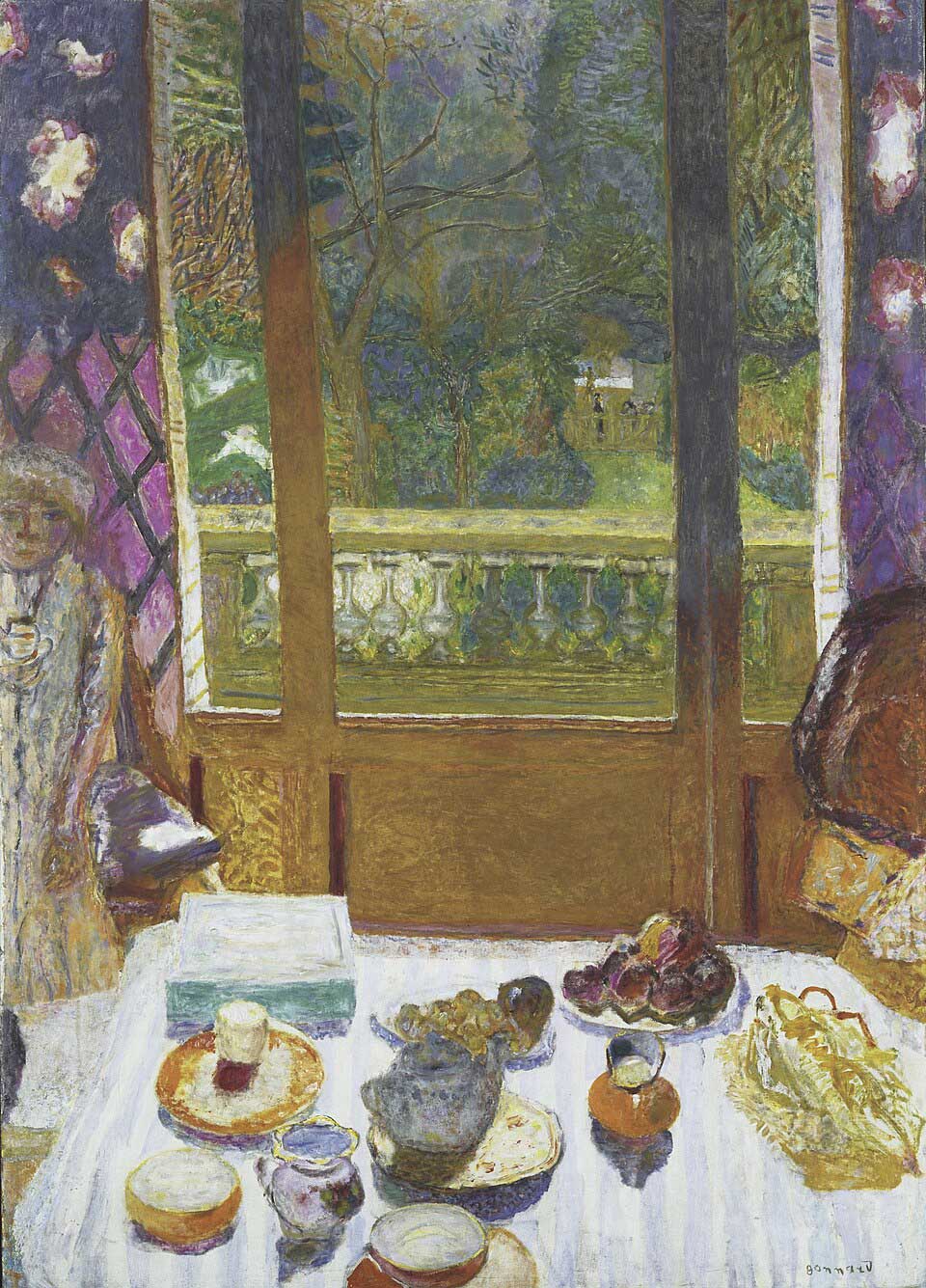
The Breakfast Room, Bonnard - c.1930
The Nabis, a group of young French painters who emerged in the late 1880s under the influence of Gauguin and the theoretical writings of Maurice Denis, took the Post-Impressionist revolution in a specific and deeply personal direction. Their founding principle was simple and radical: a painting is above all a flat surface covered in colours assembled in a certain order. Before it is a landscape or a figure or a scene, it is an arrangement of colour and form that produces a direct sensory and emotional effect on the viewer.
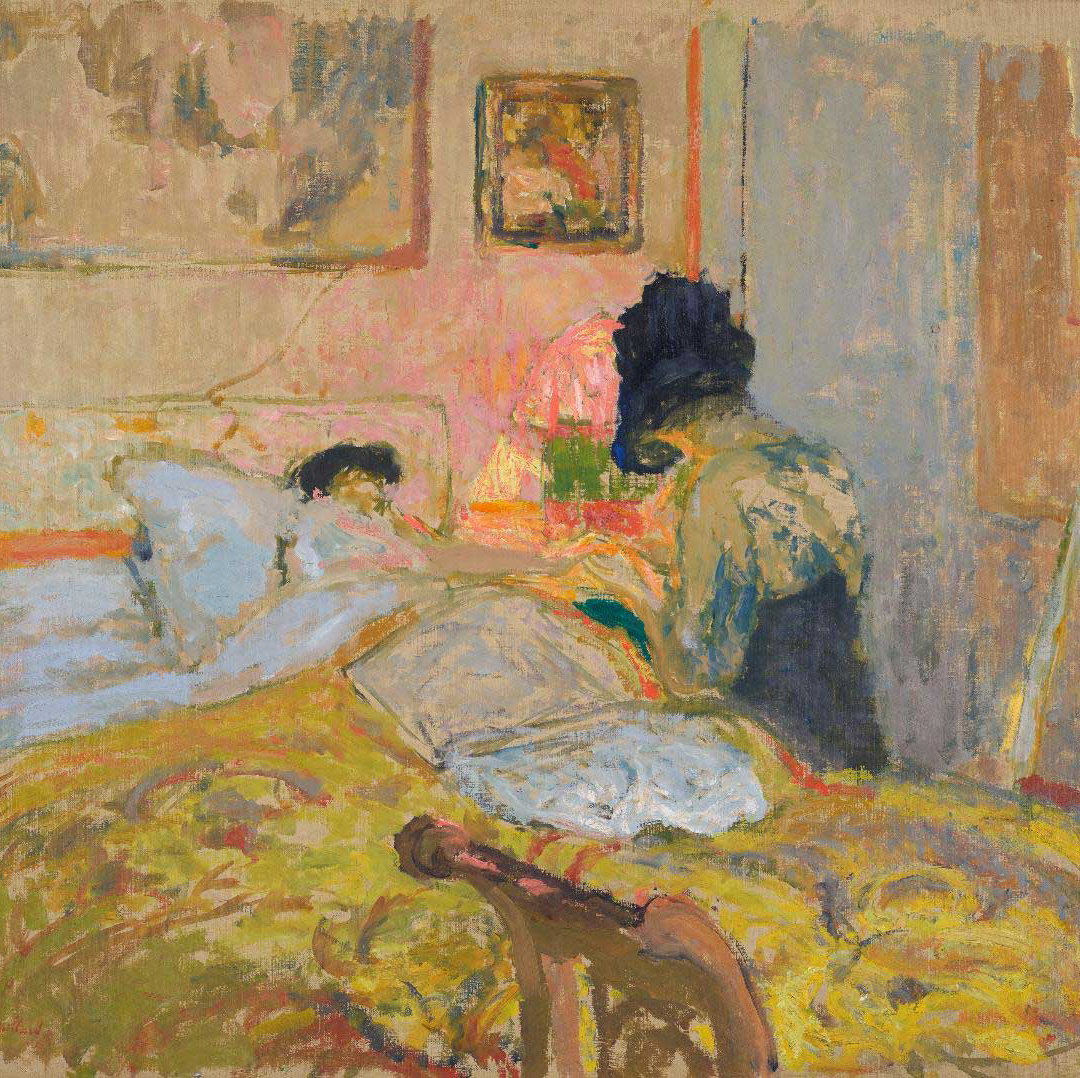
In practice, this meant turning away from public subjects and heroic themes entirely. Pierre Bonnard and Edouard Vuillard, the two great intimists of the group, found their material in the domestic interior. The apartment. The table set for a meal. The figure half-absorbed into a patterned wallpaper. The lamp casting its particular warmth across a room at dusk.
What the Nabis discovered in these ordinary spaces was inexhaustible. In a Bonnard, the table laid for breakfast becomes a symphony of colour and light, every object vibrating with the specific sensation of that morning, that room, that quality of early sun. In a Vuillard, the boundaries between figure and environment dissolve entirely. A woman sewing becomes inseparable from the pattern of her chair, her dress, the wallpaper behind her. You do not look at these paintings from a distance. You are inside them. You feel what it is like to be in that room, held by those colours, surrounded by that particular living warmth.
The Nabis brought the long arc of French sensory painting to its most intimate conclusion. The senses, they showed us, do not require grand subjects or dramatic scenes. They are fully alive in the quietest room. In the most ordinary afternoon. In the simple, extraordinary act of paying attention to what is already around you.
What this lineage offers us is both humbling and sustaining. Monet had a garden. Cezanne had a mountain and a bowl of apples. Van Gogh had a bedroom and a view from a window. Vuillard had his mother's apartment and her dressmaking fabrics. None of them went looking for extraordinary subjects. They brought extraordinary attention to what was already there.
April invites us into that same practice. The light is changing. The world is waking up. Your senses are ready to receive again after the quieter months of winter. The tradition we inherit tells us clearly that this is enough. That the room you are sitting in right now, seen with genuine attention, contains everything you need.
There is a particular kind of creative drought that does not feel like drought at all. You are still working. Still showing up. Still producing things. But somewhere along the way the aliveness went out of it. The work feels like work in the wrong sense. Competent, perhaps. But not felt.
I know this place. I have spent time there more than once.
What I have learned is that the way back is almost never through the mind. Planning does not fix it. Techniques do not fix it. Trying harder definitely does not fix it.
The way back is almost always through the body.
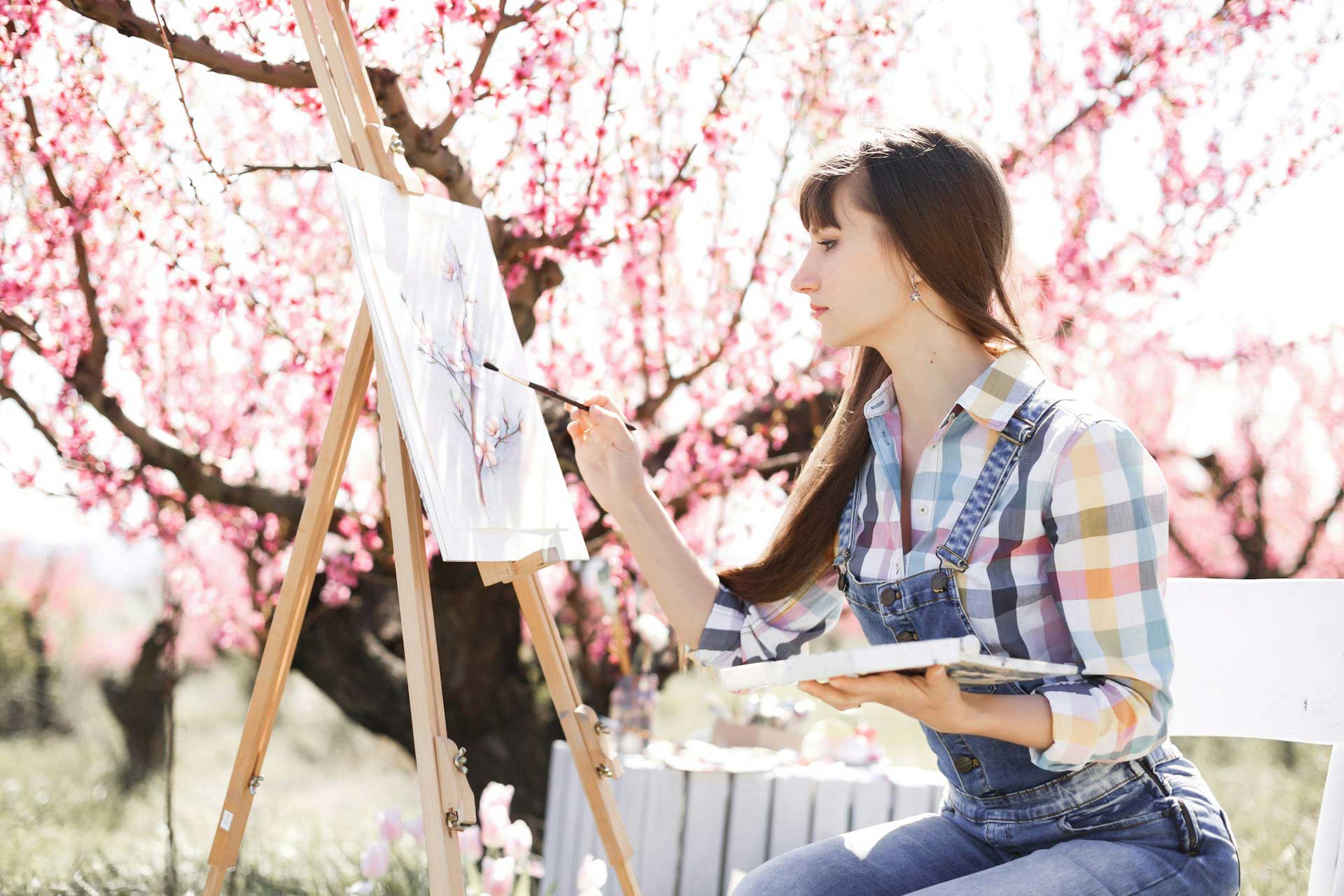
There is a particular quality of attention that happens when you stop thinking about making art and start simply experiencing something. The roughness of a linen surface under your fingertips. The exact smell of a specific pigment mixed with medium. The sound of a brush moving across dry paper, that particular whisper.
These things matter. Not as preparation for something else. As the thing itself.
The senses are your oldest creative tools. Before you knew a single technique, before you ever heard the words composition or value or colour theory, you were a small person with wide open senses, drinking the world in. That capacity does not disappear. It just gets buried under layers of knowing.
April is a good time to unbury it.
There is a practice I return to whenever I feel the aliveness going out of my work. I call it a sensory inventory, though that makes it sound more formal than it is. Really it is just this: before you begin working, stop and notice five things. Not in your head. In your body.
What do you smell right now? Not what should be there. What actually is?
What does the surface you are about to work on feel like under your hand? Temperature, texture, weight.
What sounds are present in the room? Not as background. As foreground.
What colours are closest to you right now that you have not consciously registered?
What does your body actually feel like sitting here? Where is it holding tension? Where is it at ease?
That is the whole practice. Two minutes. And it does something remarkable to the quality of work that follows. The marks become more alive. The decisions become more instinctive. The work stops being something you are producing and starts being something you are genuinely present to.
The senses are always available. They never went anywhere. They are just waiting to be invited back in.
This month, make that invitation deliberately. Not just in the studio, but in your daily life. Notice what you are tasting, smelling, touching, hearing, seeing with an attention that is curious rather than dutiful. Let the world be rich again. Let it feed you.
You will be surprised what arrives on the canvas when you walk in already full.
According to the Oxford English Dictionary, sensation is defined as:
A physical feeling or perception resulting from something that happens to or comes into contact with the body.
An inexplicable awareness or impression.
Sensation is the body's first intelligence. Before thought organises experience into meaning, sensation receives it. Raw, immediate, unfiltered. The warmth of afternoon light on your arm. The slight resistance of a surface that is not quite dry. The cool weight of a glass of water held between both hands.
As artists, sensation is our most direct link to the living world. It is the thread that connects what is outside us to what moves within us. When we are fully in sensation, truly feeling rather than observing from a distance, the work that emerges has a quality that nothing else produces. A presence. An aliveness.
April is the season of returning sensation. After the quieter, more inward months of winter, the body begins to receive again. Colour seems brighter. Scent more insistent. The textures of the world more vivid, more communicative. Spring does not just happen to the landscape. It happens to us.
Practicing sensation in our creative lives means lowering the threshold between experience and response. It means allowing what we feel in our bodies to move into our hands without too much interference from the censoring mind.
This can feel vulnerable. Sensation is honest in a way that thought is not. It bypasses the part of us that knows what we should make and goes straight to what we actually feel.
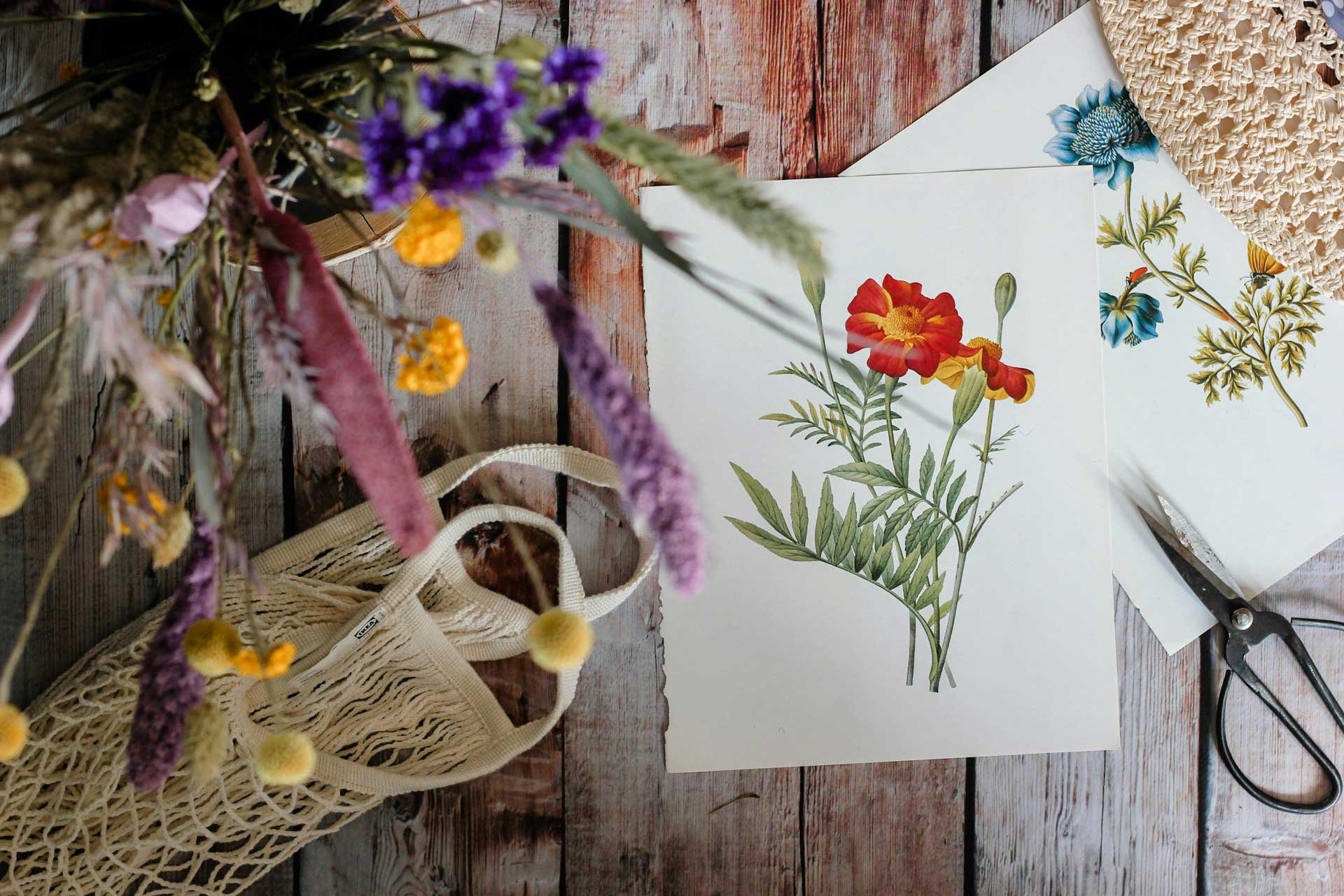
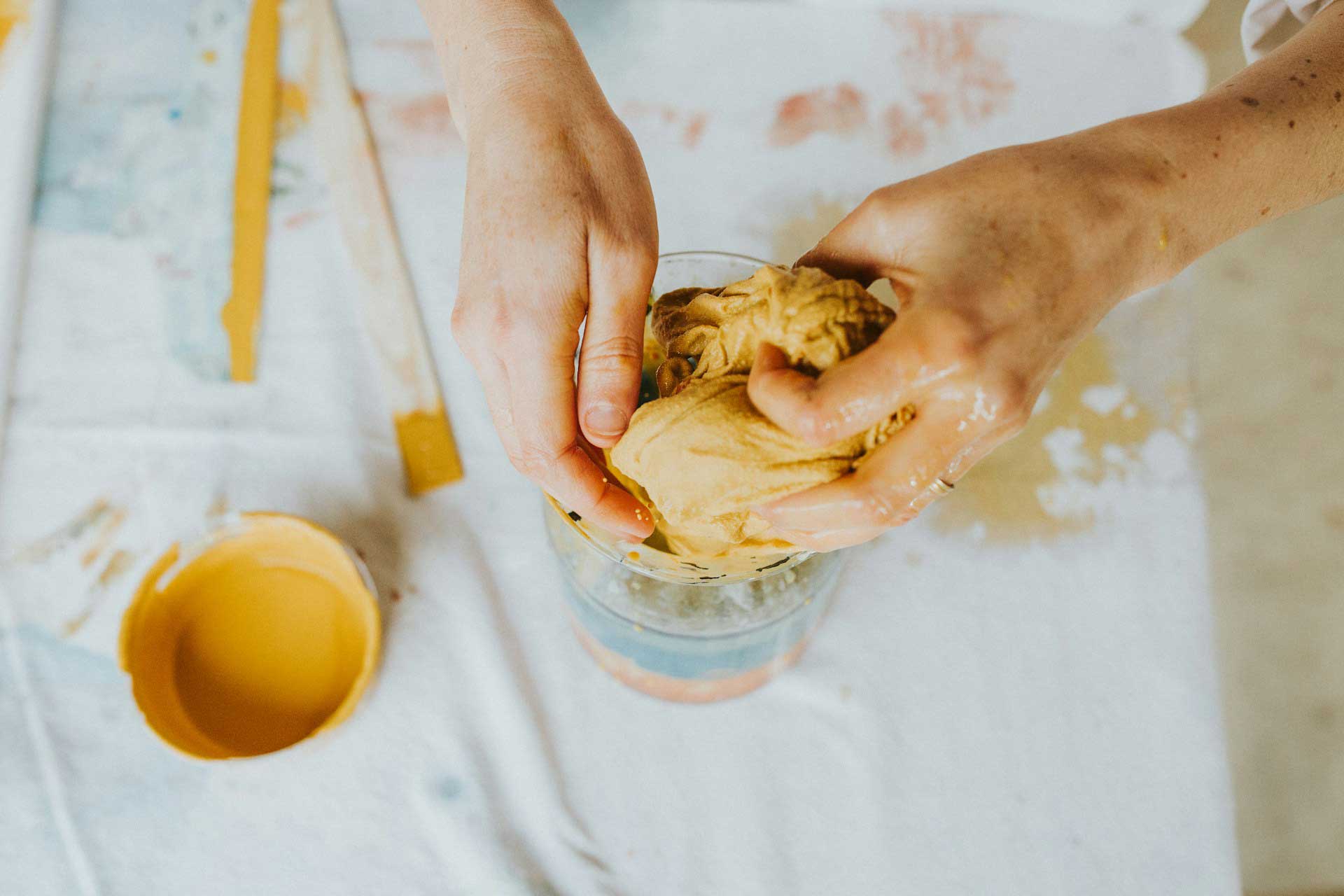
Try this: before you begin your next creative session, spend a moment just touching the materials you are about to use. Not preparing. Not planning. Just feeling. The weight of the brush. The temperature of the palette. The grain of the paper. Let your hands introduce themselves before your mind takes over.
What am I actually sensing right now, in this moment, in this body?
What does this material feel like, not what should I do with it, but what does it feel like?
What sensation am I most drawn to today? What am I resisting?
Sensation reminds us that art begins in the body before it reaches the canvas. When we honour that, when we let ourselves feel before we think, something shifts in the work. It becomes less managed and more alive.
More like us. More like now.
Let's tap into our creative intuition and do some self-reflective work inspired by our theme. Below you will see our month's Oracle/Tarot card spread. But fear not, if you are not one drawn to using oracle or tarot cards, no worries, just use the accompanying reflective questions as writing prompts for your journals!
Here is a three-card oracle spread designed to tap into your creative intuition and our themes. Take a deep breath, grab a cup of tea and enjoy.
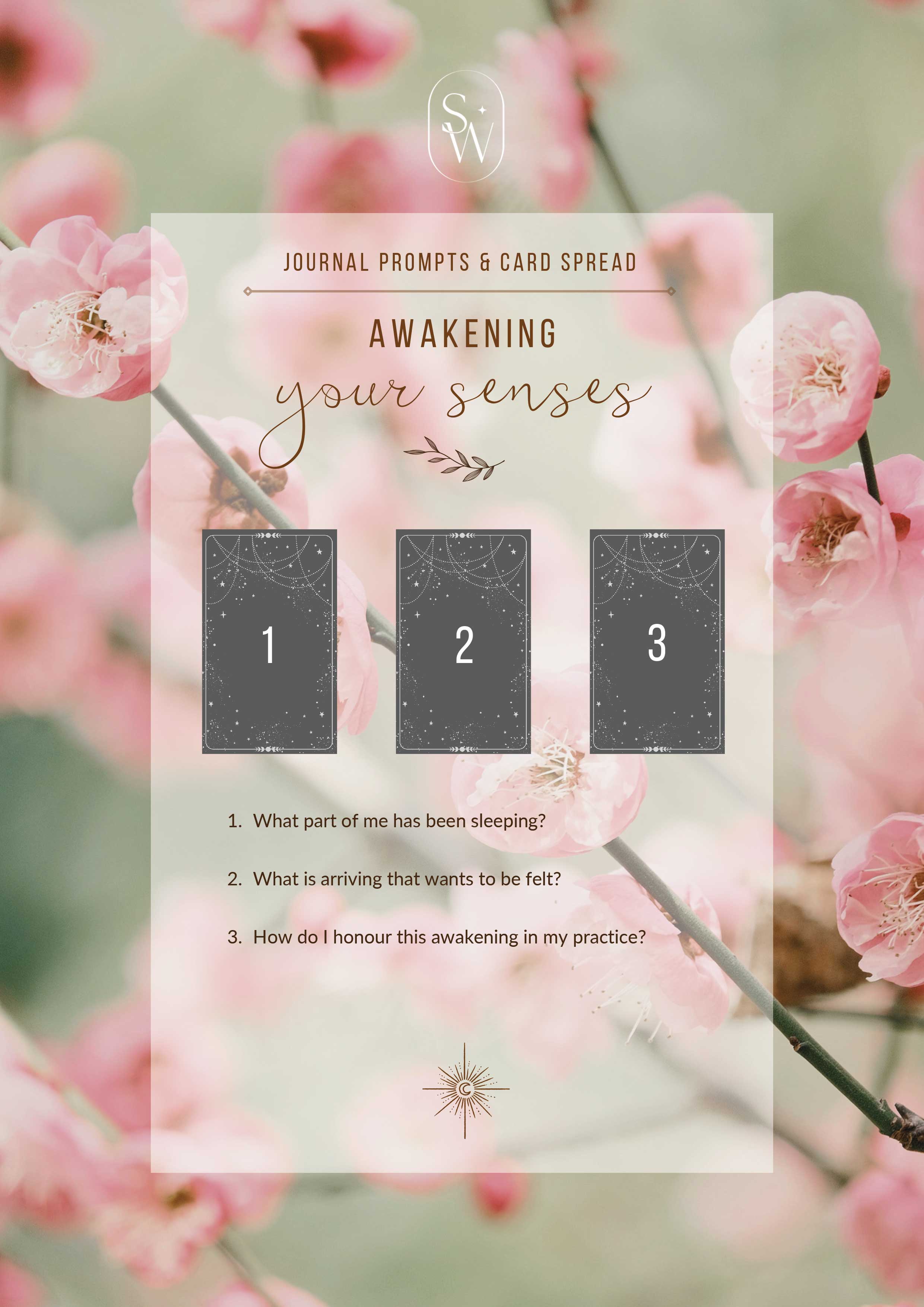
A three-card check-in for the creative soul.
Card 1: The Dormant Sense
What part of me has been sleeping?
This card reveals the sense, capacity, or way of experiencing that has gone quiet over the winter months. The one that is ready now to be gently called back. It might be your sense of colour, or pleasure, or wonder. It might be your ability to rest in the present moment without rushing past it. Notice what this card stirs in you without judgment. This is not absence. It is readiness.
Card 2: The Invitation
What is arriving that wants to be felt?
This card points to the experience, inspiration, or creative energy that is knocking at the door this season. Something wants to move through you. A new colour palette, a shift in subject matter, a different quality of attention. This card asks you to receive rather than pursue. To open rather than reach. Let the sensation come to you.
Card 3: The First Mark
How do I honour this awakening in my practice?
This card offers practical, embodied guidance for how to meet this new aliveness in your creative life. It might suggest a material, a pace, a way of beginning. It is less about what to make and more about how to show up. With what quality of attention, what openness, what willingness to feel rather than control.
Find a quiet moment before you begin working. Light a candle if that feels right. Let yourself arrive fully before you draw.
As you turn each card, notice your body's first response before your mind begins to interpret.
Write down whatever arises. Words, colours, memories, sensations. Do not filter.
Let the three cards form a gentle pathway back into your creative body.
This spread works beautifully with both oracle and tarot decks.
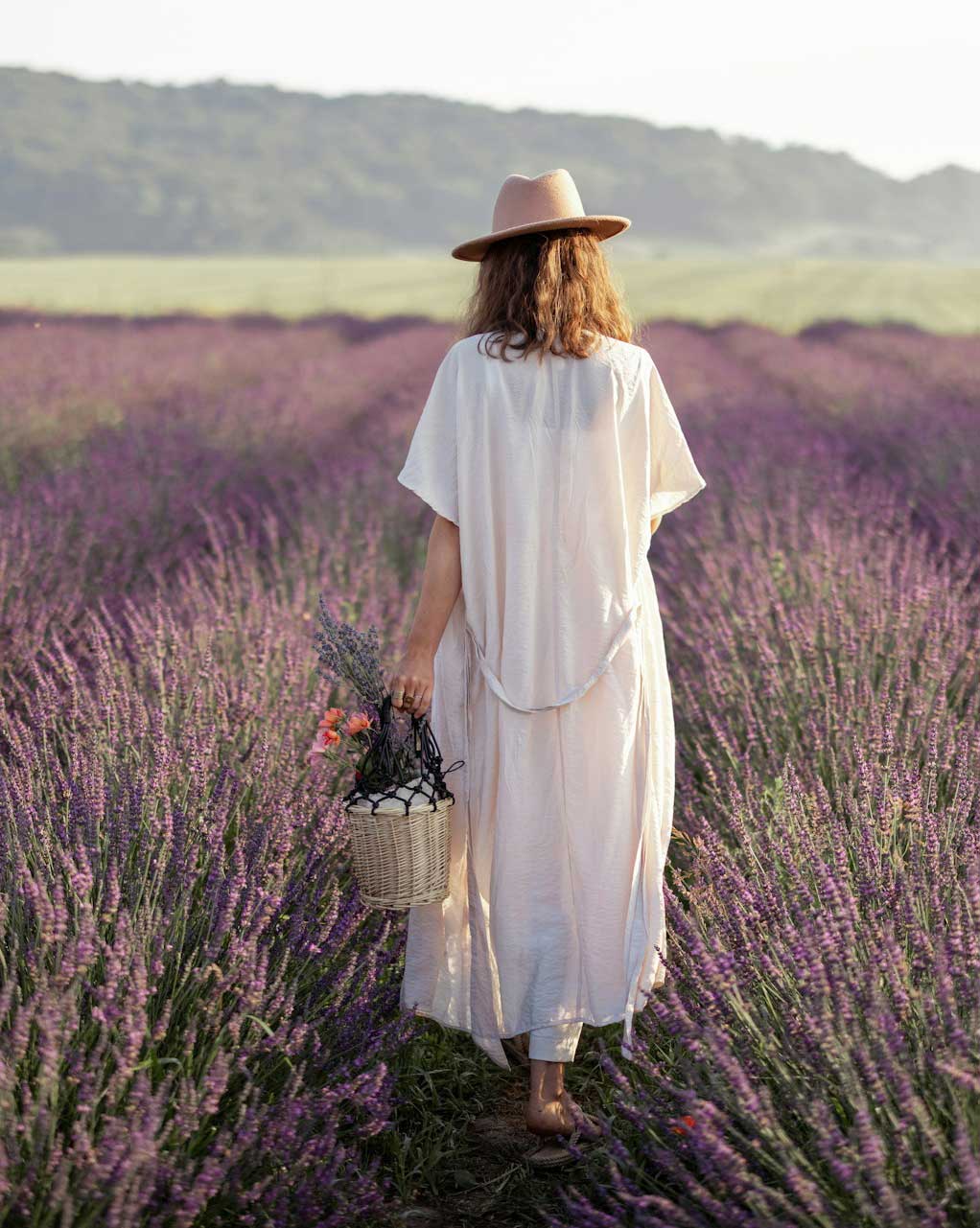
There is something about lavender that bypasses the thinking mind entirely. The scent alone is enough to soften something. To slow the breath. To remind the body that it is allowed to feel good.
I chose this meditation for April because it captures exactly the quality of sensation I want us to explore this month. Not grand or dramatic. Just tender. A gentle coming back to yourself through the senses.
Rachel's voice in this piece has the quality of warm light through a window. It asks nothing of you except to receive. And in a month where we are practicing exactly that, receiving the beauty of the season through open, willing senses, it felt like the most honest and nourishing gift I could offer.
Find a quiet corner. Close your eyes. Let the lavender in.
Here’s a little more information from Rachel…
This gentle guided meditation is inspired by the energy of the lavender plant, and colour. You may like to use lavender essential oil during this meditation, purple stones or crystals that resonate with you, or have some lavender nearby. This is a softening journey into self love, with healing vibrations and soothing tones, to help you relax and heal, and expand on your transformative journey here on earth. Here we honour all the magic and beauty within you, with a few gentle affirmations, but mainly by calling upon the image of a lavender healing mist, glowing with love. Please note: Rachel gives a five minute ending warning, but she prefers to allow you to exit the meditation on your own, incase people choose to fall asleep.
lots of love,
Rachel
Each month we will have a positive affirmation. I recommend you print out this affirmation and put it in your sketchbook or somewhere in your studio. Recite the affirmation out loud each time you show up to create. Saying words aloud is powerful and can begin to re-write some of our own limiting beliefs or calm our fears. Try it now…
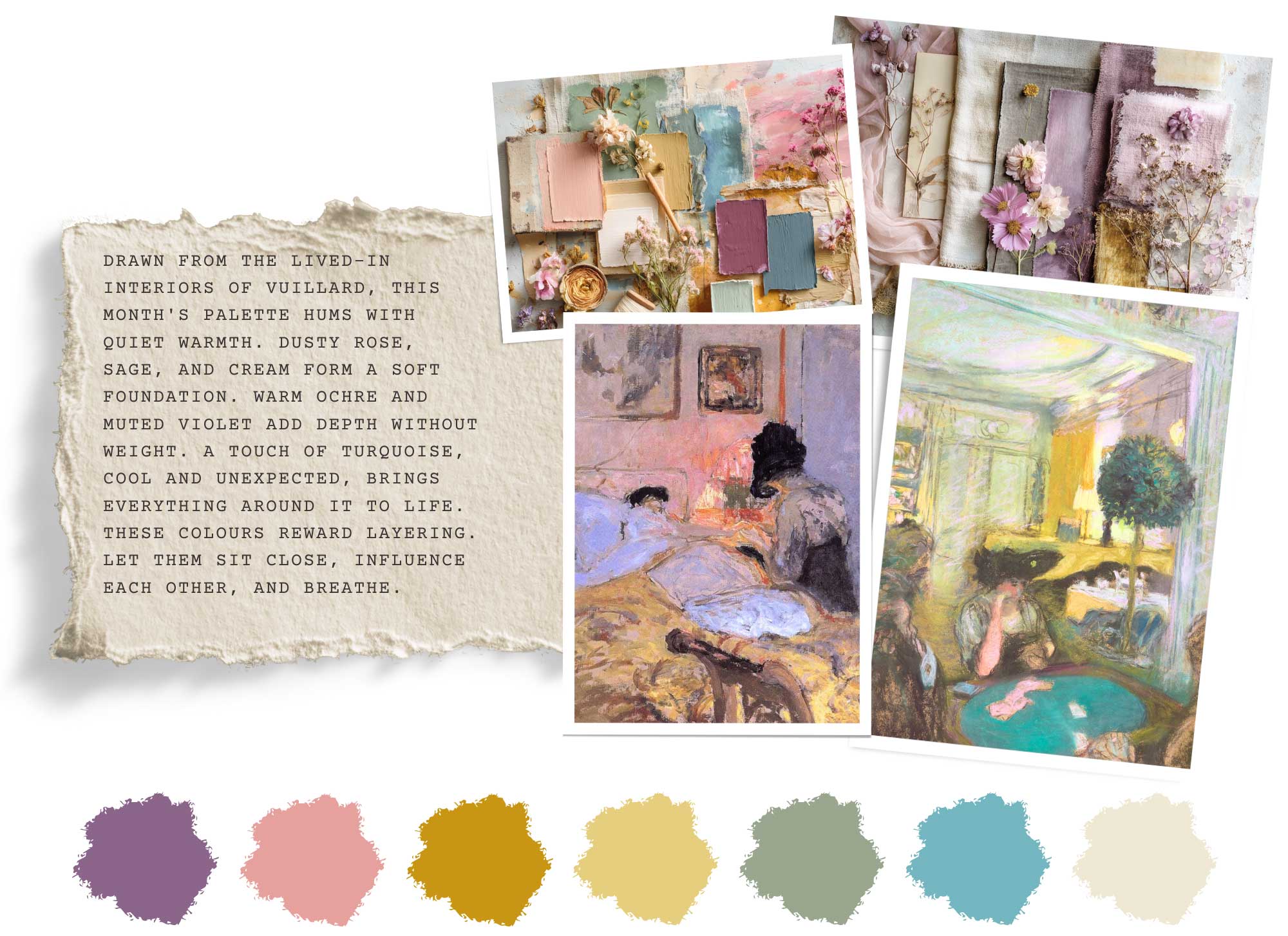
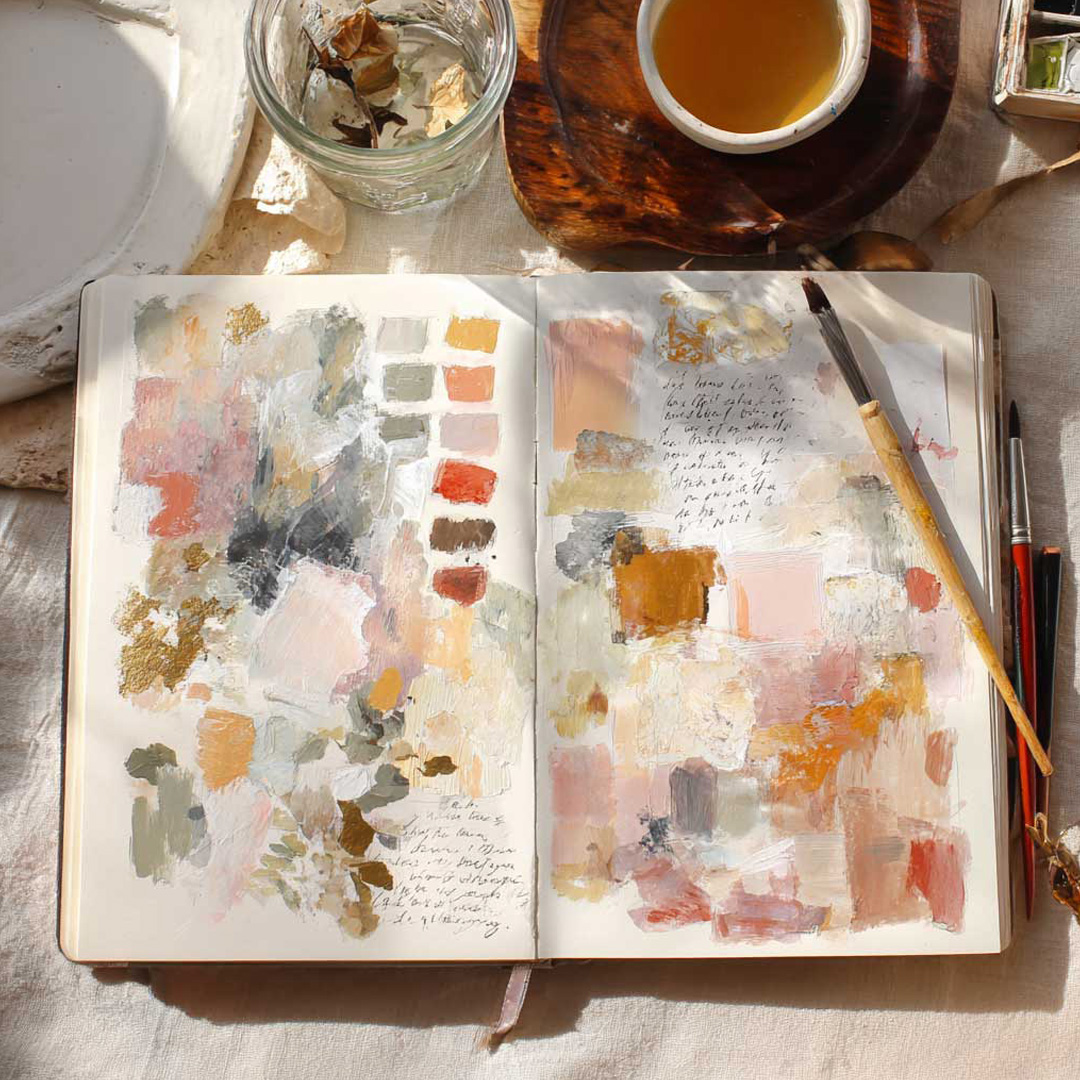
This month's palette is drawn directly from the world of Vuillard, the colors of lived-in French interiors in afternoon light. Nothing sharp, nothing demanding. These are colors that ask you to slow down and feel.
Dusty rose brings the warmth of faded fabric and old wallpaper. Sage green holds the quiet presence of a plant in a corner. Warm ochre is aged wood and afternoon sun falling sideways across a floor. Soft gold adds a gentle luminosity, not bright, not metallic, but the color of warmth itself. Muted violet offers depth without drama. Cream anchors everything and keeps the palette breathing. And then there is the turquoise. The glaze of a ceramic bowl, a tile glimpsed through a doorway. The one cool note that makes all the warmth around it feel more alive.
These colors work best sitting close together, almost touching, the way Vuillard's patterns press against one another. Layer them rather than isolating them. Let them bleed at the edges. Let them influence each other.
Use the turquoise sparingly. It is the accent that makes you look twice, not the foundation. A little goes a long way and that is exactly the point.
This is a palette for noticing. For working slowly. For allowing the sensation of color itself to be enough.
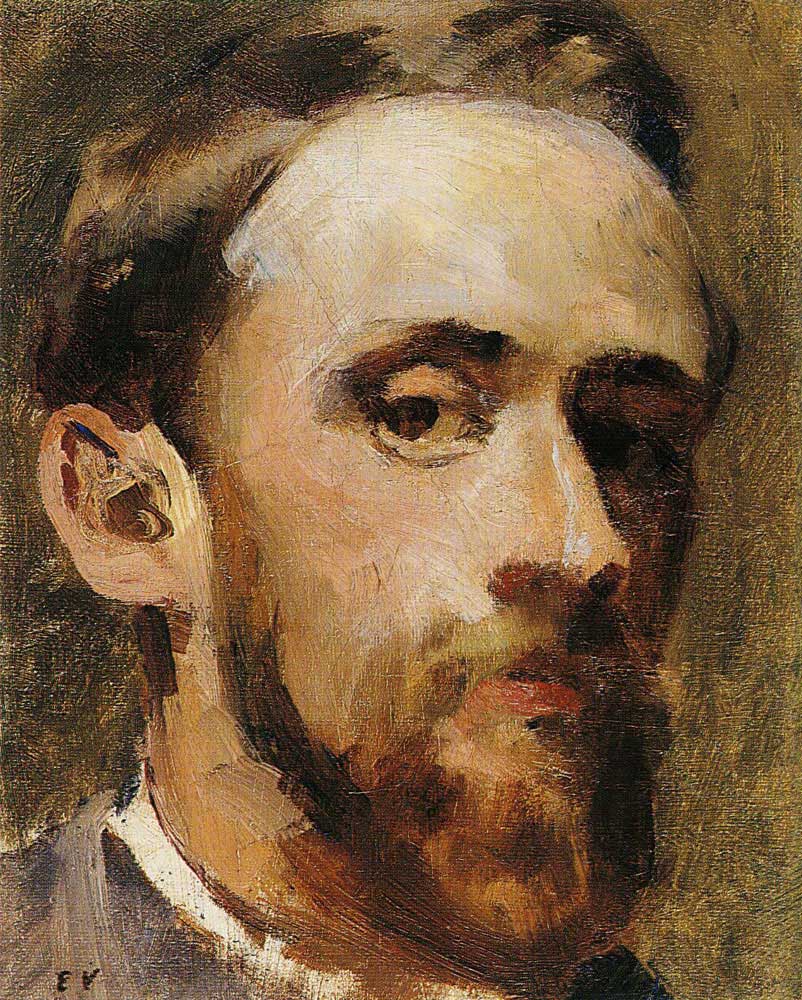
Edouard Vuillard, Self Portrait 1888
Edouard Vuillard (1868 to 1940) spent most of his long life in Paris, in apartments shared with his mother, working on paintings so intimate and so insistently domestic that critics struggled for years to know quite what to do with them.
He was not, by temperament, a man who sought attention. He worked quietly. He kept his private life private. He returned again and again to the same subjects, his mother sewing, a lamp lit in a corner, a table set for a meal no one is yet sitting at, with the patience and devotion of someone who understood that the ordinary world, seen with sufficient attention, is inexhaustible.
He studied at the Ecole des Beaux-Arts and the Academie Julian in Paris, where he met the painters who would become the Nabis, a loosely affiliated group united by the conviction that art should be about feeling rather than mere representation. Pierre Bonnard became his closest friend and creative companion. Together they developed what would be called intimisme: painting that turns toward the interior life rather than the heroic or the spectacular.
Vuillard's mother was central to his art and to his life. She was a dressmaker, and his childhood home was always full of fabric, bolts of pattern, the texture of different weaves, the visual complexity of materials stacked and folded and worn. His eye was trained in pattern before it was trained in anything else.
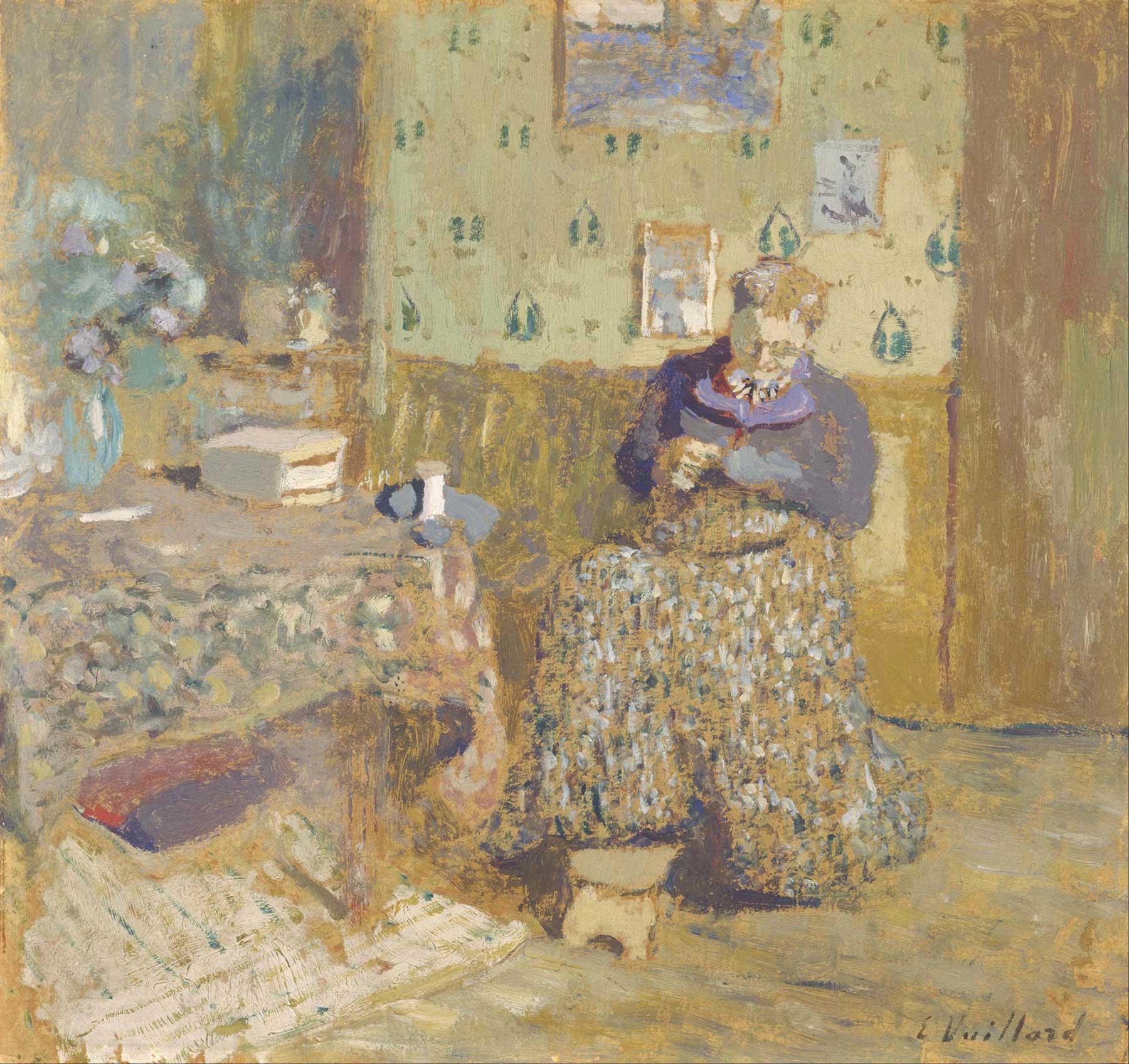
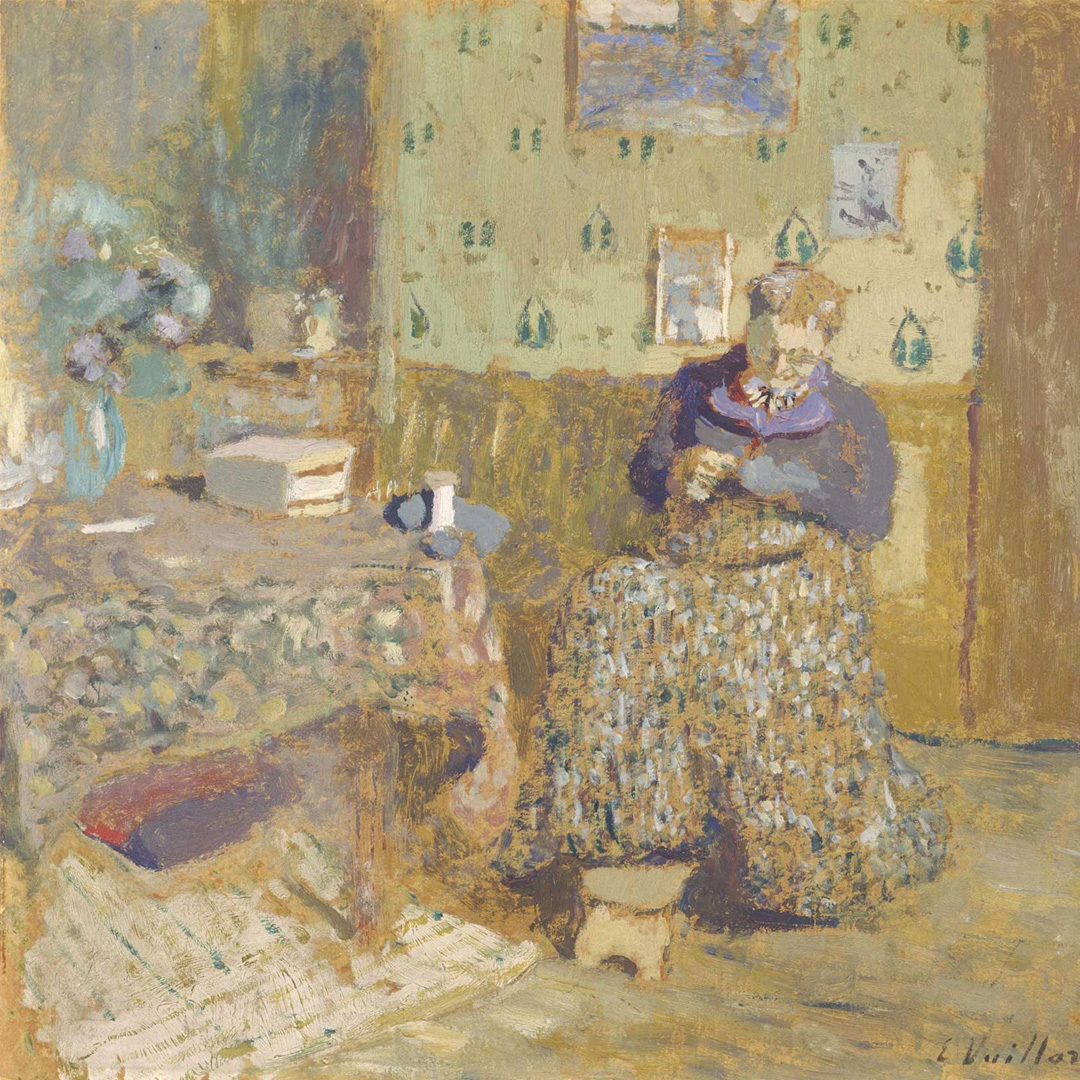
Vuillard, Madame Vuillard Sewing, 1920
The work for which Vuillard is best remembered was made primarily between 1890 and 1910. These paintings, small, densely patterned, shimmering with compressed attention, show domestic life not as subject matter but as living environment. The figures in them are often barely distinguishable from their surroundings. A woman becomes part of the wallpaper. A face merges with the pattern of a curtain.
This is not carelessness. It is philosophy. Vuillard believed that a person and their environment are not separate things. We are shaped by our spaces. We absorb them and they absorb us. The pattern of a room enters us over years of living in it. His paintings make this invisible process visible.
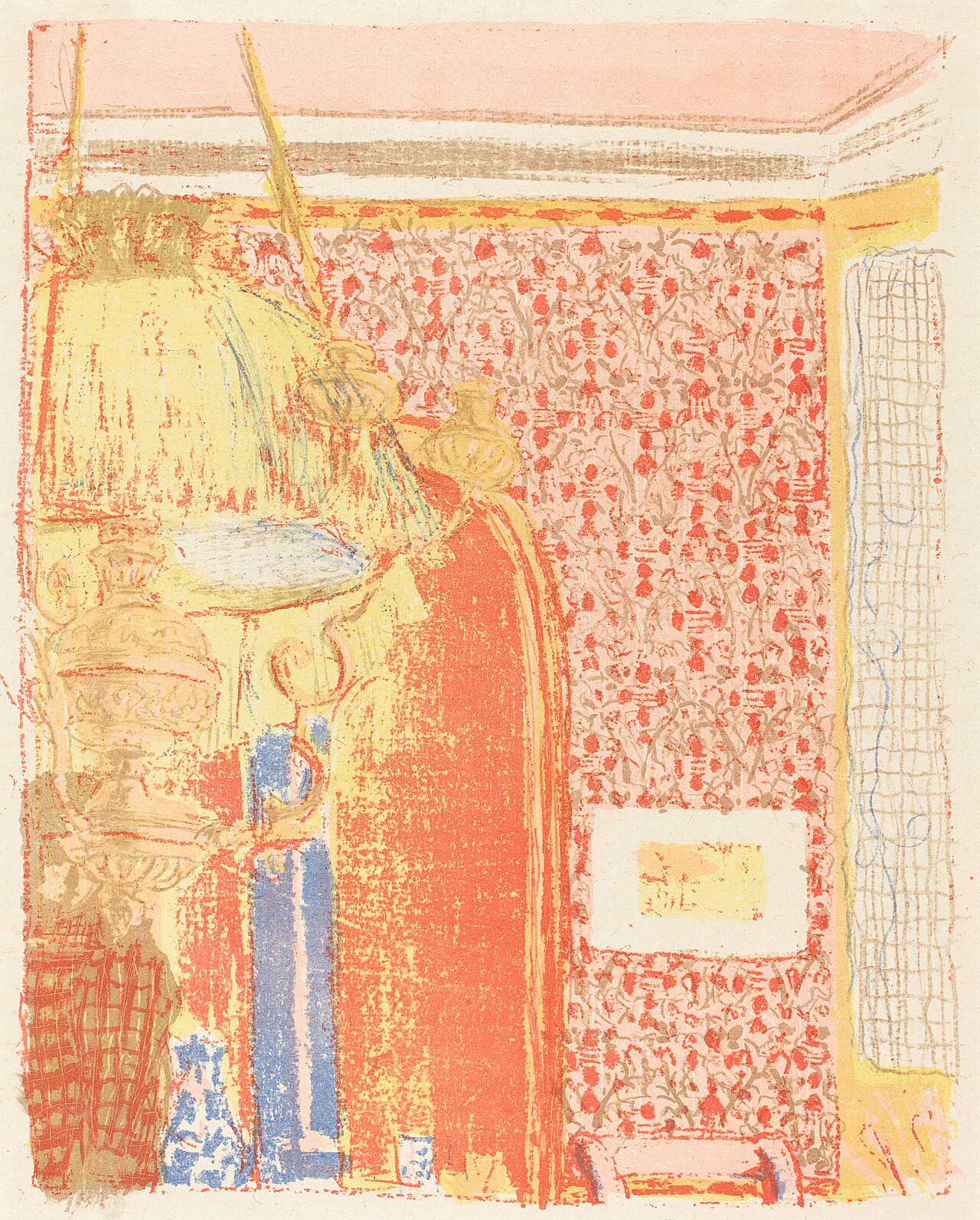
Vuillard, Interior with Pink Wallpaper, 1899
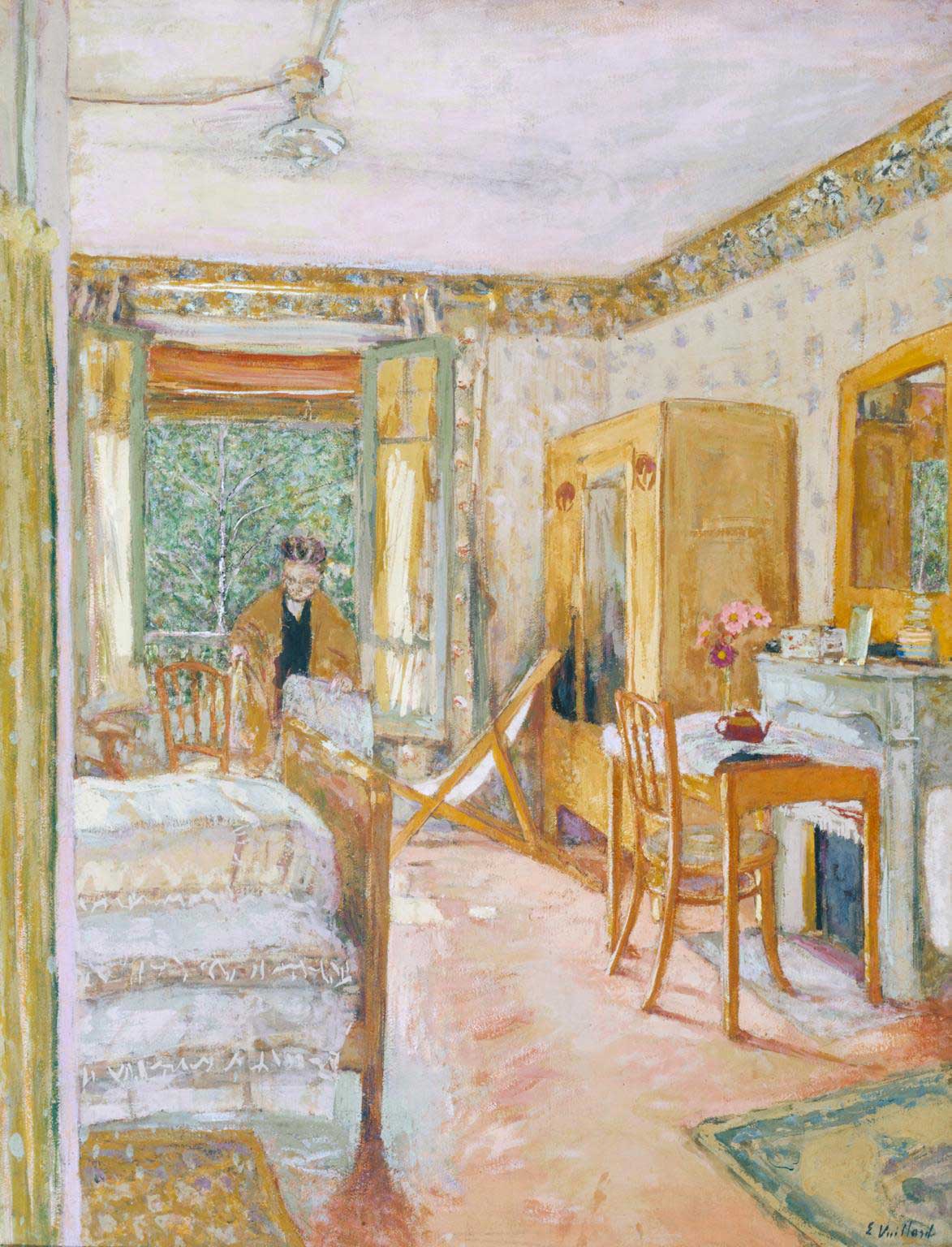
Vuillard, Sunlit Interior, 1920
Vuillard's color is deceptive. His palettes seem muted at first, dusty, faded, quiet. But spend time with them and you begin to see how precisely calibrated they are. Every tone has been considered in relation to every other. The dusty rose against the sage. The ochre wall against the blue-grey of a shadow. Nothing is accidental. Everything is felt.
His use of pattern is equally deliberate. He layered floral wallpapers against striped fabrics against the weave of upholstery with a confidence that came from genuine sensory knowledge. He had lived with these surfaces. He knew how they felt as well as how they looked.
What Vuillard offers us today is permission. Permission to find our creative material close to home. Permission to treat the domestic world, the table, the window, the lamp, the chair, as worthy of the deepest creative attention. Permission to work small, to work quietly, to return to the same subjects again and again without apology.
He also offers a masterclass in sensory devotion. His paintings ask us to look longer, feel more, let the experience of a room or a fabric or a quality of light become genuinely nourishing before we translate it into art.
That is the practice. That is always the practice.
Before you begin, set down your materials and spend three minutes doing nothing but sensing. Look around the room you are in. Notice the quality of the light. Is it warm or cool, direct or diffused? Notice any smells present. Notice what you can hear. Notice the temperature of the air.
Then, on a fresh page, make a quick written or drawn inventory of what you sensed. Do not think too hard. Just record.
Now choose one thing from your inventory, one sensory impression that felt most alive to you, and let that become the starting point for a drawing or painted study. It might be the quality of light. A colour you noticed. A texture.
Reflect: What happens to your work when sensation, rather than subject, becomes the starting point?
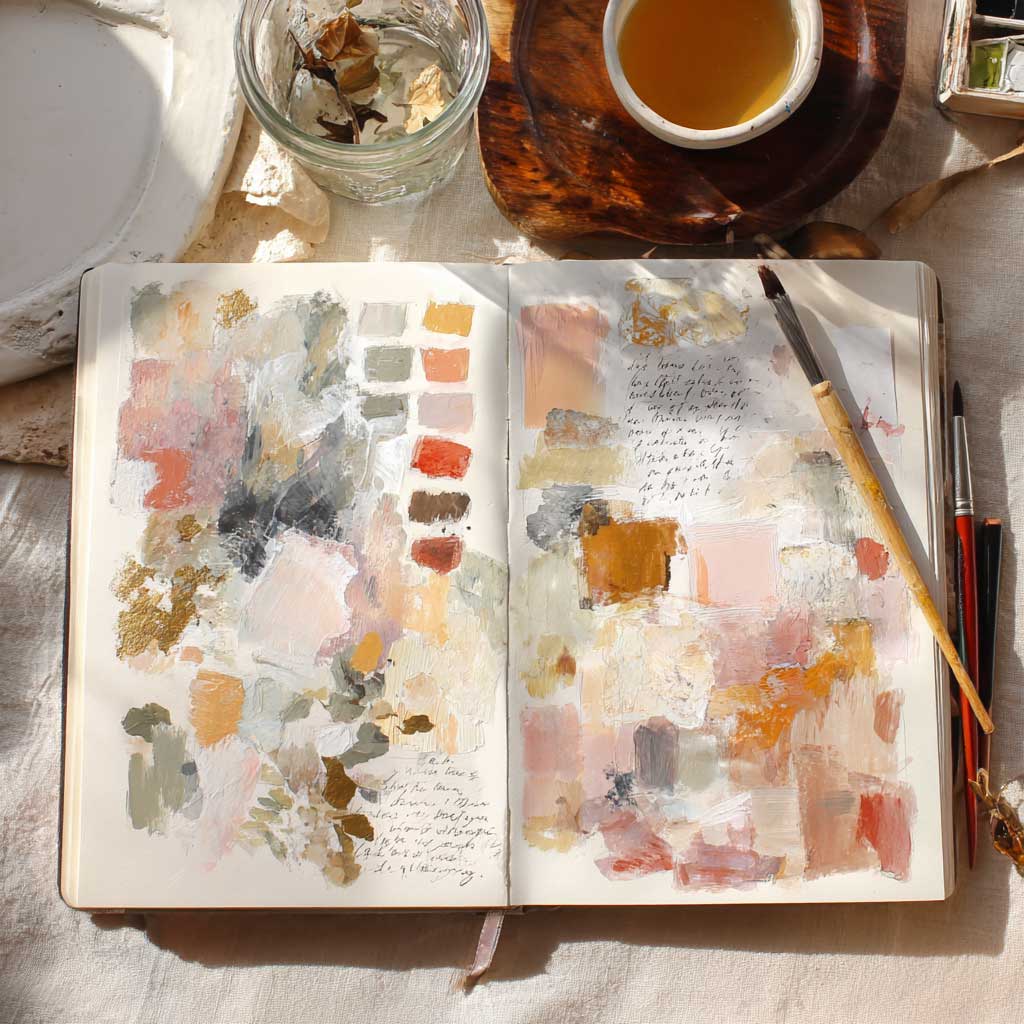
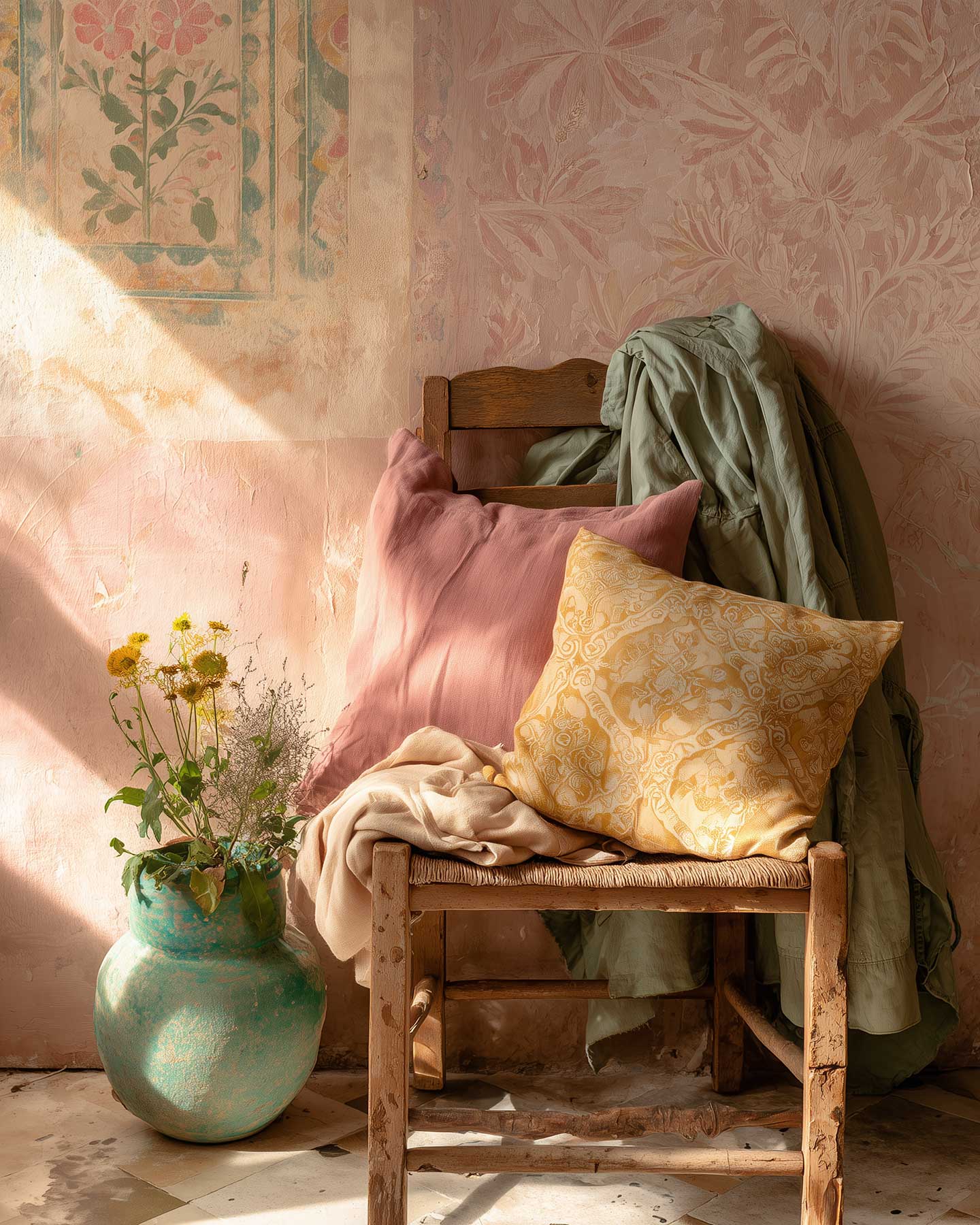
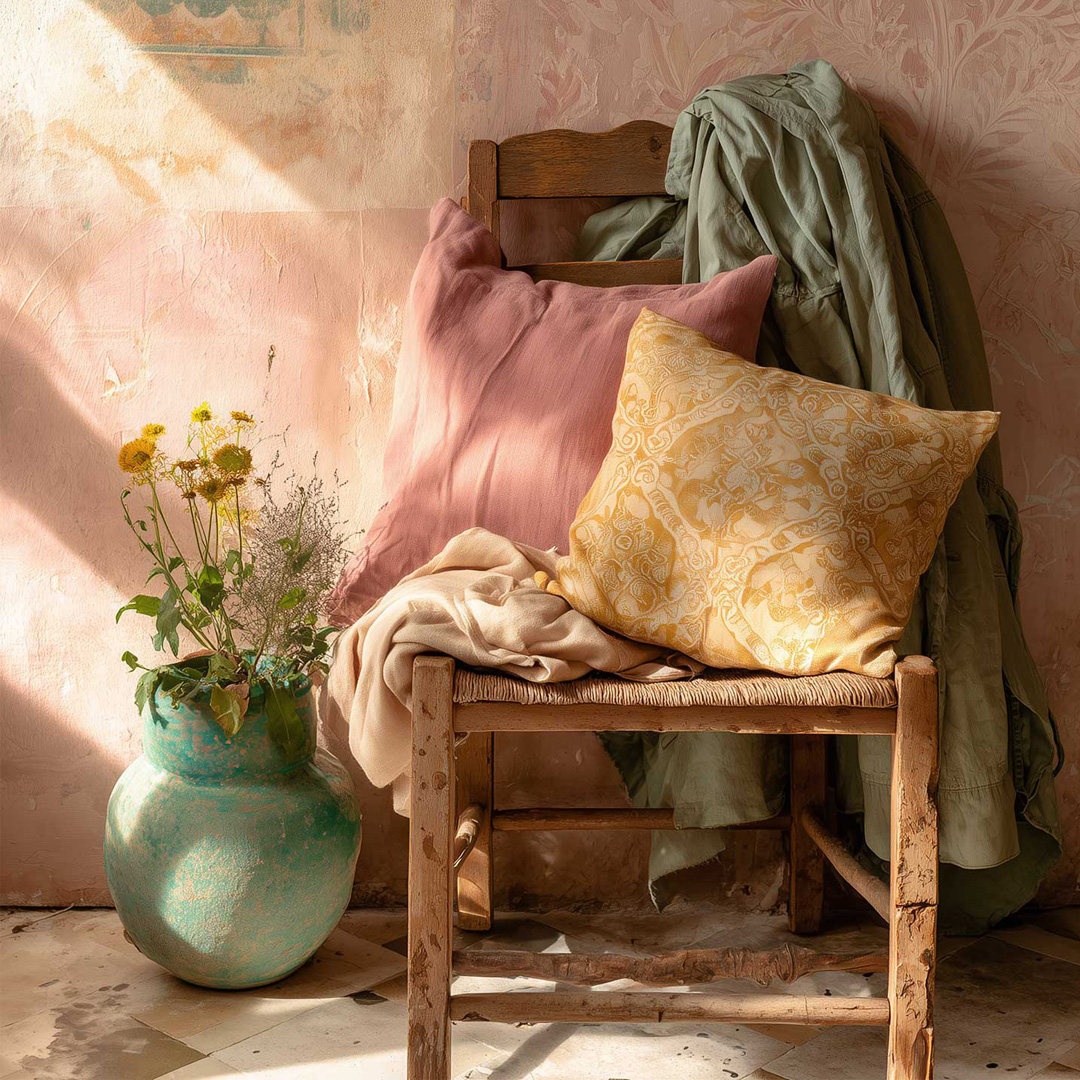
Study the reference image above. Notice where pattern meets pattern. The cushion against the wall. The jacket over the chair. The plant breaking the geometry behind it. Let your eye move slowly across the scene before you pick up a single tool.
On a fresh page, make a painted or drawn study of the corner with a focus not on accuracy but on sensation. Have fun with it! How do the patterns feel pressing against each other? Which elements draw your eye first? Let your marks be as dense or as sparse as the feeling requires. Use this month's palette, dusty rose, sage, ochre, muted violet and a touch of turquoise, interpreting the colours as your own rather than matching them literally.
You are not copying a photograph. You are using it as a doorway into feeling.
Reflect: Where did you find yourself simplifying? Where did you want to add more? What did the act of looking for pattern change in the way you saw the scene?
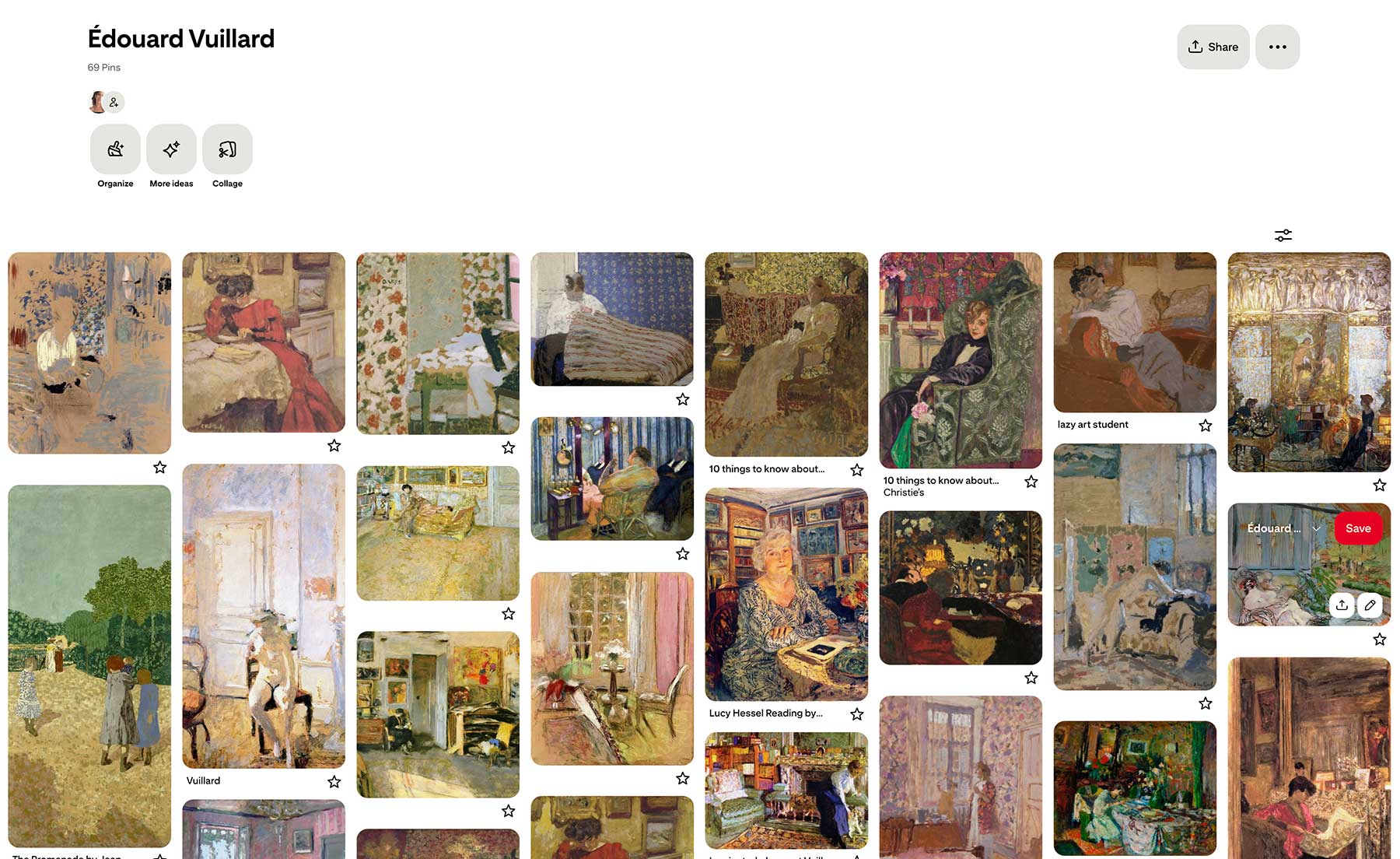
Choose one of Vuillard's paintings (or a part of one) from the slideshow or the Pinterest board. Spend at least five minutes simply looking before you begin.
Notice how the figure relates to the room. Where does pattern dominate? How does he use light? What is the emotional feeling of the space, not what you think it should be, but what you actually sense?
Make a study of a section of the painting, not the whole, just a portion. Focus on capturing the feeling rather than the likeness. Use pencil, watercolour, or pastel. Work loosely. Let the sensation of the original guide your marks.
Reflect: What surprised you? What did copying a small section reveal that looking at the whole painting did not?
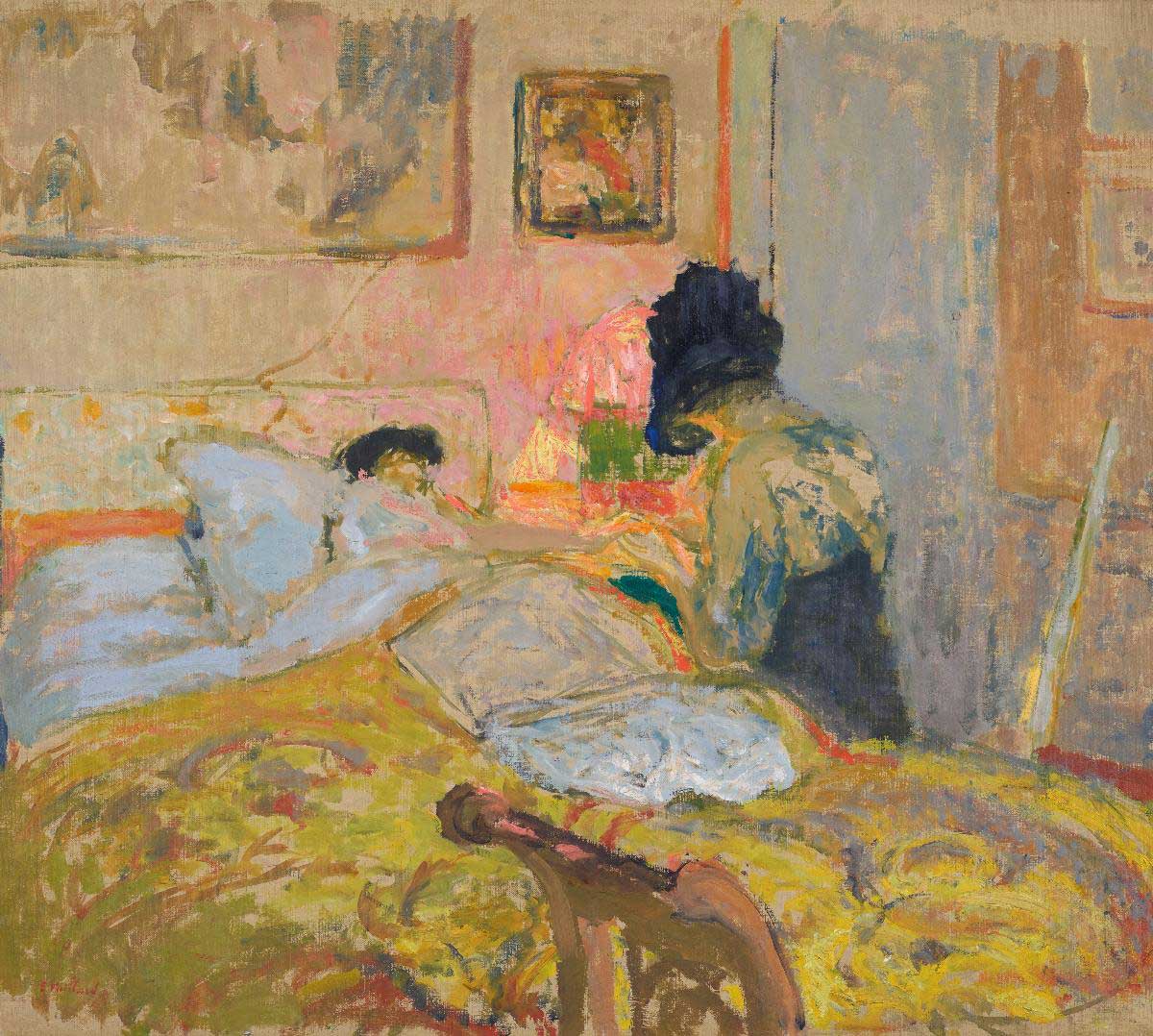
You can view our Pinterest board to see more of Vuillard's work:
This month's lesson arrived at exactly the right time.
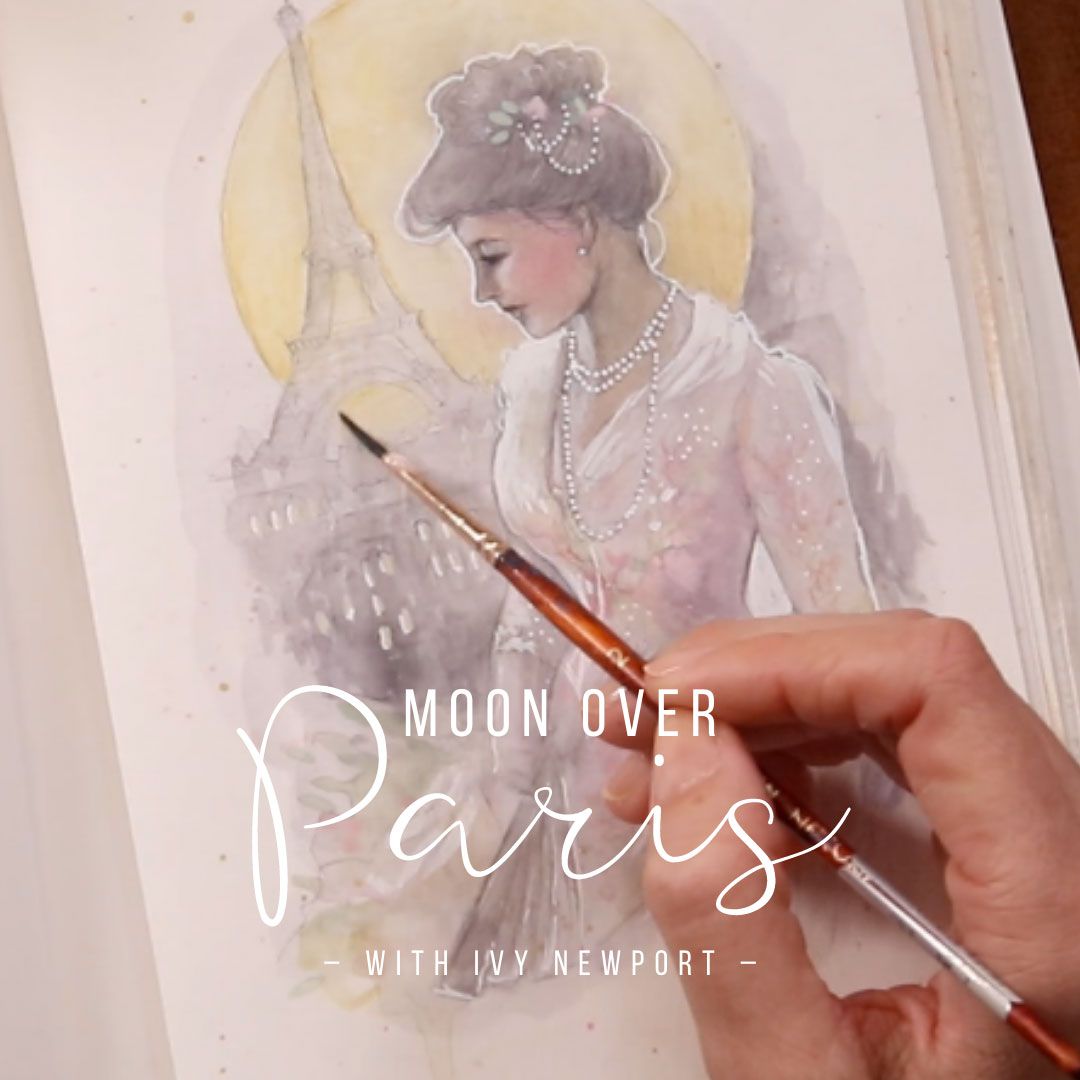
Moon over Paris is a mixed media watercolor painting, and for me, it was a process of genuine discovery. I came to it not as a demonstration of mastery, but as a student, feeling my way through something new, finding the painting as I went.
That spirit sits at the heart of April's theme. The senses waking back up. The hand reaching for a color before the mind knows why. There is something quietly brave about allowing yourself not to know yet, and this lesson captures that feeling beautifully.
Consider it an invitation to paint alongside someone who is still learning, too.
You can also listen to this month’s issue of the Studioworks journal. I find I love listening to books, podcasts and music while I draw, paint or go on a long walk. Enjoy.
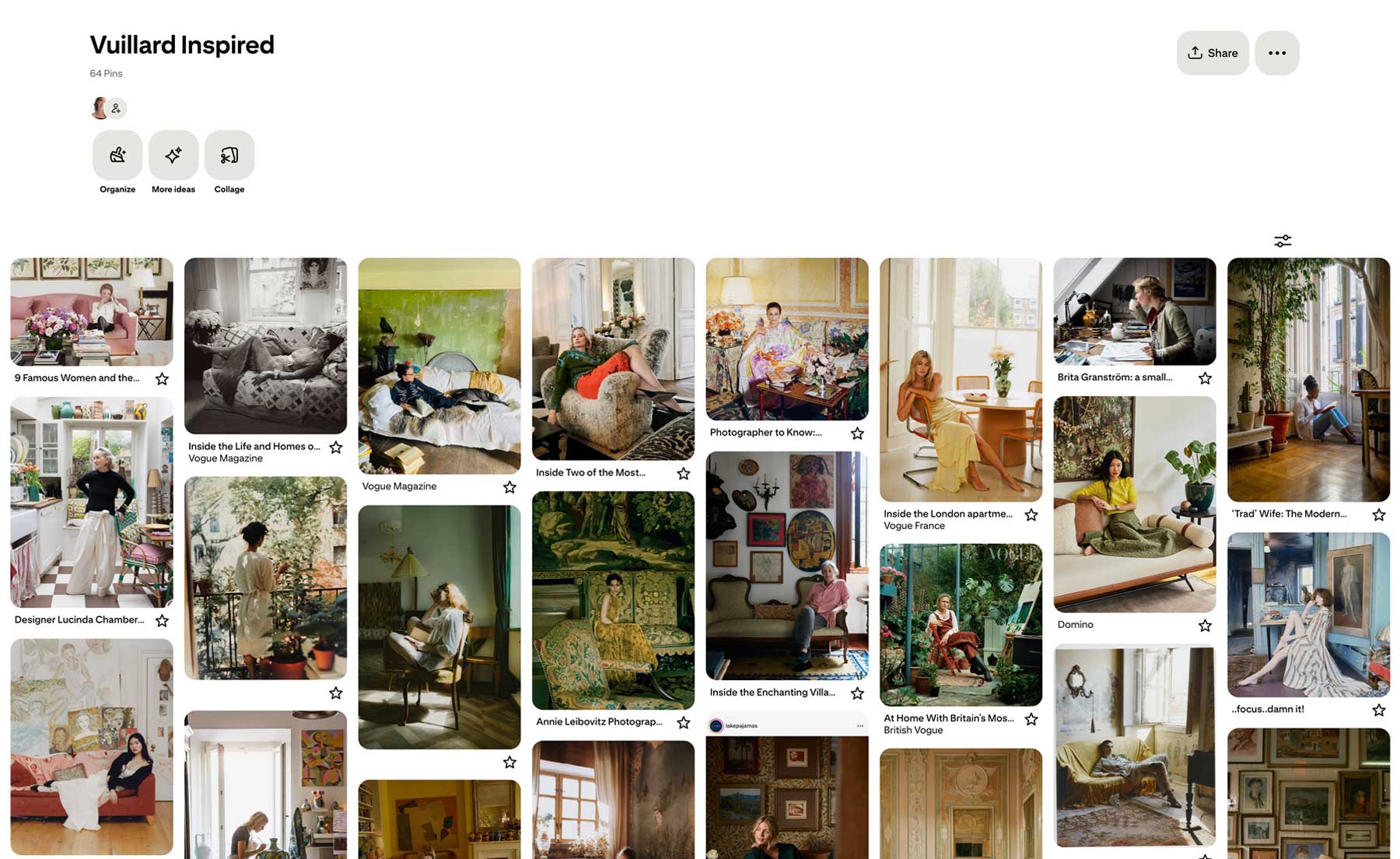
One of my favorite things to do is to curate inspiration. From Pinterest boards to books, resources, playlists and more - I love to share anything that might facilitate learning, expansion, and sparks of curiosity! Being an artist, we naturally crave these things so here are some of this month’s picks from me to you.
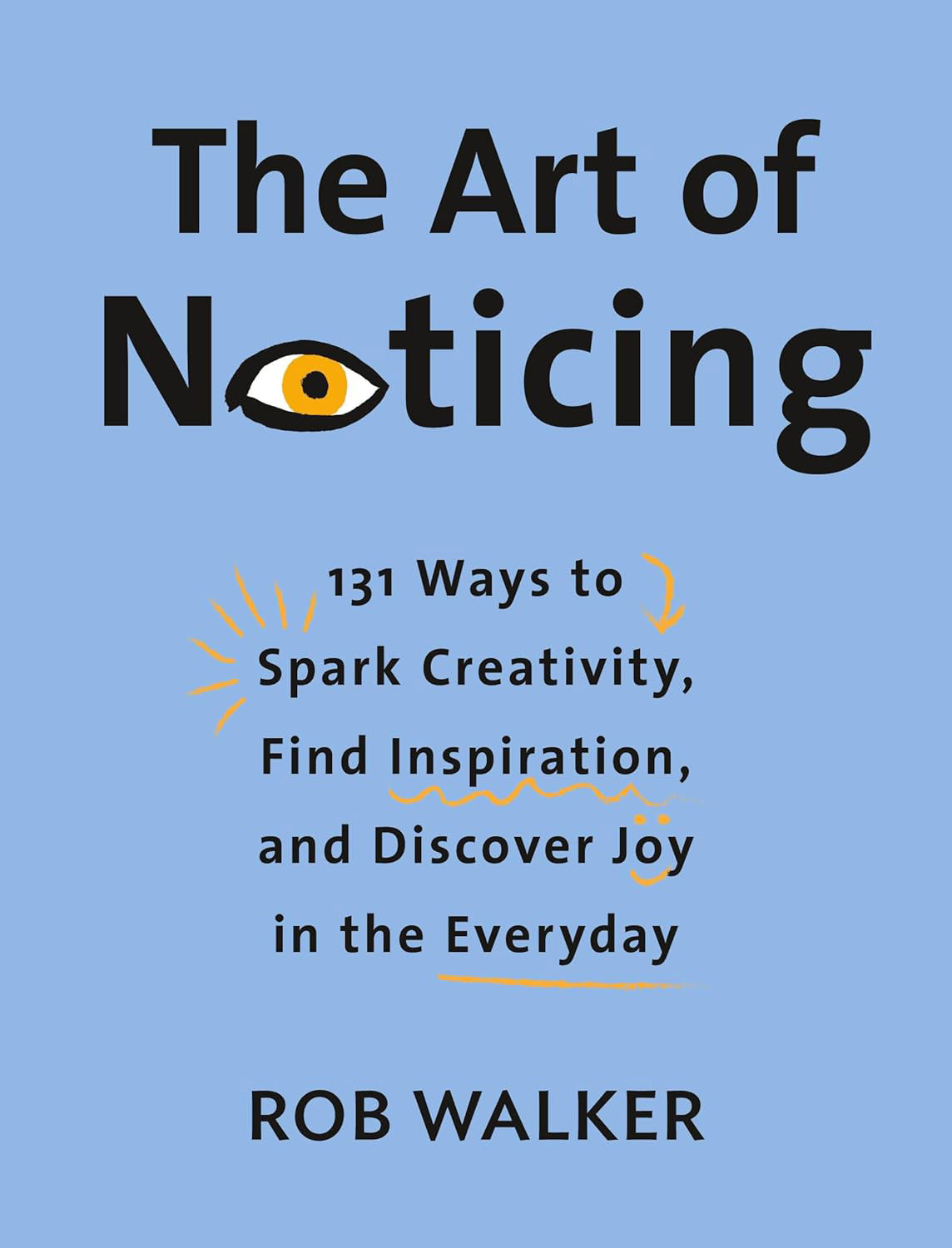
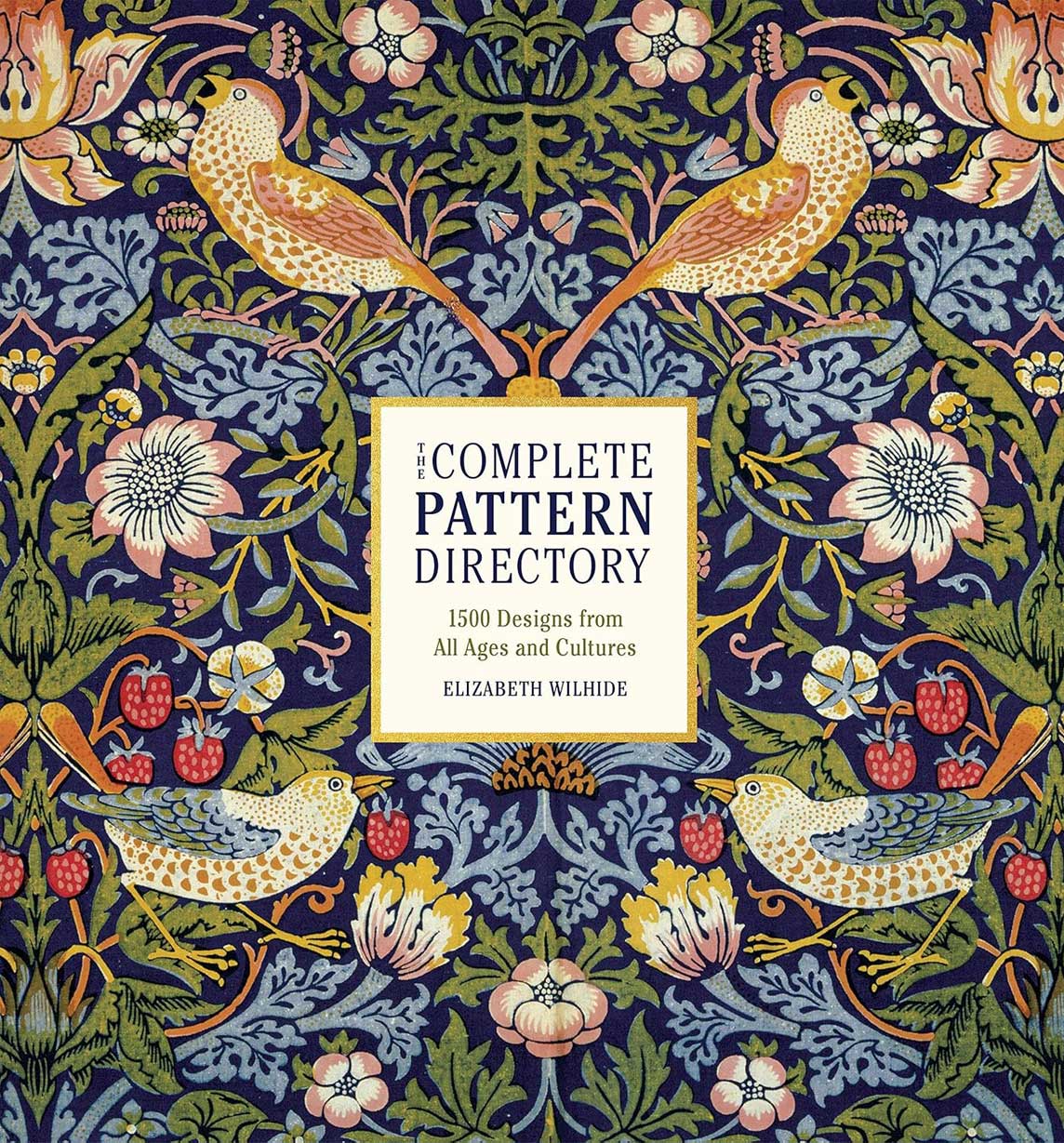
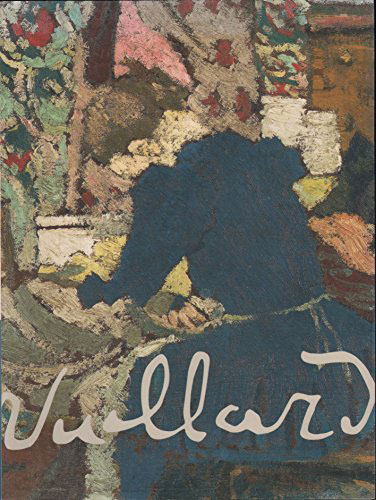
I had so much fun curating this list. I hope you enjoy!!
Classes that pair well with this month’s theme in your Studioworks Creative Library