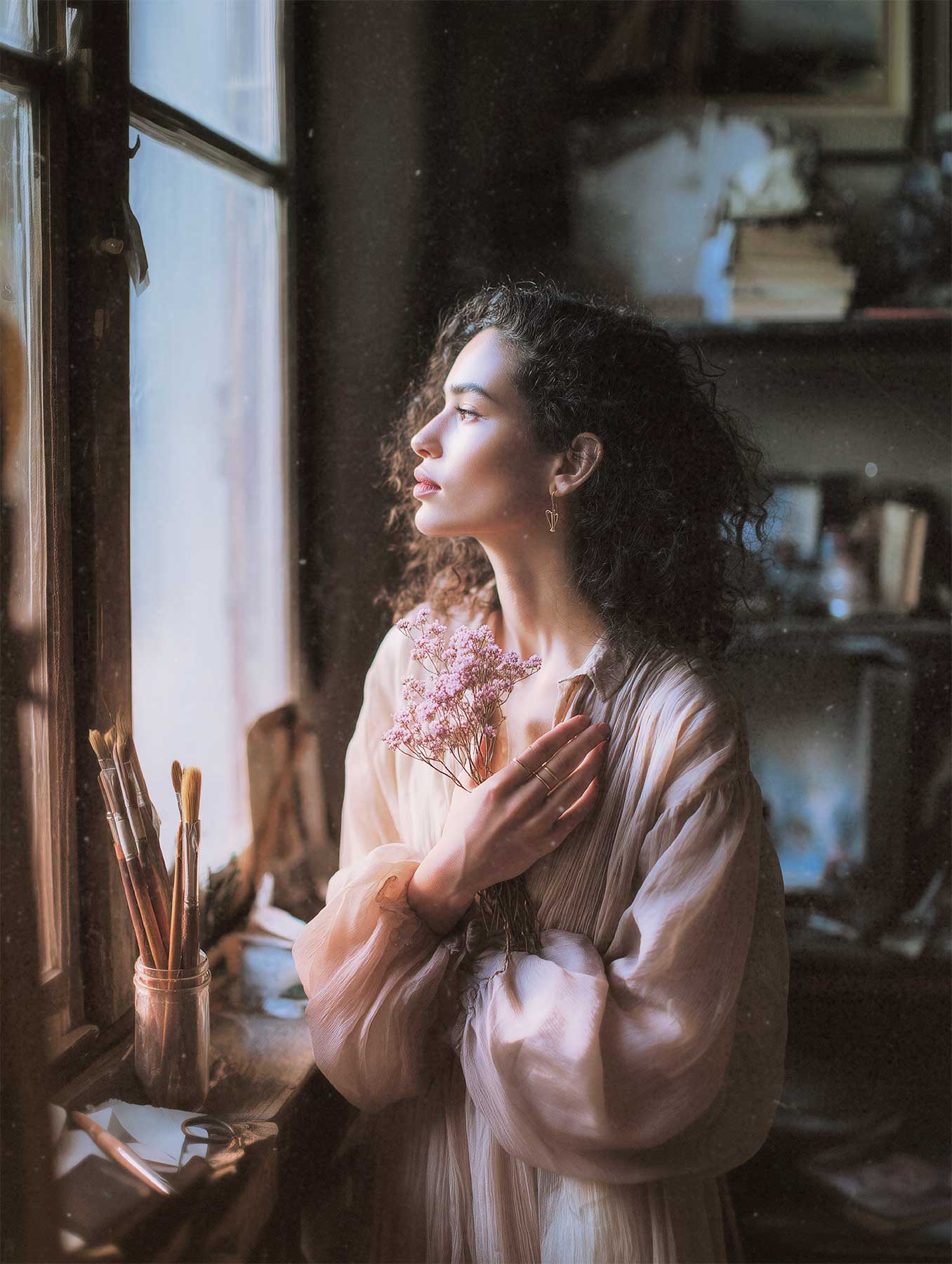
Dear creative friends,
Welcome to The Studioworks Journal’s Issue No. 84. I’m so delighted you are here with me.
Every creative season brings a moment when we must pause, to soften our grip and allow what wants to come through to do so in its own time. Surrender is the quiet art of trust, an invitation to let go of control and move with life rather than against it.
Our theme, The Grace of Surrender, invites us to rest in that tender space between doing and being. It’s a reminder that not everything needs to be pushed or planned, that creation can also happen in stillness.
Throughout history, artists have found beauty in this letting go, in brushstrokes that wander, in pauses that reveal, in the courage to release what no longer feels true. When we surrender, we open the door to renewal.
Let this month be a gentle exhale. Allow your art to unfold at its own pace. Let go of what feels heavy, and trust that what’s meant for you will remain.
xo,

Sometimes the demands of life feel like they are tying us into increasingly intricate and impenetrable knots. The overarching cultural trends, expectations, and desires that we live within can compound this feeling. For artists, this pressure cooker can serve as a call to action, a reminder that creativity cannot be boxed in. The Abstract Expressionists represent just such an artistic mold-breaking, a radical new way of flowing with the creative process.
As artists, we benefit from tapping into methods that facilitate letting go, unwinding the coil, and cultivating room to breathe. We can gain immense creative freedom by learning from historical movements and borrowing methods we find useful today. Join me in exploring how the Abstract Expressionists mastered the act of release and, in so doing, reshaped how we think about art.
In the wake of WWII, the entire globe was reeling, and no sector of life was free from the impact. As the world focused on rebuilding, many people began to question just what sort of new reality they wanted to cultivate. Just as the Great Depression helped spur the rise of Social Realism, the strictures of war and the subsequent McCarthy era heightened the need to express oneself in more personal, indirect, nuanced, and non-literal ways. Rebellion and commentary were forced into channels harder to implicate politically. It was within this climate that Abstract Expressionism was born.
The movement derived its name from combining the non-objective anti-figurative aesthetic of European Abstract schools with the self-revelation and emotional intensity of German Expressionism. The predominant characteristics of the style were an emphasis on personal expression, capturing the spirit of a thing, spontaneous, energetic action, conveying concepts of psyche, such as the unconscious, and letting go of conventional structure.
Two major categories associated with the movement were action painting and color-field painting. The former used vigorous movement and emotional engagement to make the process of creating the art as essential as the final product, and the latter employed large fields of color and simple shapes to evoke emotion and encourage contemplation. The overarching elements of both were large-scale, immersive, all-over composition, non-representational form, and direct emotional expression.
The focus on individuality, abandonment of conventional structure, and free thought, which characterized the movement, resulted in artists whose work was incredibly diverse, often sharing little in common other than time and place. Still, the movement's home was New York, and its artists included not only painters but also collagists and sculptors. Instrumental in legitimizing, amplifying, and propelling the scene were art critics Clement Greenberg and Harold Rosenberg. Their coverage of the artists and the collecting of their works helped thrust the New York School into the center of Western Art, overthrowing the long supremacy of Paris.
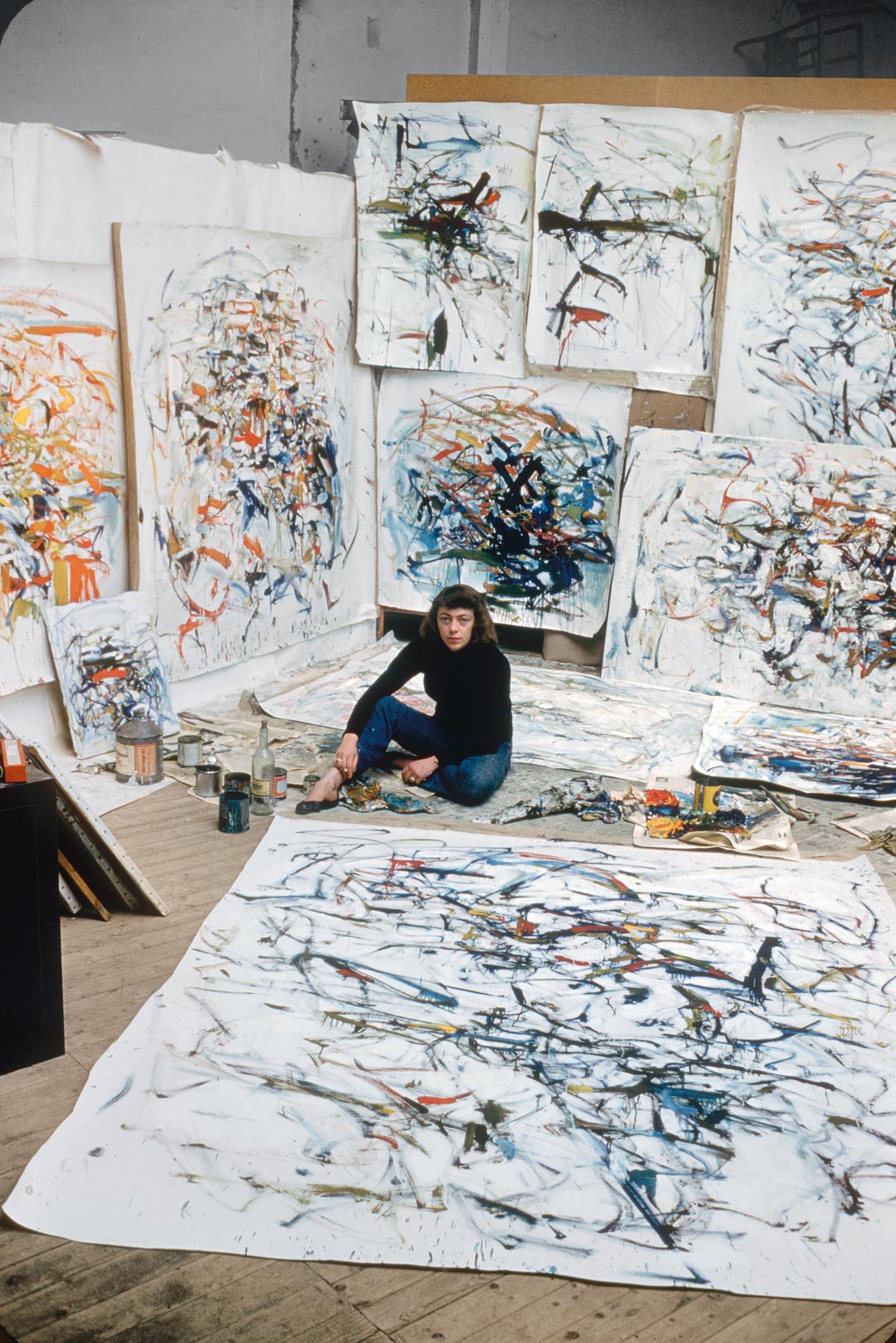
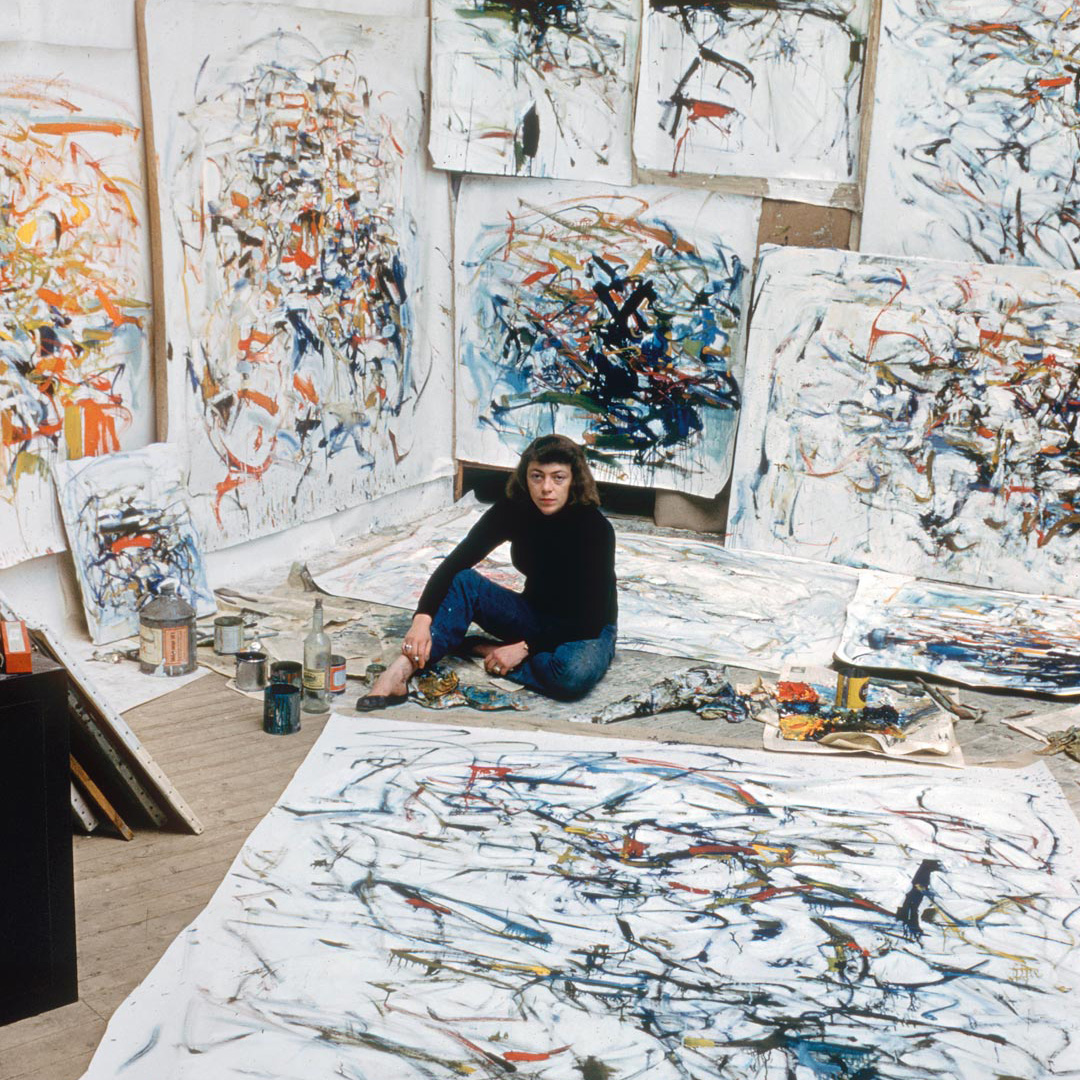
Joan Mitchell in her studio
Abstract Expressionism is often said to originate with the works of Jackson Pollock and Willem de Kooning in the late 1940s and early 1950s. However, many other artists, including the emotional and gestural Joan Mitchell and the spiritually attuned minimalist Agnes Martin, also helped define the movement.
Instantly recognizable, Pollock’s large-scale ‘drip paintings’ convey the angst, irrationality, vulnerability, passion, and exigencies that underpinned the postwar world. His method of action painting, in which the canvas was on the floor or leaned against a wall, and the paint was dripped directly from the can and then reworked with trowels, sticks, or knives, allowed his mood, emotions, and energy to reveal themselves spontaneously. His iconic painting NO. 5 evokes something universal and numinous, and, as one of the first pieces in his signature style, it also ranks among the most expensive paintings in history.
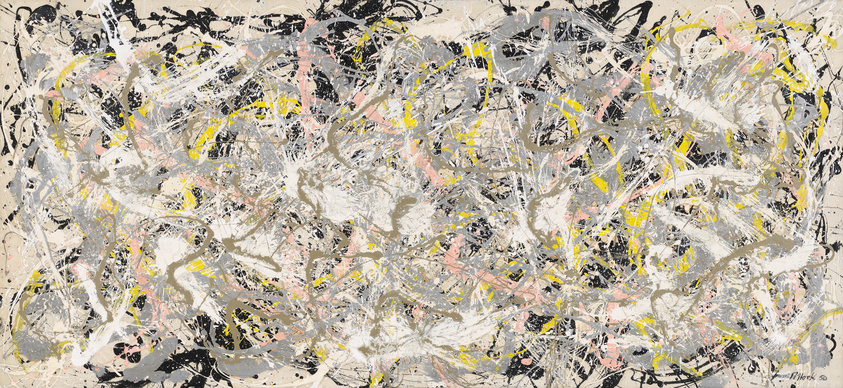
Jackson Pollock
Drawing on his own unique form of action painting, Willem de Kooning created works marked by aggressive paint handling and vivid color, forming geometric shapes and biomorphic imagery. His singular style combined elements of Picasso with influences of Gorky and the Surrealists, paving the way for future gestural painters. Some of his most influential works can be found in his “Women” series paintings.
Carving a path into the boy’s club of the Abstract Expressionists, Joan Mitchell bridged the gap between action painting and color-field painting. She made a name for herself with her intensely emotional gestural paintings, earning the respect of her peers and a solid place in history. Her willingness to assert herself, speak with knowledge and fervor about painting, engage in debates with other artists (primarily men), and generally flout cultural expectations around femininity earned her the dubious honor of being dubbed one of ‘the Vocal Girls’ by Time magazine. In works such as her piece Hemlock, Mitchell evoked a landscape in her unique way, generating a rhythm in paint befitting the poem "Domination of Black" by Wallace Stevens, from which the painting derives its name.
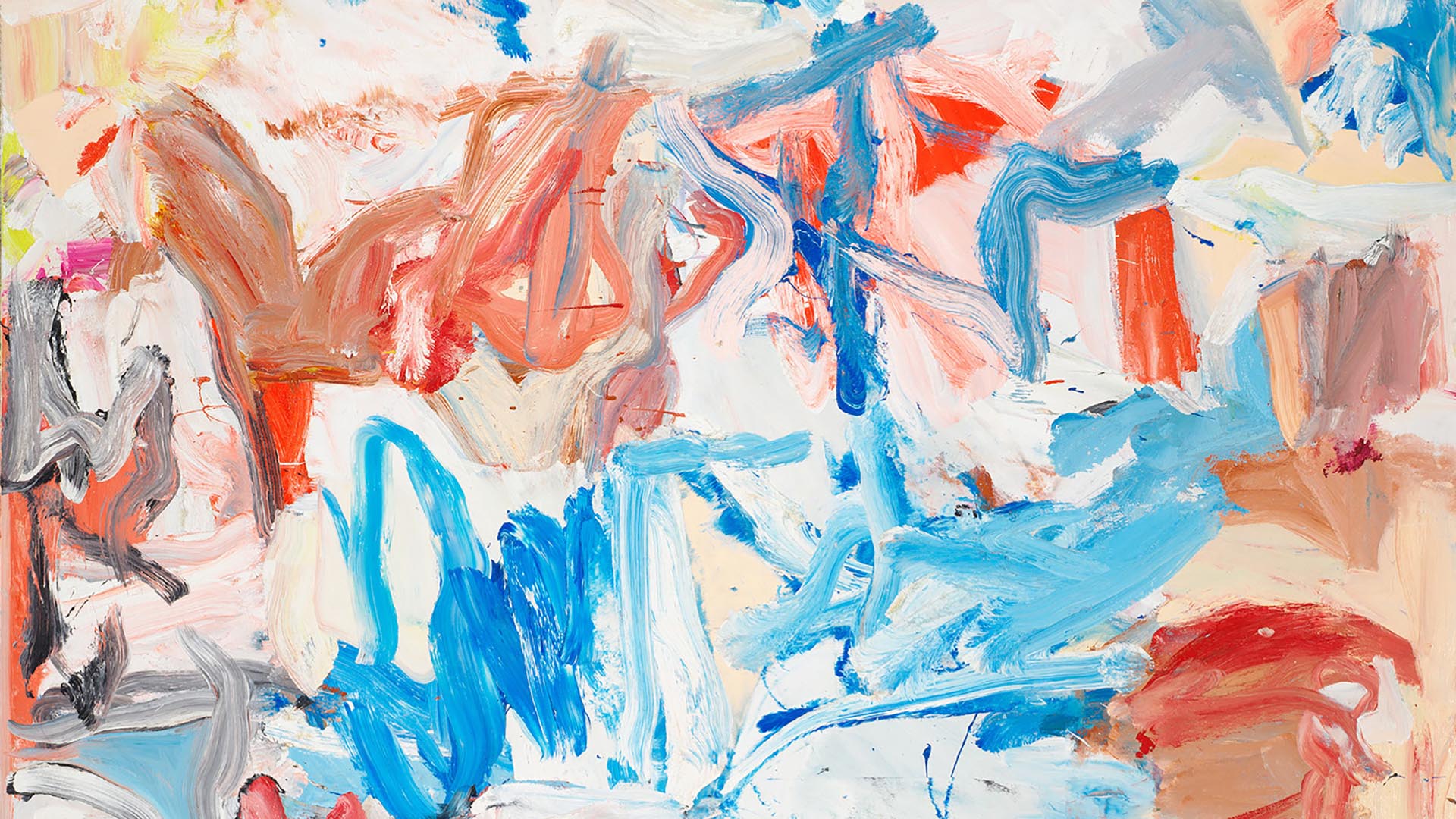
Willem de Kooning
Drawing on his own unique form of action painting, Willem de Kooning created works marked by aggressive paint handling and vivid color, forming geometric shapes and biomorphic imagery. His singular style combined elements of Picasso with influences of Gorky and the Surrealists, paving the way for future gestural painters. Some of his most influential works can be found in his “Women” series paintings.
Toning things down a bit and leaning more towards color-field painting, Agnes Martin gained acclaim for her minimalism, her muted color washes, grids, and lines that evoke pure feeling. Intensely private, Agnes spent much of her career, after leaving New York, in isolation contemplating nature and imparting a luminous reflectivity born of her studies of Zen Buddhism and Taoism. A brilliant example of her mastery of color, pattern, and ability to promote meditativeness is her gilded beauty Friendship.
Major events, like war, can reshape how people think about life and art. They provide an avenue for sloughing off convention and examining how to more freely and genuinely express ourselves. By negating virtually every norm in painting, going inward to tap emotional motivation, and letting the body take over, as with Jackson Pollock, or, conversely, channeling that emotion into precise, multihued color grids like Agnes Martin, the Abstract Expressionists paved the way for artists to create what uniquely reflects them as individuals.
Letting go looks different for each of us. The beauty of abstraction is that it liberates us to create without precise rules about how something is “supposed” to appear. It allows us to convey what resides within us, however we feel moved to, revealing how personal release can be a revolutionary act and hence, a creative coup.
This year has asked a lot of me. So much change, so many shifts I didn’t plan for. I’ve found myself in moments of resistance, trying to keep things steady, trying to hold everything together. But the truth is, sometimes the holding becomes the weight.
Lately, I’ve been learning to loosen my grip. To let life move me a little. To trust that what falls away makes space for something new. Surrender has stopped being a concept and started being a practice, one that shows up not just in my life, but in my studio too.
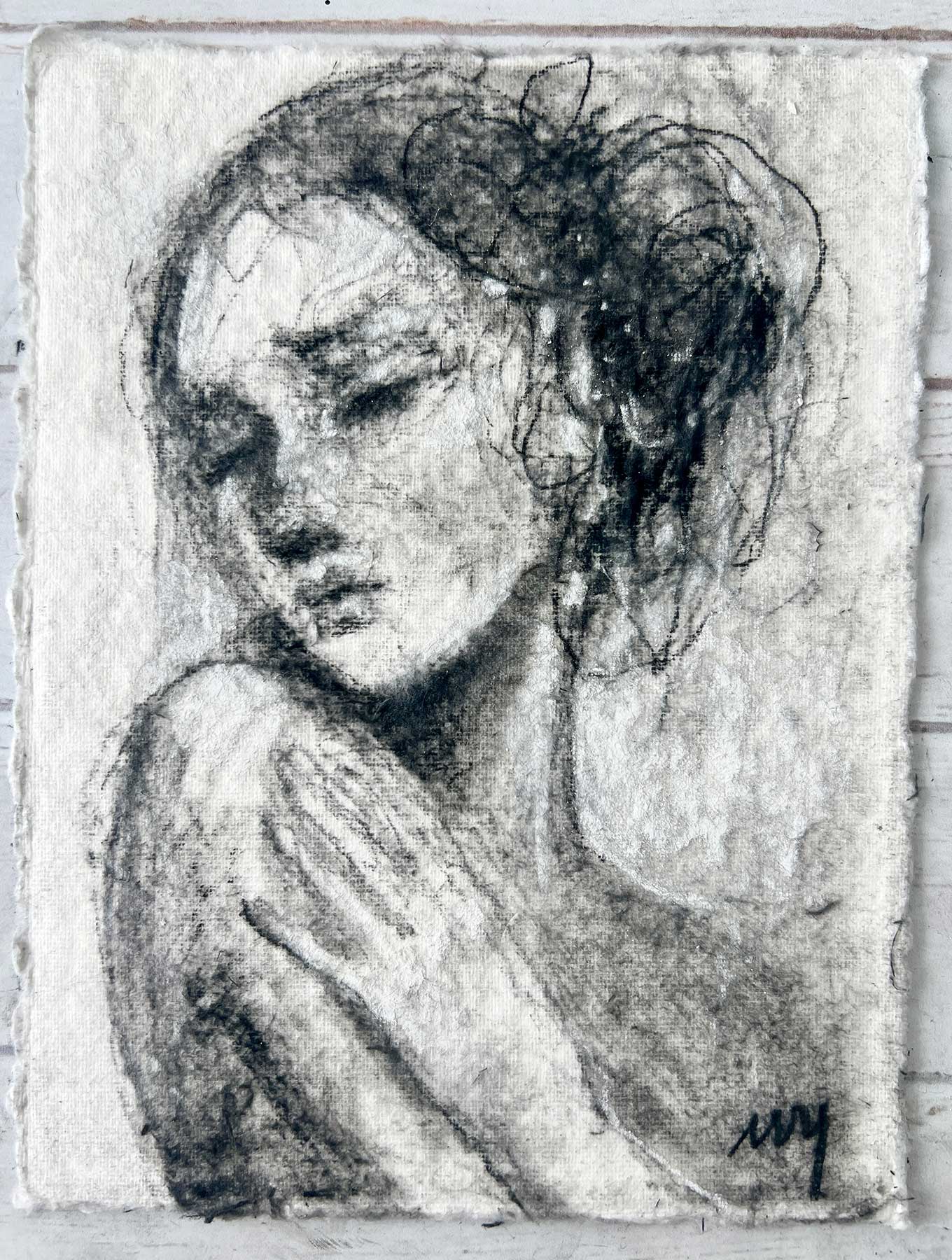
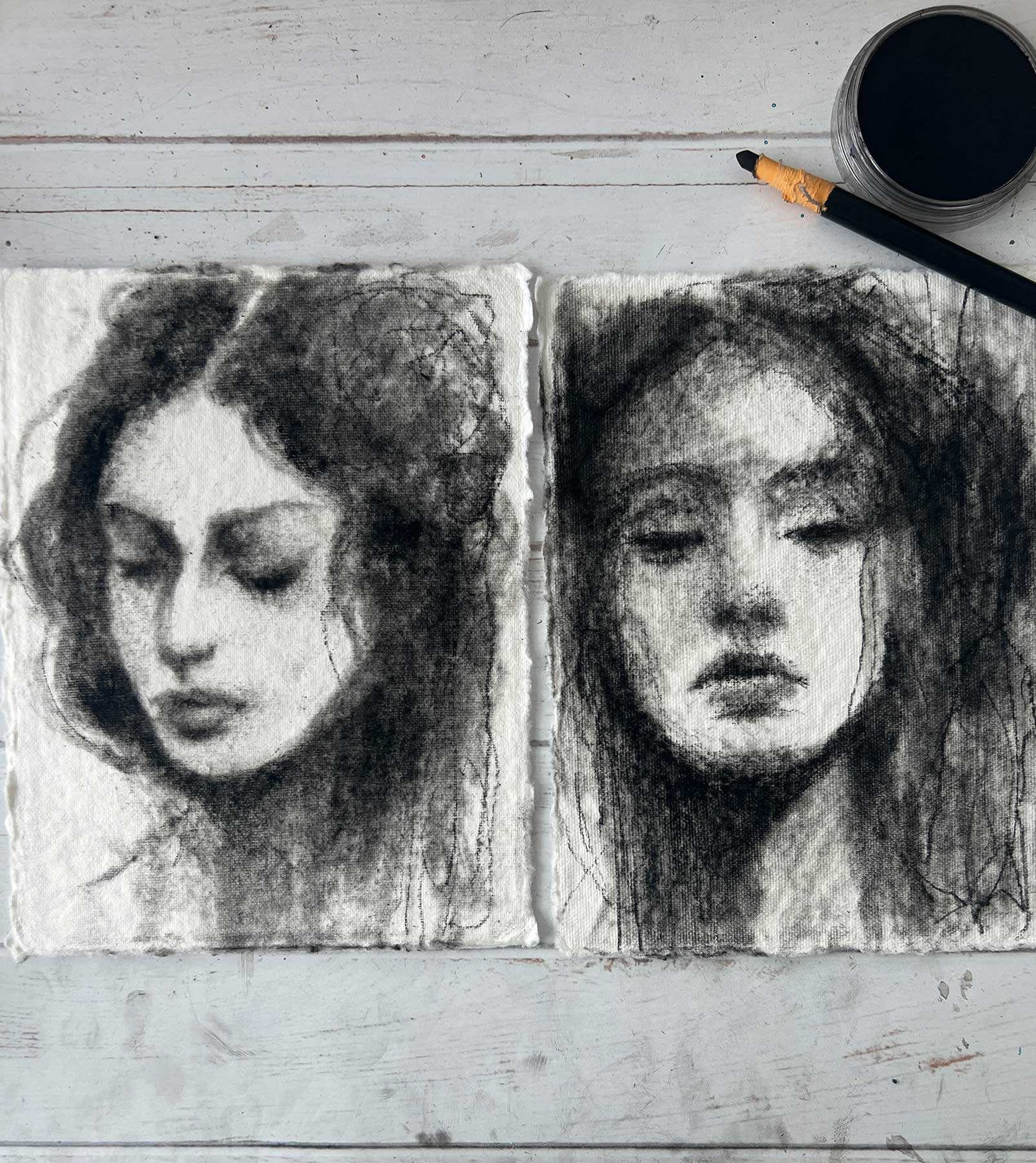
When I sit down to create, I’ve noticed how often control tries to take over. I reach for the safe color, the perfect line, the familiar path. That urge to make it right, to keep it contained, is strong. But the work always feels different when I let myself slip out of that mode. When I stop managing the outcome and simply allow the moment to unfold.
Recently, I started experimenting with my non-dominant hand. It sounds simple, even silly, but it’s been quietly transformative. Using the “wrong” hand removes the illusion of control. The marks are uneven, sometimes awkward, and yet they’re alive in a way my careful ones aren’t. There’s honesty in them. They come from a place deeper than skill, from instinct.
At first, I could feel my body tense. I wanted to correct, to switch hands, to fix what looked strange. But something softened when I stayed with it. The slower, shakier strokes began to feel like a kind of truth-telling. They reminded me that beauty doesn’t always come from precision. It often comes from permission, the willingness to be imperfect, to be seen in the becoming.
Surrender, I’ve realized, is not giving up. It’s saying yes to what is. It’s creating space for something new to move through us. In art, that can mean letting color run, allowing accidents to speak, or following a line simply because it feels right in your body. In life, it can mean trusting that not knowing is part of the path.
There’s a deep relief in that. To release the need to control every outcome. To stop rehearsing what should be and begin listening to what is.
Surrender doesn’t mean stopping. It means softening enough for something real to come through. That’s where the art lives. That’s where life feels true again.
Last month’s issue focused on self-understanding and the quiet work of knowing the inner artist. If you missed the Enneagram section and feel curious about how your type influences your creative patterns, you can return to that article to explore it. This month continues that inner conversation. Once we begin to recognize our patterns, the next step is learning how to soften them.
Surrender, in this context, is not collapse or passivity. It is the simple act of loosening what has become rigid, noticing where we tighten, and allowing a more spacious way of moving through creative life. Each Enneagram type has its own rhythm of letting go. Understanding that rhythm can help us work with ourselves rather than against ourselves.
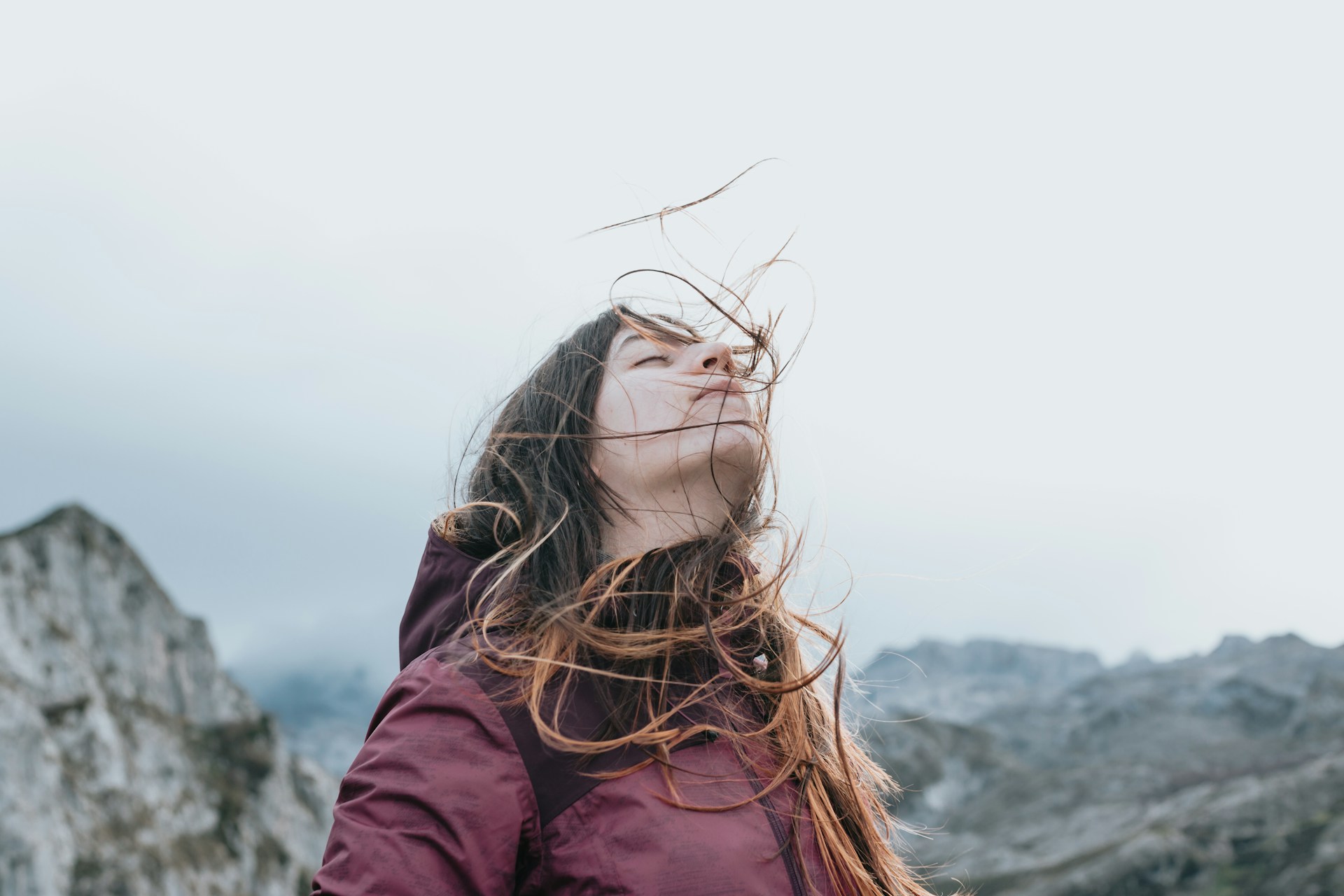
Below are quiet reflections on how each type might approach surrender in a creative season that asks for softness and presence.
Surrender often begins with releasing the internal pressure to correct or refine. A softening occurs when the work is allowed to be unfinished, imperfect, or simply “enough.” Letting a piece rest without adjusting it can become a small, steady practice of trust.
Letting go may mean stepping back from the instinct to give or support before tending to personal needs. Surrender can look like making space to create without offering anything to anyone else. A quiet, uninterrupted session becomes its own form of nourishment.
Yielding often involves loosening the focus on productivity. Allowing rest, slow exploration, or work that does not lead to an immediate result can open up new creative breathing room. The pause becomes part of the process rather than a disruption.
Surrender may appear as releasing the need to intensify emotional experience. Letting a moment be ordinary or letting an artwork stay simple can bring relief. Softening emotional expectations creates room for clarity and ease.
Letting go can mean stepping out of analysis long enough to connect with the body and the present moment. Working quickly, using a single tool, or limiting choices encourages trust in instinct rather than information.
Yielding often involves easing the need for certainty. Allowing a creative step without knowing where it leads can build confidence in personal intuition. Small acts of experimentation help shift from anticipation to presence.
Surrender may take the form of staying with one idea long enough to let it deepen. Slowing down, finishing one sketch before moving to another, or sitting with quiet can open a different kind of freedom.
Letting go can involve relaxing the instinct to push forward. Allowing gentler tools, softer lines, or slower pacing can create space for subtlety. Surrender becomes a way of opening rather than controlling.
Yielding may mean actively choosing rather than drifting. A simple commitment such as sitting down to draw for ten minutes can shift the inner landscape. Small, clear decisions support a sense of presence.
This is not a rigid map. It is a gentle framework for noticing how each type tenses, resists, or over-efforts, and how a small shift in that pattern can create more room for creativity. Surrender is a personal practice. It unfolds in small, steady moments, and each type approaches it in its own quiet way.
According to the Oxford English Dictionary, yield is defined as:
• To give way under pressure; to cease resisting.
• To produce or bring forth as a natural result.
Yielding is the art of allowing. It’s what happens when we stop forcing and begin to trust. In a culture that values control and constant motion, yielding feels radical, a quiet refusal to push when the wiser choice is to pause.
For artists, yielding is an act of presence. It’s the moment we stop trying to shape the outcome and start listening to what the work wants to become. It’s the breath we take before we begin again.
To yield is not to quit. It’s to soften enough for truth to move through us. When we yield, we release the need to master and instead allow ourselves to be guided by intuition, by emotion, by what is unfolding.
Practicing yield in our creative lives means loosening our grip. It means noticing when tension builds, the need to control, to perfect, to know and letting that need ease its hold.
Yielding invites patience. It asks us to step back, to let materials move in their own way, to give form time to reveal itself. Sometimes this looks like resting instead of pushing forward. Other times it means picking up the non-dominant hand and letting it draw what the mind cannot plan.
• What if I let the work breathe?
• What if I stopped pushing for resolution and simply allowed it to unfold?
• What might grow in that space of trust?
In the rhythm of creation, yield is the pause between inhale and exhale, the place where something new begins to take root.
Yield reminds us that art, like life, doesn’t always ask for more effort. Sometimes it asks for less.
It is not about control.
It is about allowing.
And in that allowing, we return to flow.
Let’s tap into our creative intuition and do some self-reflective work inspired by our theme. Below you will see our month’s Oracle/Tarot card spread. But fear not, if you are not one drawn to using oracle or tarot cards, no worries, just use the accompanying reflective questions as writing prompts for your journals!
Here’s a three-card oracle card spread designed to tap into your creative intuition and our themes. This spread and its journaling prompts encourage reflection on the artist’s inner wisdom, the magic of inspiration, and the journey of trusting intuition in the creative process.
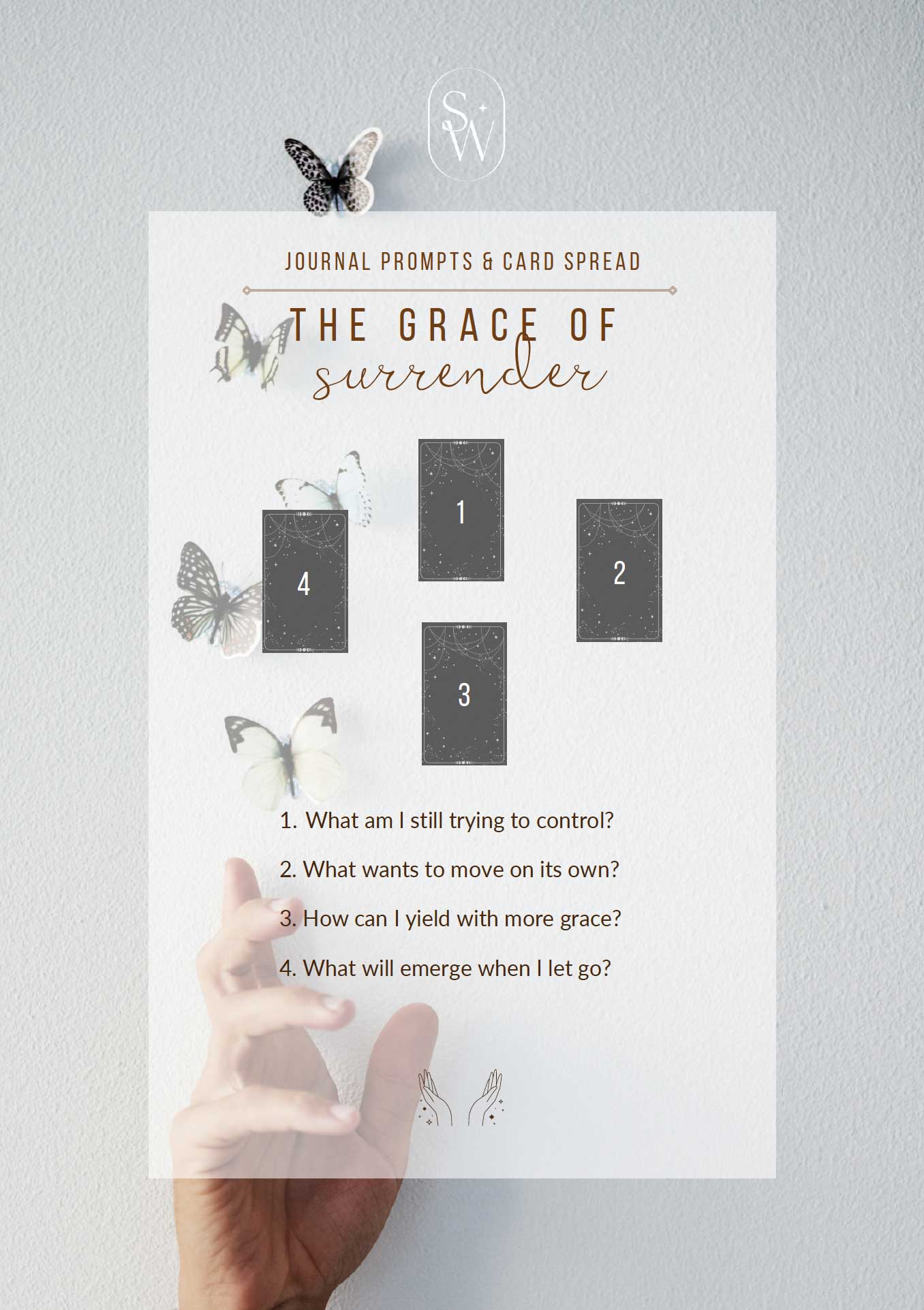
Card 1: The Grip
What am I still trying to control?
This card reveals where you may be holding on too tightly, to an outcome, a routine, or an identity. It shows the places where resistance or fear of change may be blocking natural flow. Notice what feels heavy or rigid. This is where softening can begin.
Card 2: The Current Beneath
What wants to move on its own?
This card points to what is already unfolding beneath your awareness. It may represent a shift, a creative impulse, or a part of your life that no longer needs your interference. Trust what you sense here, this is the quiet rhythm of becoming.
Card 3: The Practice of Softening
How can I yield with more grace?
This card offers guidance for how to release control and open to trust. It may suggest a gentle action, a mindset, or a small daily ritual to help you loosen your grip. It reminds you that surrender isn’t a single act but an ongoing practice of allowing.
Card 4: The Fruit of Trust
What will emerge when I let go?
This final card reveals the quiet reward of yielding, what your surrender will yield in time. It may symbolize peace, clarity, creative renewal, or unexpected beauty. Let this card remind you that when we stop forcing, life finds its own rhythm again.
This spread works beautifully with oracle or tarot decks.
Treat yourself to this wonderful and powerful meditation from one of my favorite meditation creators - Rachel Hillary
Here’s a little more information from Rachel…
This practice is created for something I felt like I needed myself right now, a big hug and release in a meditation. It is delicate and emotional, a safe space set on a beautiful beach at sunset with purple skies. With all of my meditations, it is like an energy transmission as well, something is seeded within them with a different flower blooming with each listen. Whether you are suffering pain, grief, heartbreak, frustration, a beautiful act is that of surrendering.
lots of love,
Rachel
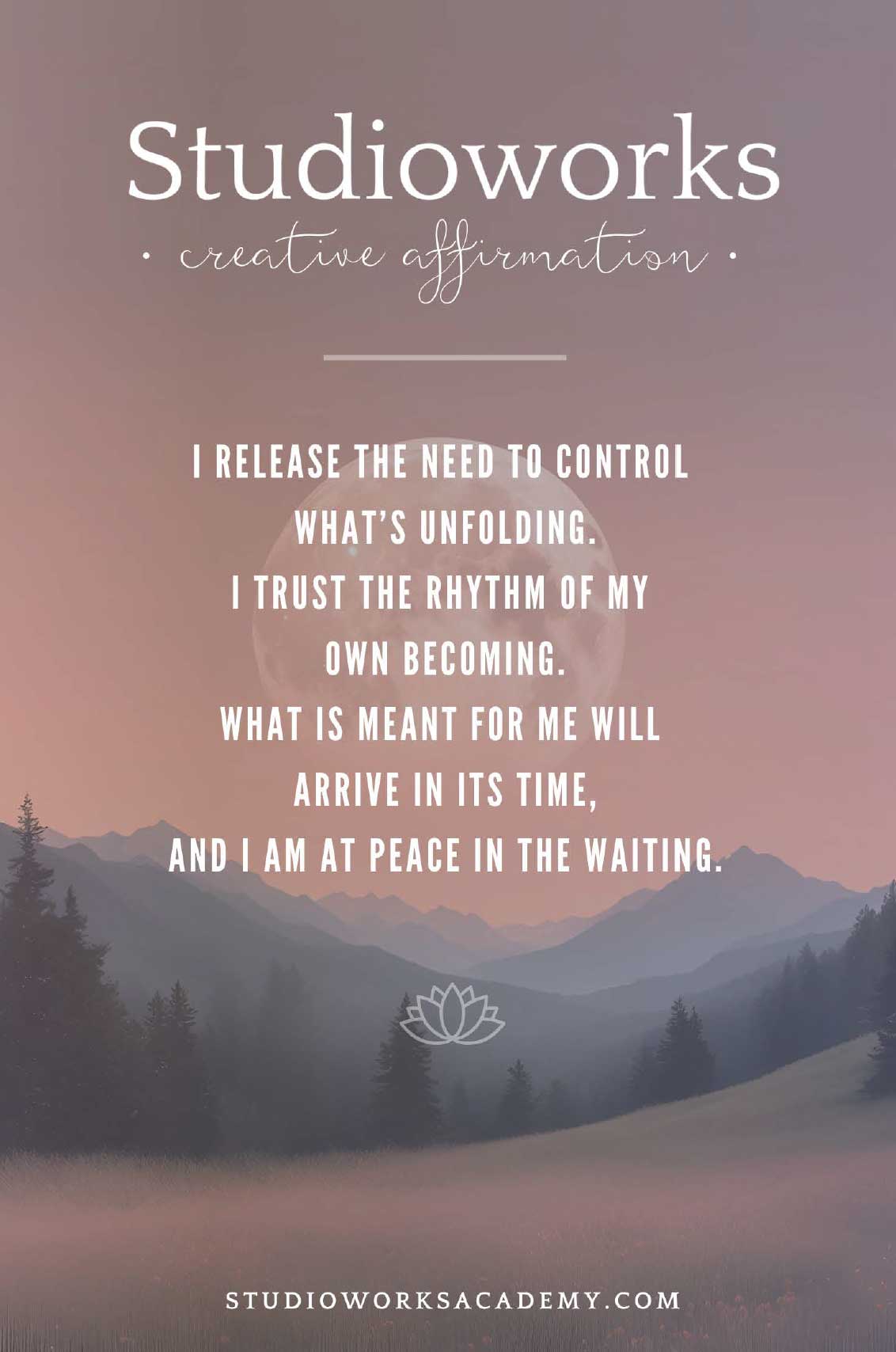
Each month we will have a positive affirmation. I recommend you print out this affirmation and put it in your sketchbook or somewhere in your studio. Recite the affirmation out loud each time you show up to create. Saying words aloud is powerful and can begin to re-write some of our own limiting beliefs or calm our fears. Try it now…
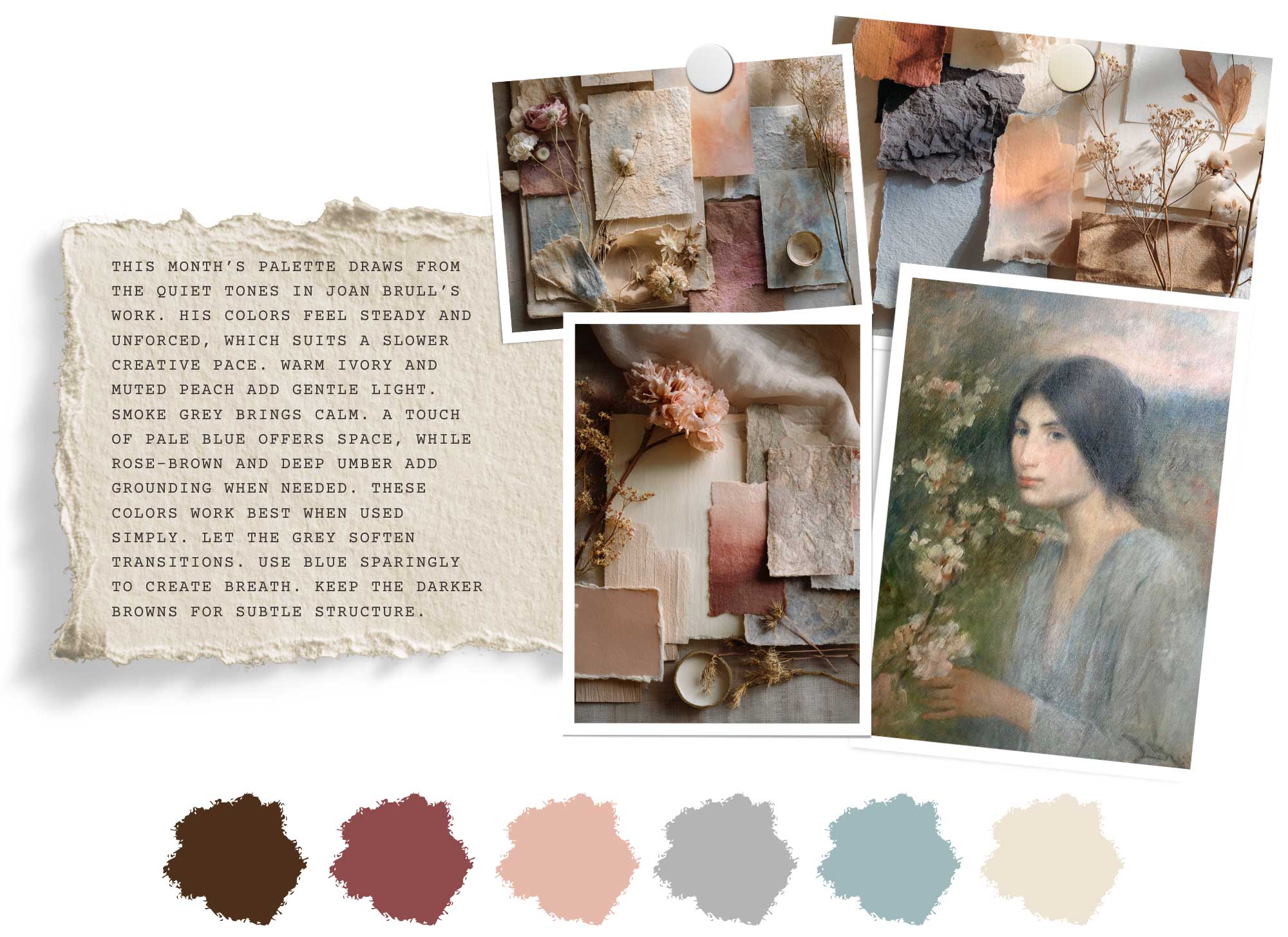
This month’s palette is inspired by the quiet, pared-back tones in Joan Brull’s work. His colors feel unhurried, which fits our theme of yielding and letting things unfold at their own pace.
Warm ivory and muted peach bring a gentle light to the palette. Soft smoke grey helps everything settle into stillness without feeling dull. A pale blue adds a cool note that suggests space and breath. Rose-brown offers warmth where you need it, and a deep umber anchors the palette so it doesn’t drift.
These colors support the idea of working with less pressure. They invite you to slow down, to pay attention to tone and mood rather than outcome. Nothing here demands control. Everything asks for a softer approach.
As you use this palette, think in terms of easing up. Let grey calm brighter areas. Use blue when you need room to breathe. Bring in the deeper browns only when a piece needs quiet structure.
Let these colors help you practice surrender, simple choices, gentle shifts, and space for your work to take its own shape.
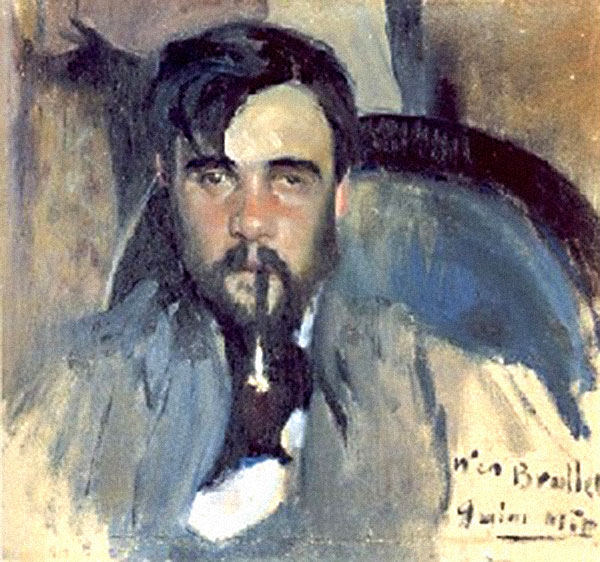
Portrait of the painter Joan Brull
By Joaquim Mir, 1898 - 1899
Joan Brull i Vinyoles (1863–1912) was a Catalan painter associated with the Symbolist movement that gained momentum in Barcelona at the end of the nineteenth century. Born in Barcelona’s Ribera district, he studied at the Escola de la Llotja before spending time in Paris, where he encountered contemporary Symbolist ideas. This movement emphasized introspection, suggestion, and emotional nuance rather than descriptive realism or overt narrative.
Upon returning to Barcelona, Brull became part of the cultural environment that surrounded late nineteenth century Catalan modernism. Although he participated in exhibitions and artistic gatherings, he did not adopt the more radical or experimental tendencies of his contemporaries. Instead, he maintained a consistent focus on intimate subjects and a restrained, contemplative style. He died in Barcelona in 1912.
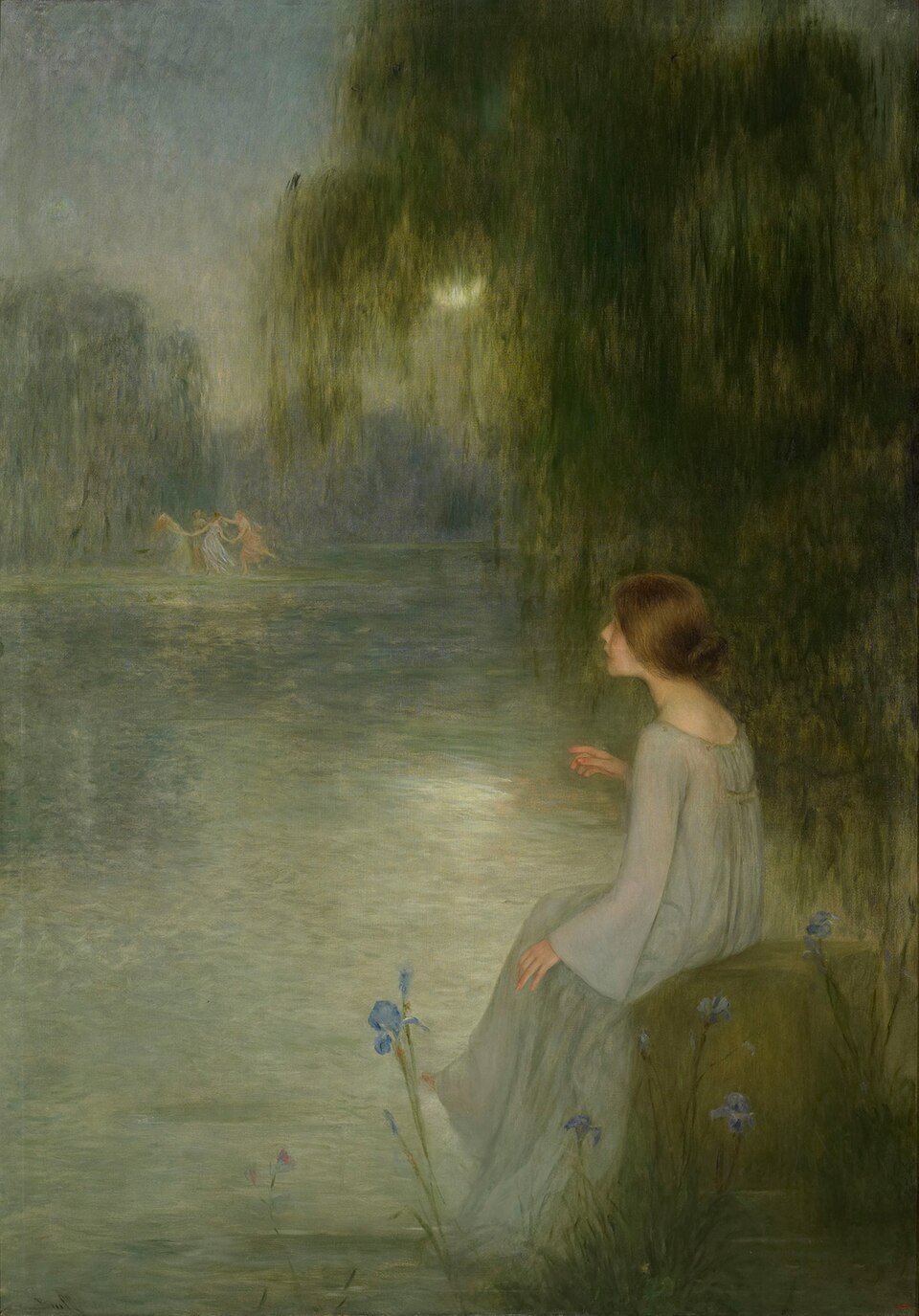
Joan Brull, Dream 1905
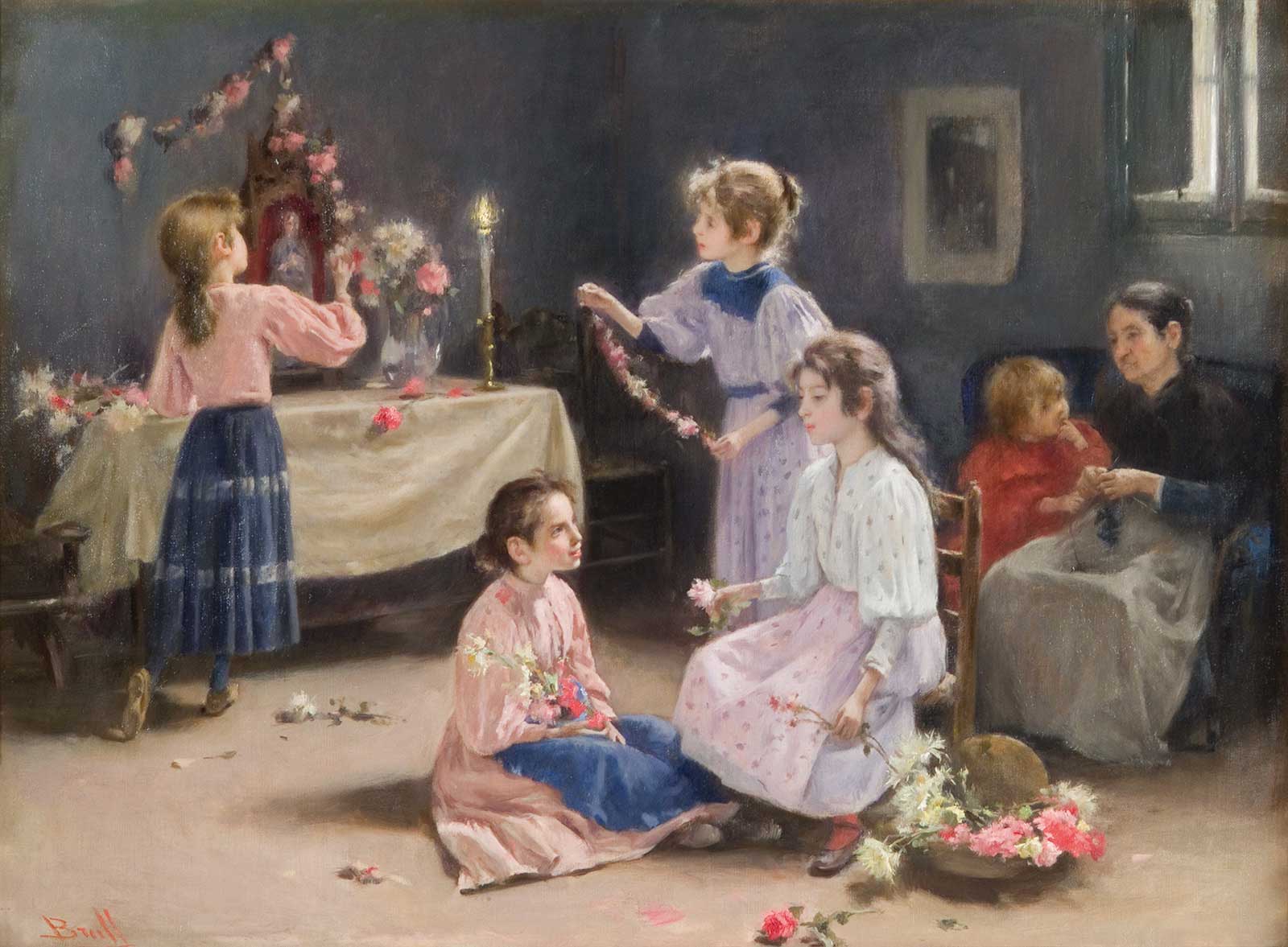
Joan Brull, Month of Mary, 1893
Brull’s early paintings reflect his academic training. Figures are clearly defined, and compositions follow traditional formats. While technically accomplished, these works show a painter still working within established conventions.
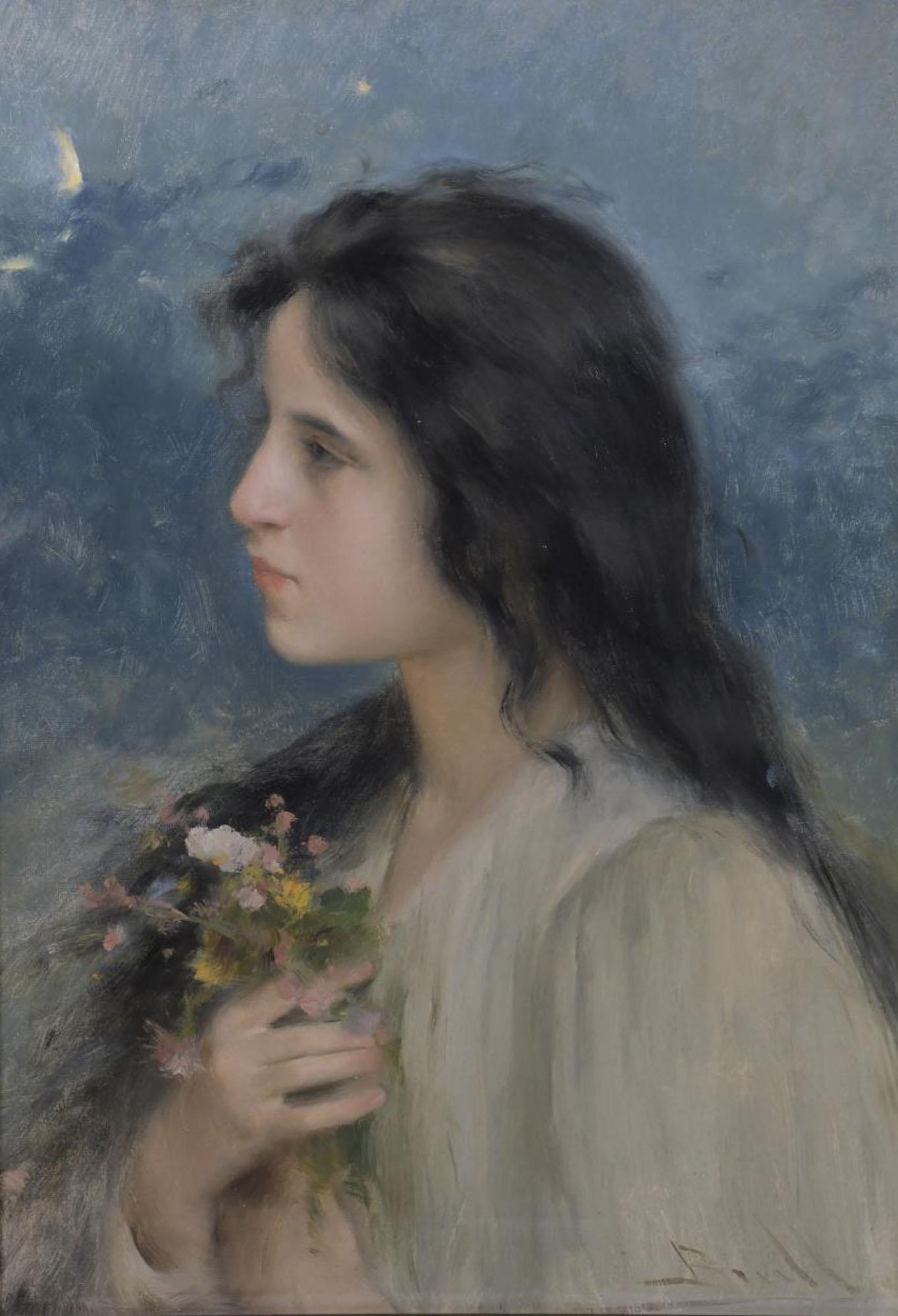
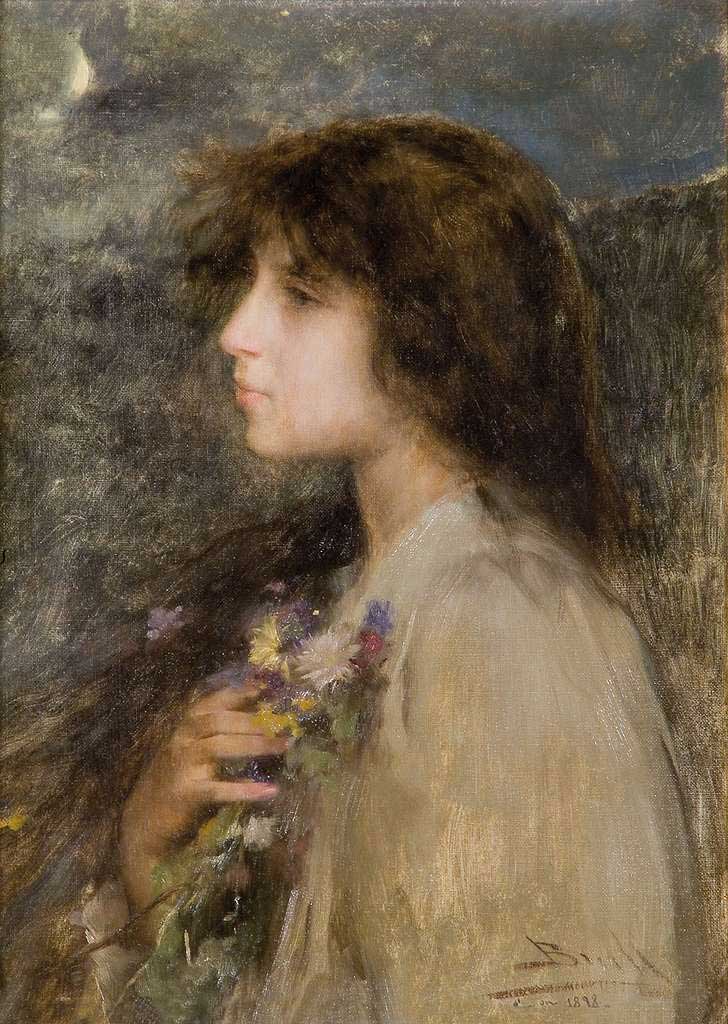
Joan Brull, Night Portrait - Girl With Flowers
During the 1890s his work shifted toward Symbolism. He began to soften contours, mute contrasts, and reduce descriptive detail. Light became diffused, and backgrounds were simplified into atmospheric fields. The emotional tone of the paintings grew quieter. Many works from this period depict young women or children in reflective or resting states.
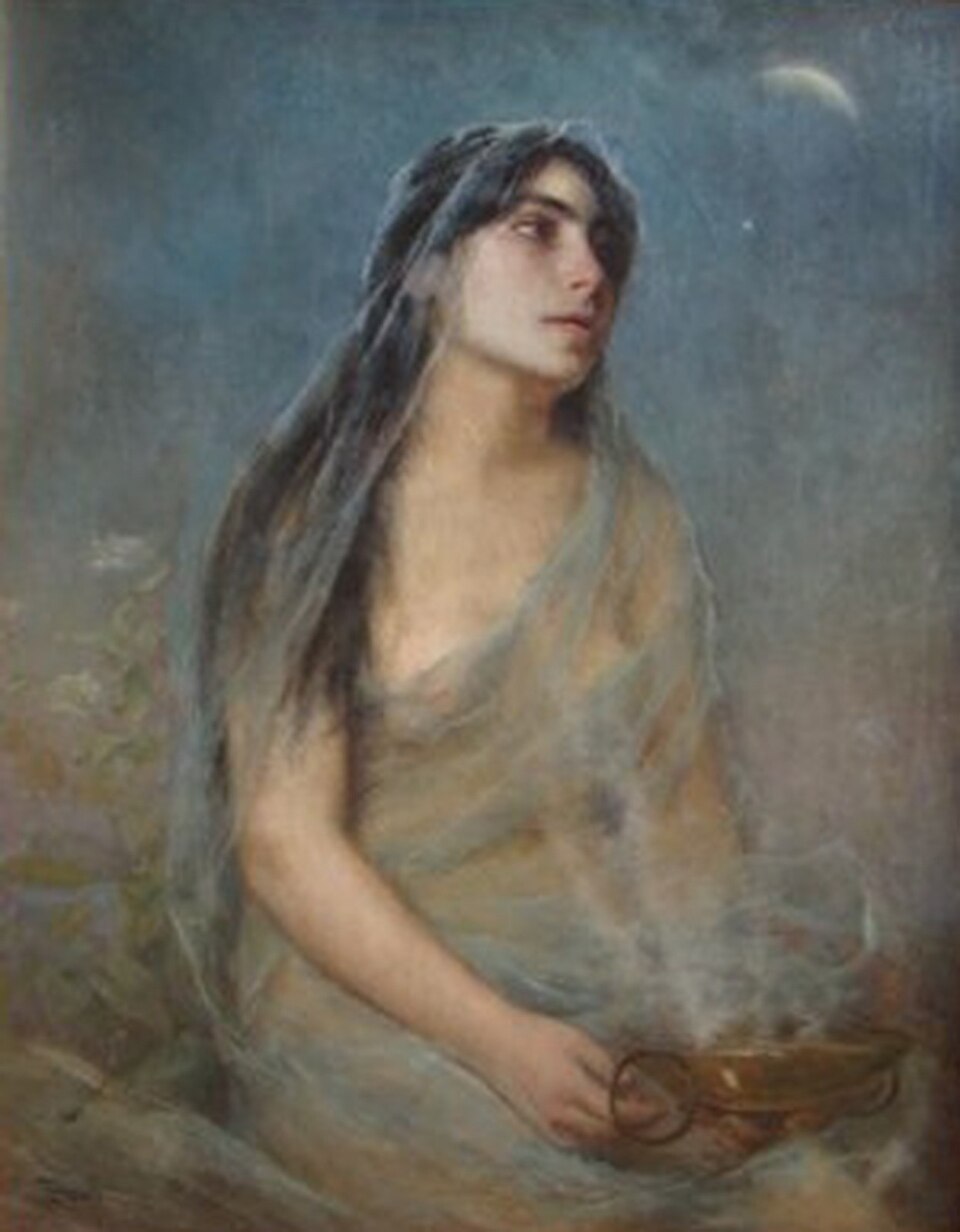
Joan Brull, Noia Amb Vel
In the early years of the twentieth century, Brull’s approach became even more refined. Edges were further softened, color harmonies were restricted, and the compositions relied on subtle tonal changes. His subjects appear calm and introspective, and the sense of atmosphere is heightened by the absence of strong outlines or dramatic lighting.
Brull’s paintings demonstrate a sustained interest in quiet emotional registers and a preference for simplicity. Rather than relying on dramatic gesture or complex narrative, he focused on atmosphere, tone, and subtle shifts in light. His figures are not defined by action but by presence. The absence of strong outlines or bold contrasts allows the viewer to encounter the image gradually.
Brull’s working method reveals an interest in gradual development rather than decisive construction. Studies and finished paintings show a painter who favored slow transitions, reduced contrast, and the steady refinement of tone. This approach suggests a process shaped by patience and a willingness to let forms emerge gently over time. His subjects appear to settle into their environments rather than dominate them, and the final image seems to grow naturally from a series of understated adjustments. In Brull’s work, clarity arises from accumulation rather than force, and the resulting atmosphere reflects a preference for openness and quiet evolution.
Joan Brull occupies a distinctive place in the history of Catalan Symbolism. His restrained color harmonies, softened modeling, and emphasis on introspective subjects create a body of work that values subtlety over spectacle. Through careful control of tone and a sustained focus on calm emotional states, he established a personal visual language that remains notable for its quiet clarity. His paintings demonstrate how understatement, simplicity, and patient refinement can produce an enduring and expressive artistic vision.
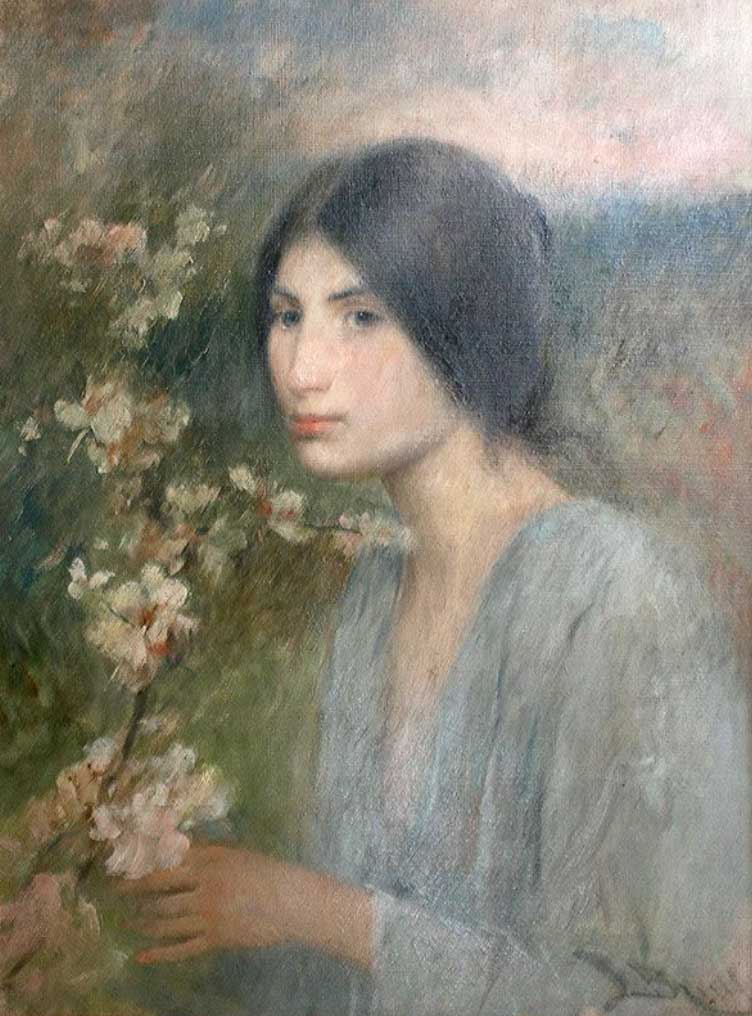
Joan Brull, Nena Amb Flors
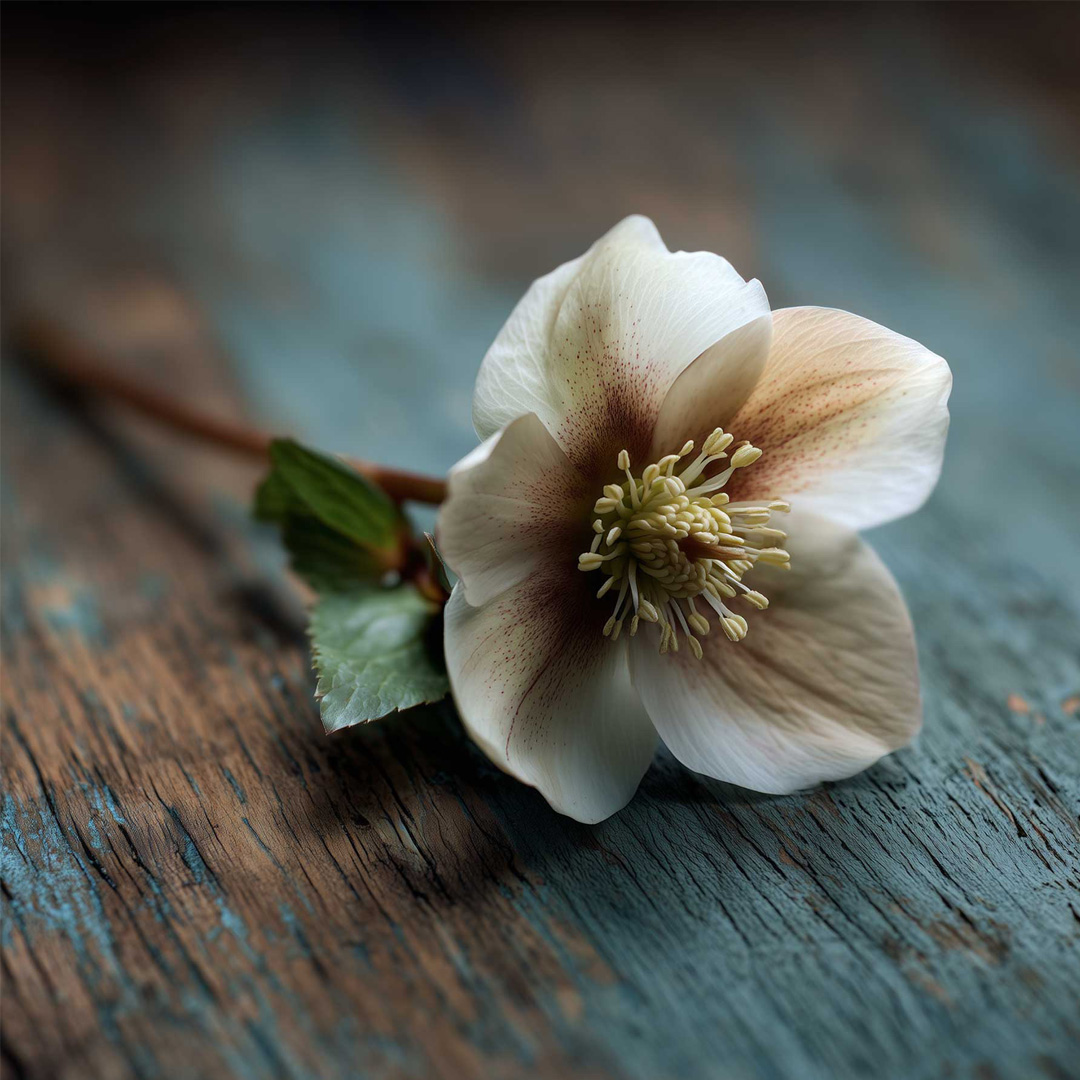
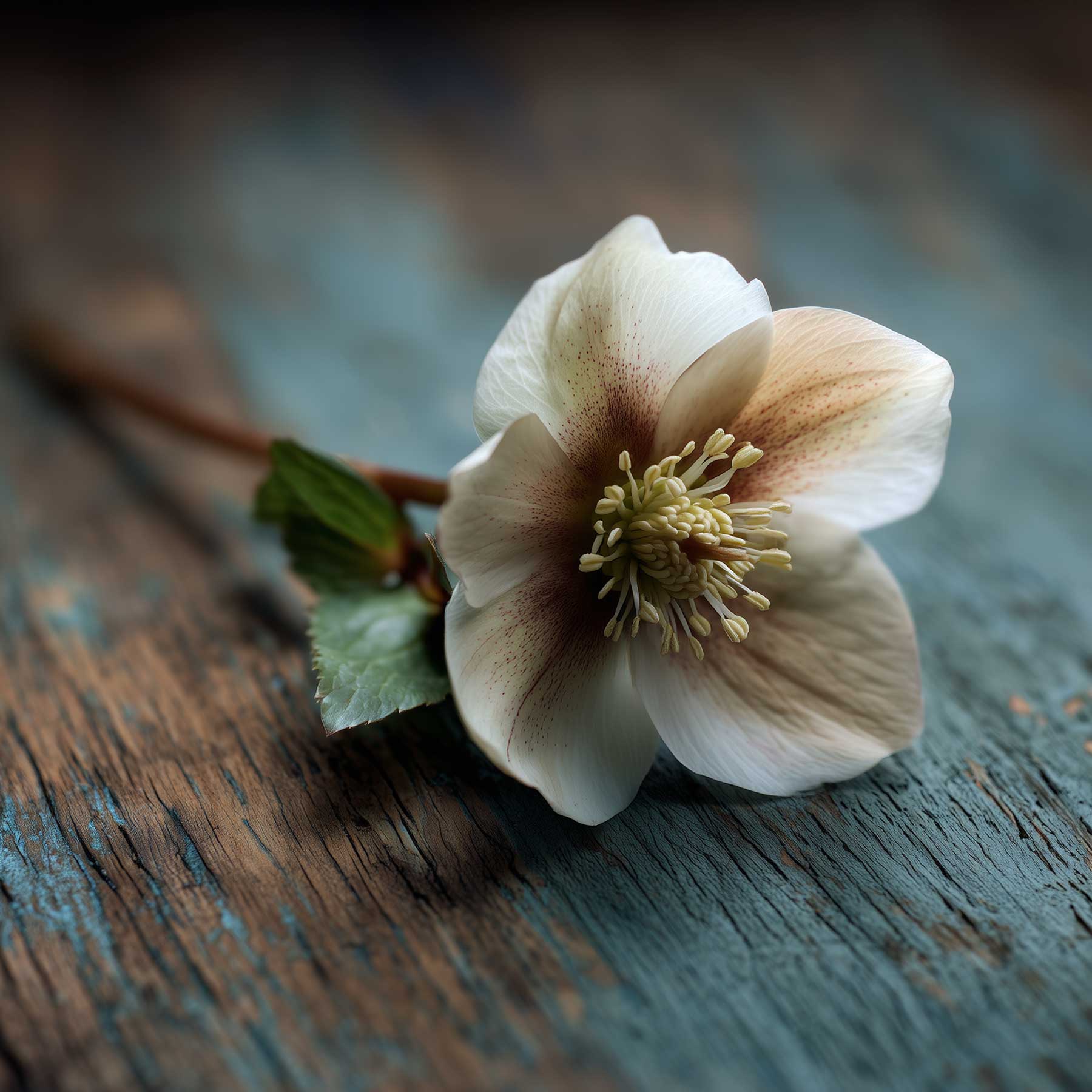
Place a single flower on your table and let it fall into its natural position. Do not arrange it. Begin a slow, simple drawing of the flower as it rests. Focus on the tilt of the stem, the weight of the bloom, and the small shadow it casts. Add a light wash of muted color or a soft layer of graphite to suggest the atmosphere around it.
(I have provided you with a still life reference photo if you would prefer to use this.)
Reflect: What changes when you let the subject be exactly as it is? What did you notice only after slowing down to observe it?
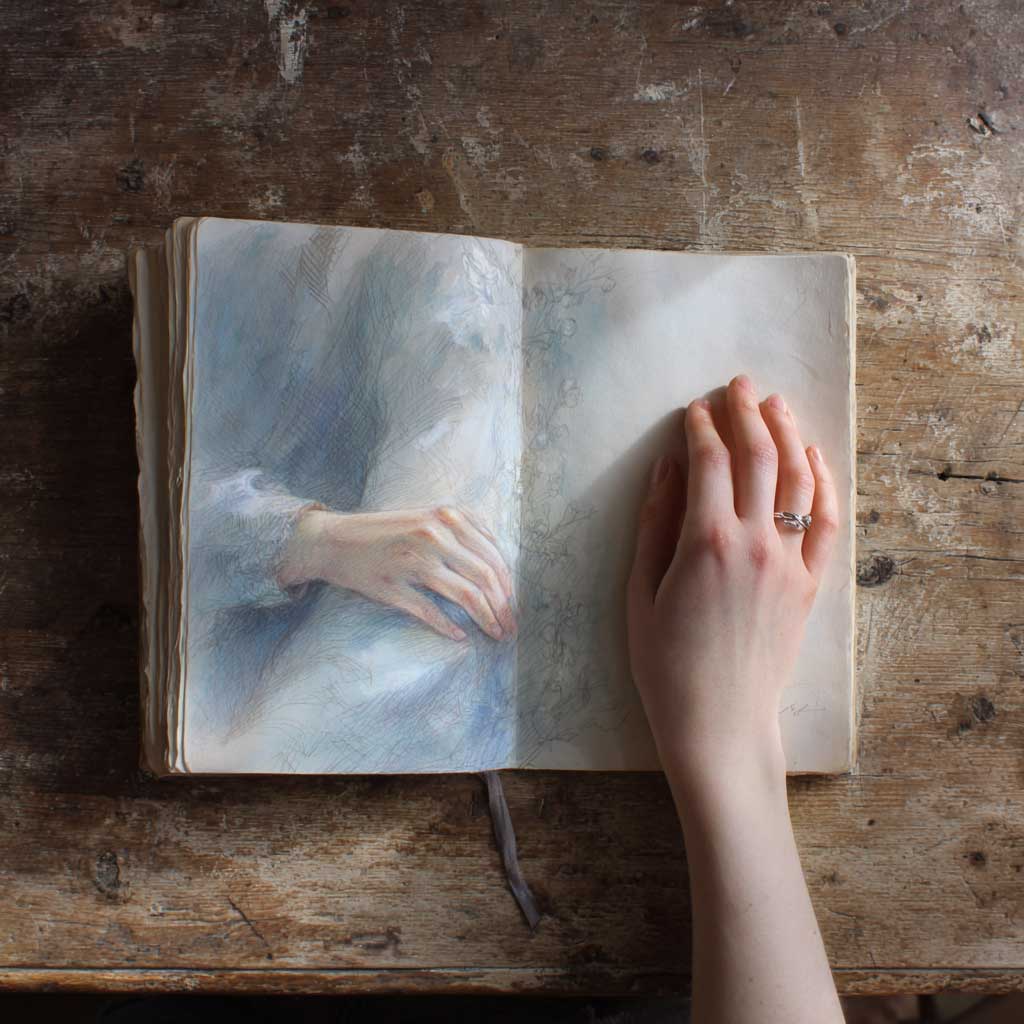
Let one of your hands settle in your lap or on a folded cloth. Draw it in the position it naturally takes without adjusting the pose. Keep your lines loose and let small imperfections remain. Add a gentle shading or a soft background tone to anchor the shape.
Reflect: What does this quiet gesture communicate? How does drawing a resting hand affect your own sense of calm?
Create a simple portrait inspired by Joan Brull’s calm, introspective figures or attempt to study and copy one of his beautiful works. If you choose to draw your own creation - draw a face or upper body with relaxed features, eyes closed and a flower held close to the chest. Keep the forms minimal and use soft transitions rather than strong outlines.
Introduce a muted color palette or a light watercolor wash to echo the gentle mood.
Reflect: What does the act of holding the flower suggest to you today? Where do you see softness emerging in the portrait?
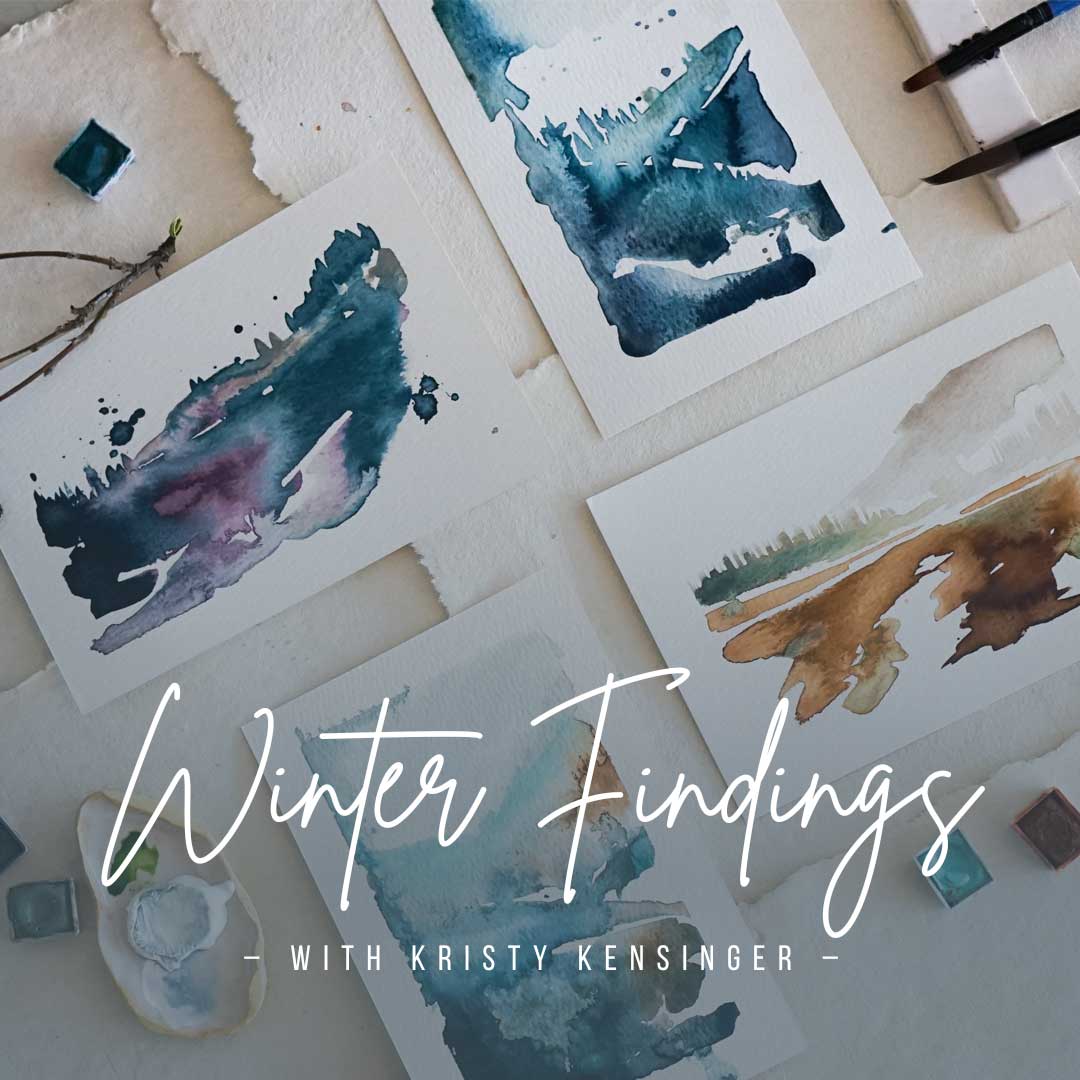
Capture the magic of winter with, Winter Findings, by Kristy Kensinger! Inspired by the beauty and depth of the season, this class explores muted jewel tones, fluid ink washes, and delicate layers that capture the ever-changing winter landscape.
With short, focused lessons, this class is designed to fit into your schedule while helping you create soft, moody, and expressive winter-inspired art. Work with inks, watercolors, and Kristy’s curated color palette—or bring your own unique touch!
Explore winter’s quiet beauty through art.
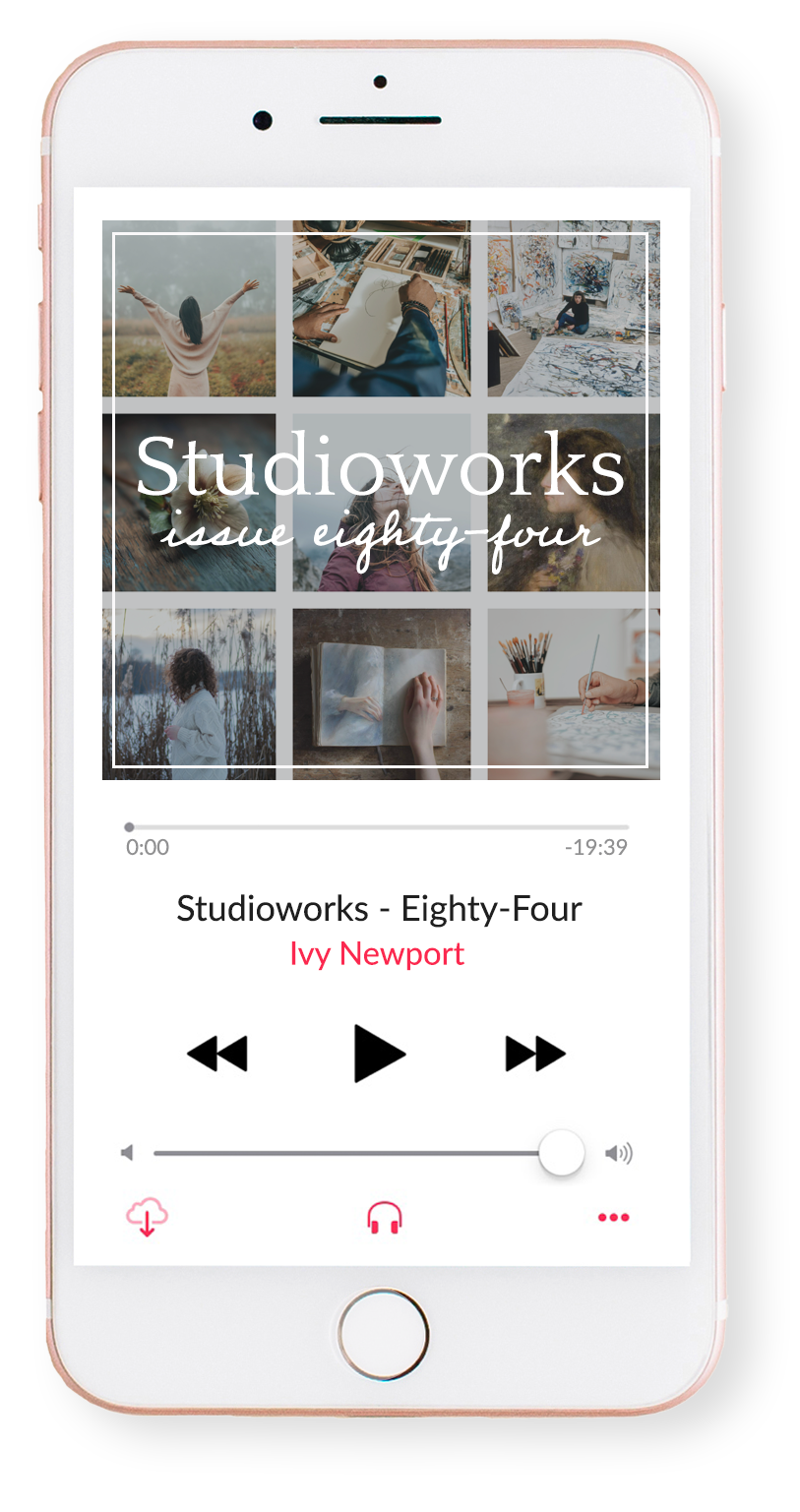
You can also listen to this month’s issue of the Studioworks journal. I find I love listening to books, podcasts and music while I draw, paint or go on a long walk. Enjoy.
One of my favorite things to do is to curate inspiration. From Pinterest boards to books, resources, playlists and more - I love to share anything that might facilitate learning, expansion, and sparks of curiosity! Being an artist, we naturally crave these things so here are some of this month’s picks from me to you.
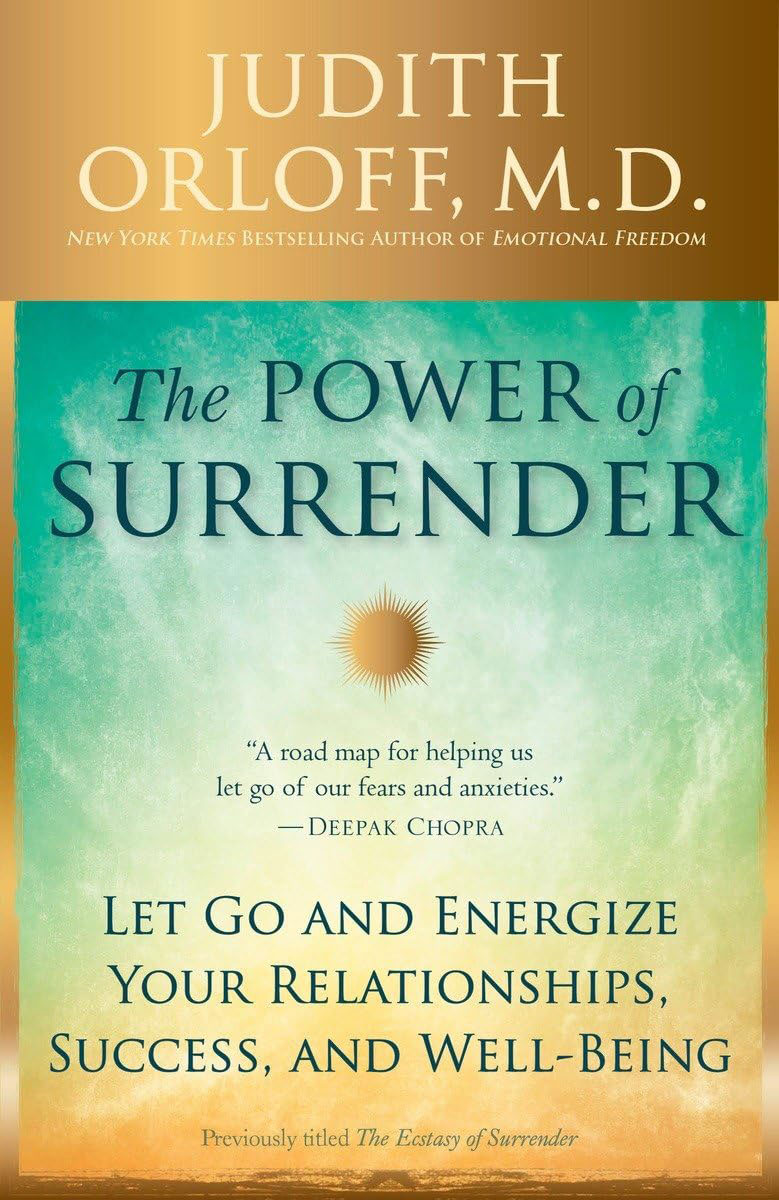
I had so much fun curating this list. I hope you enjoy!!
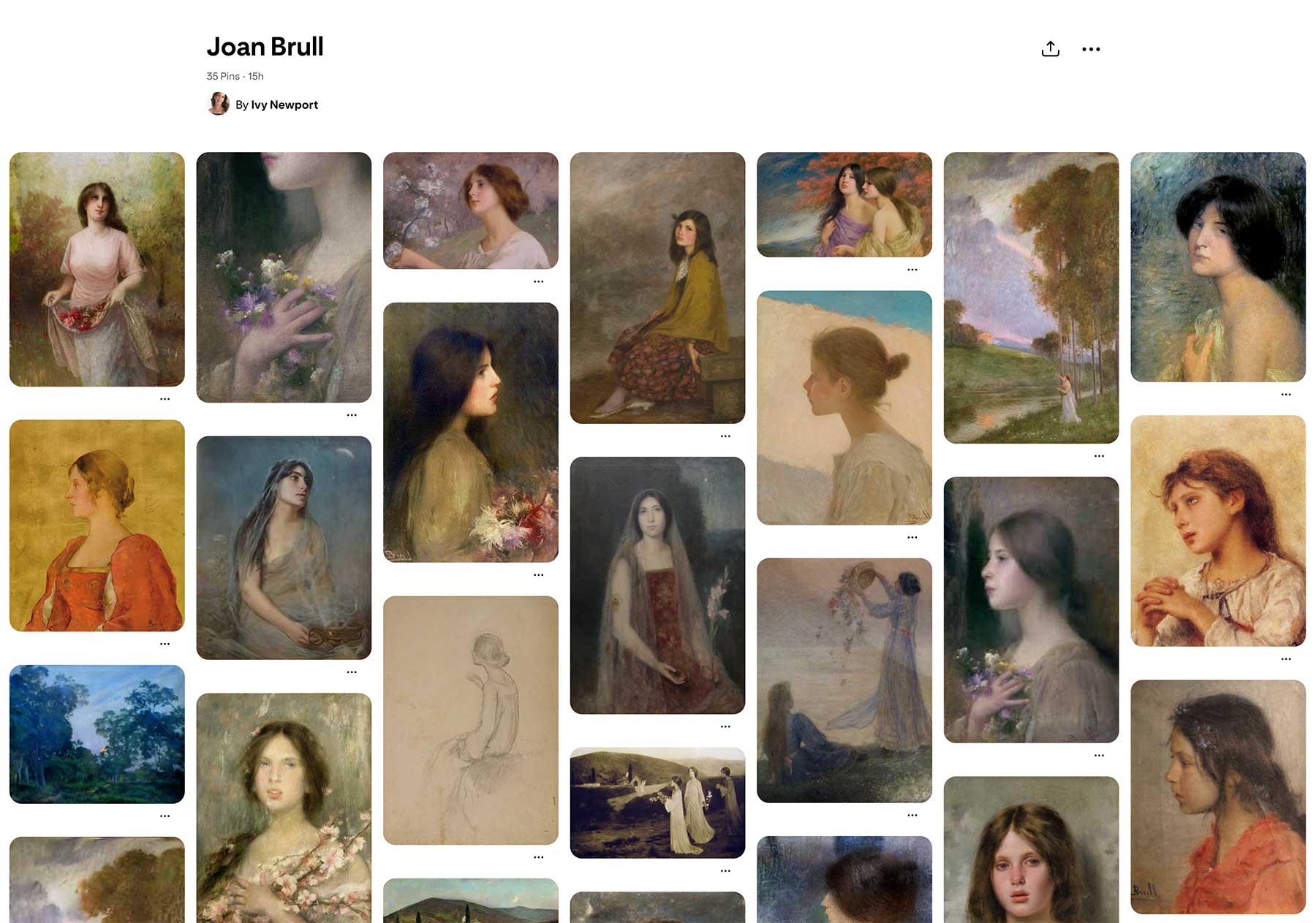
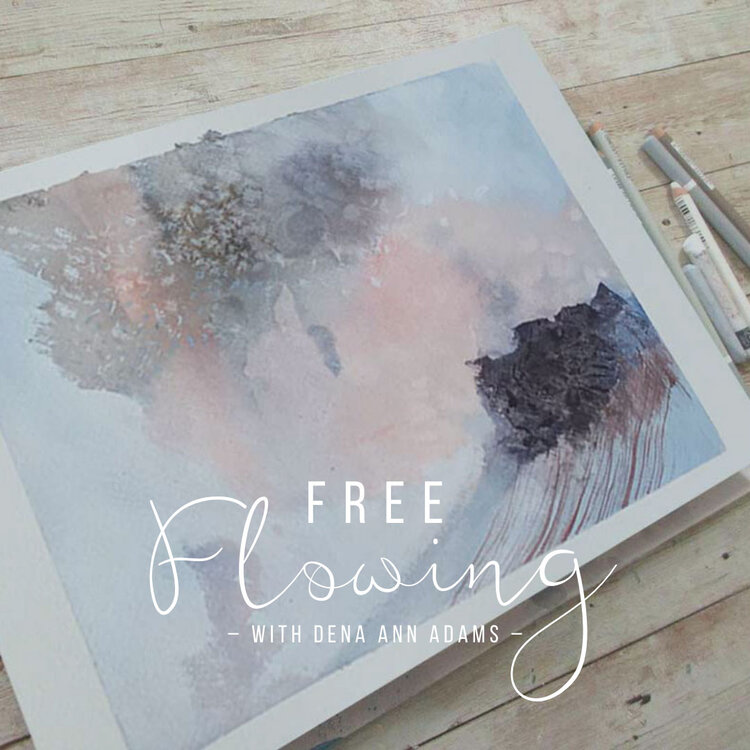
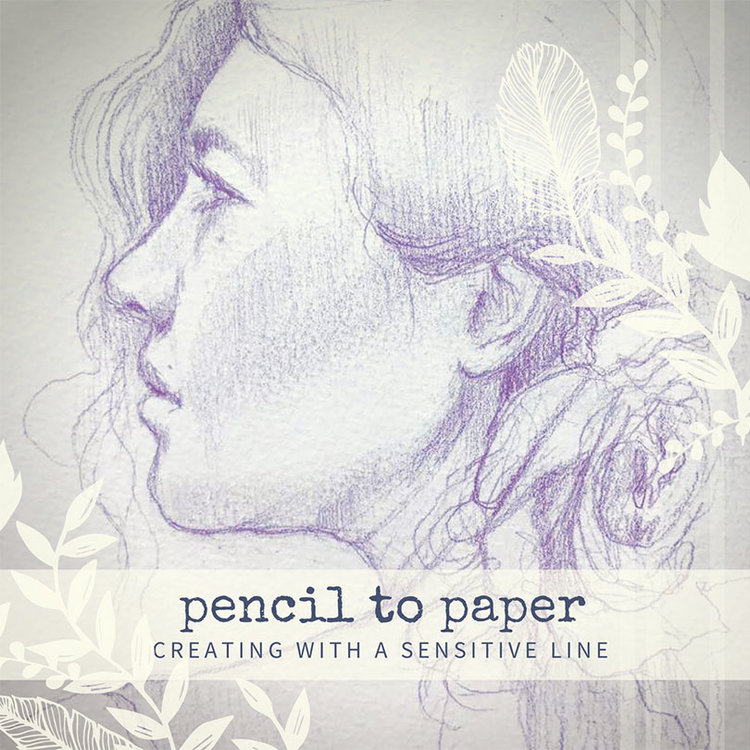
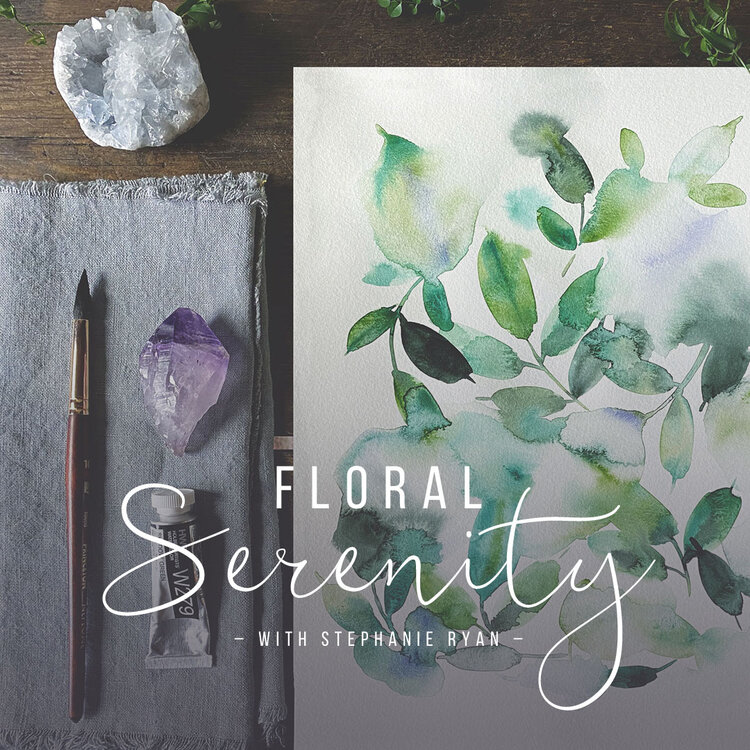
Classes that pair well with this month’s theme in your Studioworks Creative Library